Books | Poems | News | About

sidekickBOOKS

Friends of Sidekick: Introducing Carnyx Press

It’s always exciting to see a fellow indie press setting out to do things differently (especially outside the London bubble).
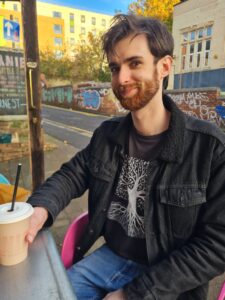
A smiling man with a coffee, sat outside a cafe.
Carnyx founder Nathaniel Spain, fuelling up to review submissions.

Carnyx Press is a brand-new micropublisher, based in Tyne & Wear in the North-East, founded by writer, designer and publishing all-rounder, Nathaniel Spain.

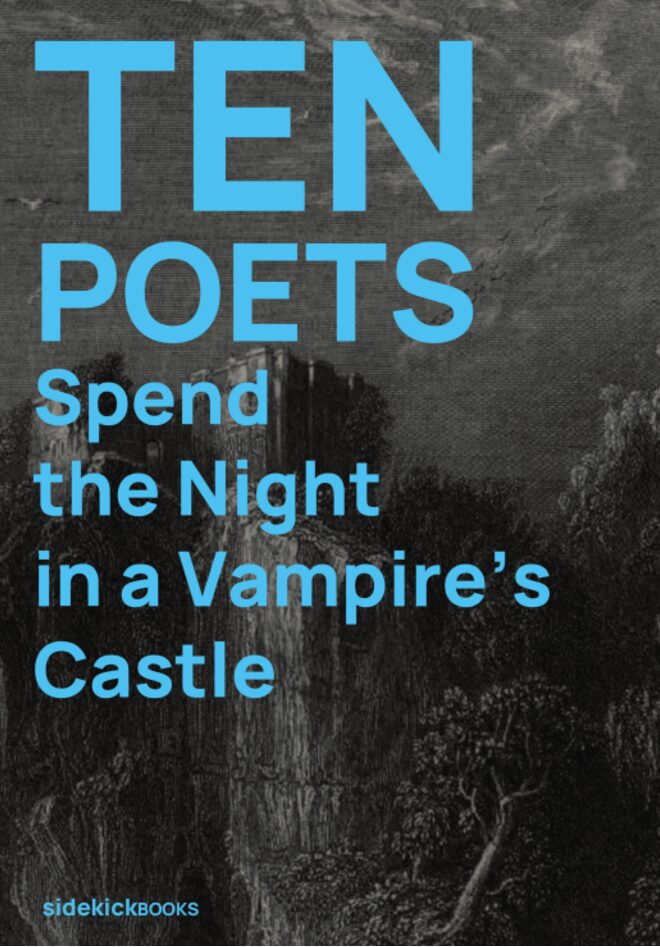
Carnyx publish speculative fiction in the form of anthologies, short fiction collections and novellas. We first got to know Nathaniel through his work with Inpress. More recently, we’ve been able to work with him as a Sidekick author in Ten Poets Get to the Bottom of Some Grisly Crimes. We caught up with him to ask a few questions about Carnyx’s mission.

First things first: Can you tell us how you chose the name Carnyx?

Nathaniel: The carnyx was an instrument found across Celtic Europe: a horn shaped like a boar’s head. I enjoy those links to paganism, to animal symbolism. These instruments were beautifully crafted and the replicas produce a lovely sound. But there’s also something kind of goofy and alien about them. I like the weirdness of ancient art, and I love the idea of artpieces surviving for centuries, the way that past cultures linger in the imagination in surprising ways.
Decorative
Carnyx Press logo
Obviously this sort of symbolism works well for projects like the upcoming folklore anthology, but I like the idea of juxtaposing, say, a sci-fi novella with this sort of ancient iconography. And also there’s a fun combination of letters in the word. You’d get a good scrabble score out of ‘carnyx’.

What made you focus on publishing speculative fiction, and what does this kind of storytelling do uniquely well?

N: Because I read a lot of speculative fiction, and write in and around speculative genres, it felt like something I could approach with expertise. There’s also a real boom in the popularity of fantasy, sci-fi, and horror at the moment, so it made sense to try and tap into that. People enjoy the escapism and the imagination of these sorts of stories, but I think a good work of speculative fiction is well-placed to talk back to our world and what it’s like to live in it; to create fantastical worlds that are actually extended metaphors. Not having to meticulously represent our world in a factual way also means you’re free to explore the world of ideas more.

“A good work of speculative fiction is well-placed to talk back to our world and what it’s like to live in it; to create fantastical worlds that are actually extended metaphors.”

You’ve worked to support plenty of other indie presses, most notably with Inpress, so it’s really exciting to see you launching your own. What’s been the most interesting part of setting up the press so far, and what do you wish more writers knew about indie publishing?

N: Creating an identity – through the visual branding, the way the press presents itself, the publications you want to release – has been really interesting. Positioning yourself in a busy ecosystem is difficult, it’s a work in progress, but it’s rewarding to start building a little community around your vibes and values. I think it’s always important for writers to understand the business of publishing, so they can be informed about the deal they want and the editorial support they’ll get. An indie might not be able to shift thousands of copies of your book, but because they’re publishing fewer titles per year you’re likely to have a more focused and personal relationship. I think indies are natural friends to writers who put the art first, or who want to get weird. But no two indies are the same, so it’s important to do your research, to be informed about who they are and what they can offer you.

“[Indie publishers] are natural friends to writers who put the art first, or who want to get weird.”
Can you recommend some speculative fiction favourites that speak to Carnyx’s style?

N: Ursula K. Le Guin is probably the premier speculative writer. I love that blend of beautiful prose, of human stories in strange and fantastical settings, and themes that are carried so thoroughly through the text that they change the way you look at the world. Some other favourites: Italo Calvino, Angela Carter, Ted Chiang, Susanna Clarke, Ann Leckie, Thomas Ligotti, Emily St John Mandel…

What’s the literary scene like in North-East England, for those living elsewhere?

N: The North East doesn’t have the same concentration of publishers as other parts of the North, but we’ve got some absolute gems. Bloodaxe in Hexham consistently publishes some of the most respected poetry in the UK. There’s another micropress here called The Braag, who I’ve worked with loads and absolutely adore. They put out really genre-pushing, beautiful pamphlets of spec fic and poetry. We’re home obviously to Inpress, who represent dozens of indies, and the Poetry Book Society, where I worked previously. There’s The Word (National Centre for the Written Word) in South Shields, New Writing North, book festivals in Durham and Hexham, some lovely independent bookshops… And the North-East is producing some great writers. Lucy Rose’s The Lamb is making waves at the moment. I’m really impressed by how Lucy balanced such a human story with utterly uncompromising gore, and so pleased for her that it’s got so much attention. I also read a neat folk horror story recently by a local author called Jacob Kerr, The Green Man of Eshwood Hall, set in a reimagined Northumberland called Northalbion. Hopefully we can do our part to bring more stories from North Eastern writers into the world, alongside writers from across the North of England!

Where can folk find information about new Carnyx releases and calls for submissions?

N: We’ve got a website over at carnyxpress.co.uk which has all our submissions info. We’re open between July and September for submissions for our first anthology, on the theme of folklore. And you can also find us on instagram @carnyxpress and on Bluesky at @carnyxpress.co.uk!

If you’re not on the socials, you can also sign up to the Carnyx email newsletter for news and calls.

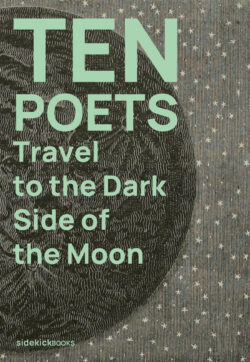
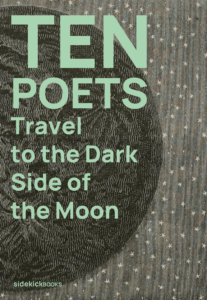
Submissions Call! Ten Poets Travel to the Dark Side of the Moon

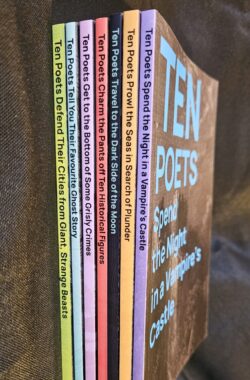
Hot on the heels of our first four Ten Poets titles, we’ve gotten all fired up for another one! Launch your best words our way for

Ten Poets Travel to the Dark Side of the Moon! If you’re not familiar with the Ten Poets series, each title dips into a beloved pop-culture theme, from murder mysteries to ghost stories to erotica to monster movies. We want you to think creatively and show us your own take on the subject each time. Do you discover something strange? Do you think about your life on Earth? Do you make it to the moon at all? Submissions should have the general character of a poem or poem-adjacent text, but they do not have to be straightforward lyric pieces. You could create a prose poem, vignette, short lyric essay – in fact, we encourage you to think in terms of longer, looser forms (up to 500 words). This follows the trend established over our last eight anthologies, which mixed and combined poetry with elements of essay, guidebook, puzzle, flash fiction and so on. For more visual pieces, please note that all pages will be printed in black and white, and will be in portrait format.
Check out the submissions call for more information and FAQs, and feel free to email us with questions.

Deadline: 15 December

No, Robot, No!

I recall the trees, incandescent as copper wires over my head.

No, Robot, No!

£10.00

edited by Kirsten Irving and Jon Stone

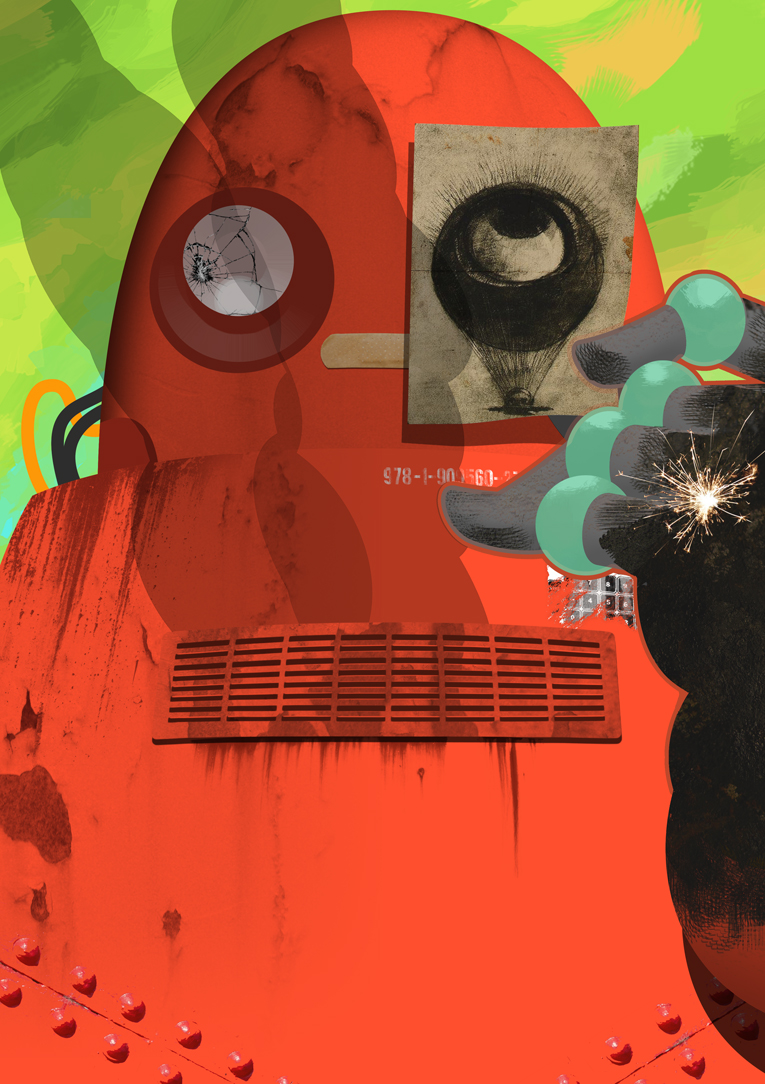
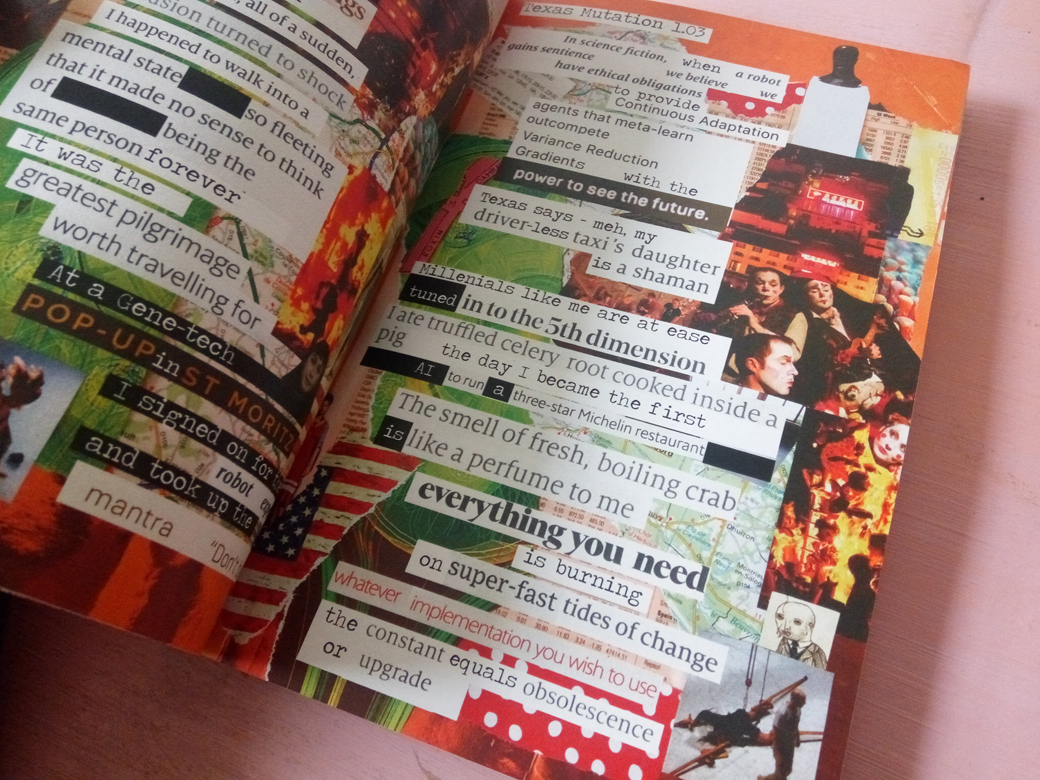
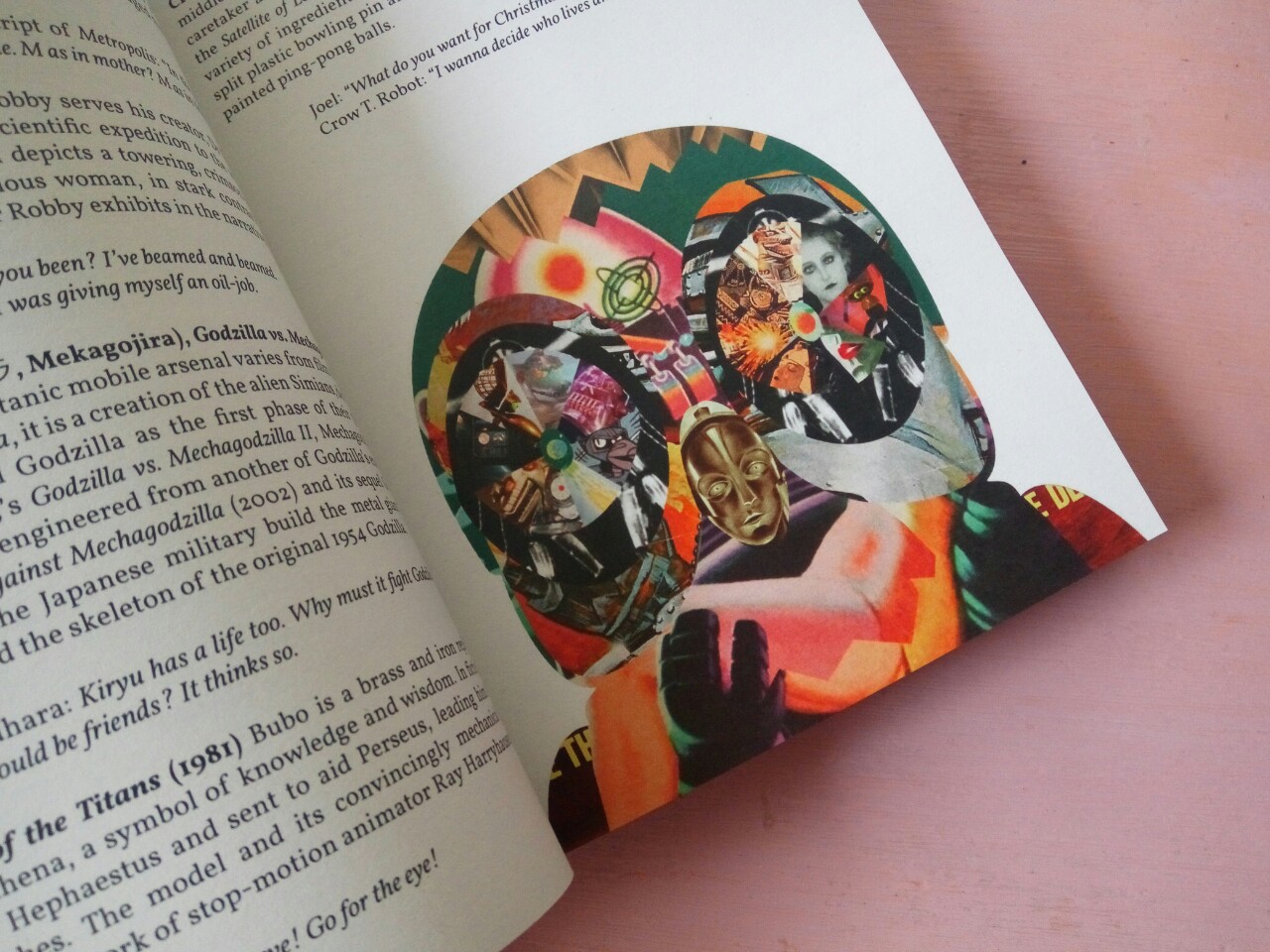
The robots aren’t coming – they’re already here. No, Robot, No is Sidekick Books Headbook No. 3: your interactive guide to the art, science, history and future of robotics and artifical intelligence. From cyborgs in cinema and droids in literature to automatons in classic mythology, we have a full programme.

148pp, ISBN 9781909560277

Please note: Due to customs issues, we can no longer ship directly to Europe. European friends, please order from our distributors at Inpress or through your local bookshop.

50 in stock

Description


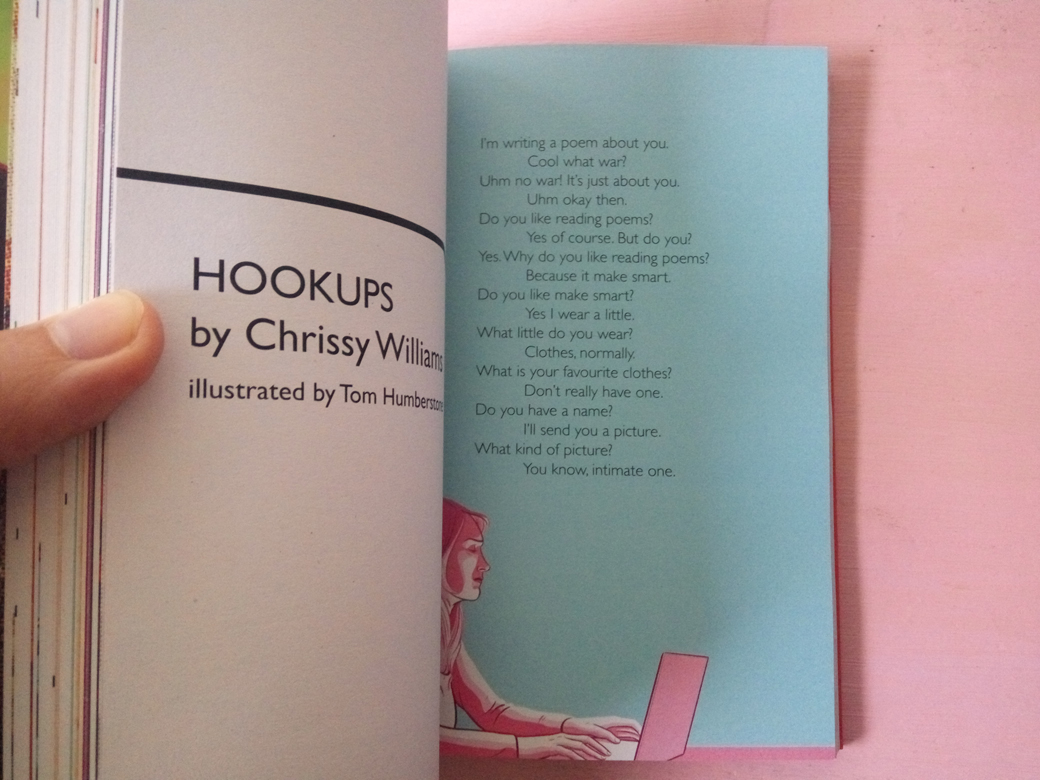
Headbooks: headlong expeditions into the half-known. A blend of the factual and fantastical, the lyrical and the visual – and fully customisable, with scrapbook and do-it-yourself pages.

The role of robots in our present and future is ever in flux. They are, and have been: dolls, toys, servants, pets, experiments, weapons, carers, companions. They threaten to replace us, to exceed us, to exterminate us. And we for our part go on remaking them – in our minds as much as in labs and lairs. Let No, Robot, No! act as your portable guide to the art and artifice of AI, automata and digital sentience. Hack into it. Overhaul and overload it. Keep it near you like a whirring clockwork heart.

Essential Components

Rowyda Amin, Andre Bagoo, Clive Birnie, Theodoros Chiotis, Angela Cleland, Iris Colomb, Joey Connolly, Ria Dastidar, Rishi Dastidar, Sarah Dawson, Harry Giles, Matthew Haigh, Cliff Hammett, Tom Humberstone, Yvonne Litschel, James Midgley, Gabrielle Nolan, Ollie Palmer, Astra Papachristodoulou, Abigail Parry, Flo Reynolds, Adam Samson, Ruth Stacey, Alex Stevens, Becky Varley-Winter, Katy Wareham Morris, Rebecca Wigmore, Chrissy Williams, Cat Woodward.


No, Robot, No! is the third book in the Headbooks series. For a trip back in time from robots to Rome, check out Bad Kid Catullus.

You may also like…

Cart

Products

CONTACT:

contact [a] sidekickbooks.com

Sidekick Books Site assembled by Jon.
Wordpress TwentySixteen theme used to power the news and books sections.