Books | Poems | News | About

sidekickBOOKS

Submissions Call: &Friends Series!

Send us your ideas for a collaborative, combinatory masterpiece!

Do you have an obsession? A subject that you think would make an incredible Sidekick-style book? If so, read on.

In a break from our normal Sidekick practice, we’re handing over the curatorial reins to you. We’re seeking proposals for the &Friends series, an experimental new series of amalgamatic poetry books, in which individual author-editors collate, curate, adapt and remix, combining original composition with work they’ve solicited or borrowed from elsewhere.

Please note: This call is not for single-author collections, but hybrid books, in the spirit of our Headbooks and Hipflasks.

We’re inviting 200-word proposals, along with a sample of 10-20 pages (not full manuscripts). In your submission, we’ll ask you to discuss the amalgamatic elements in your proposal and share your vision for the book.

You can view examples of two amalgamatic works in progress on the call page, and we suggest checking out the sample pages for our other titles to get a feel for what we’re looking for, as well as subjects we’ve already covered in depth.

Please read the full call for submissions and ask us any questions before sending proposals. We look forward to reading your work!

Deadline: 15 August 2026

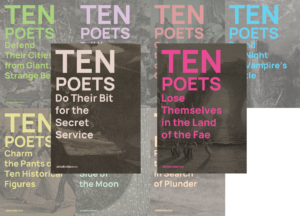
Submissions Call: Ten Poets Do Their Bit for the Secret Service / Ten Poets Lose Themselves in the Land of the Fae

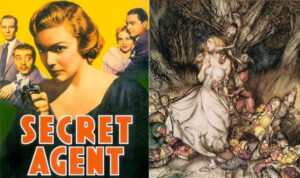
For pity’s sake, will no one think of the poets? For our Ten Poets series, we’ve sent these poor creatures into so many perilous situations (vampires’ castles, pirate ships, lunar missions, crime scenes, you name it!), without training, protective equipment or even a necklace of garlic! Do we regret our actions? Apparently not, because we’re doing it again! This time we’re dispatching our adventurers to spy and be spirited away with Ten Poets Do Their Bit for the Secret Service and Ten Poets Lose Themselves in the Land of the Fae. Decorative The full call is here, so firm up your alias, gather your goblin fruit and join us in strange new realms…

Deadline: 28th February 2026

Vampires vs. Pirates

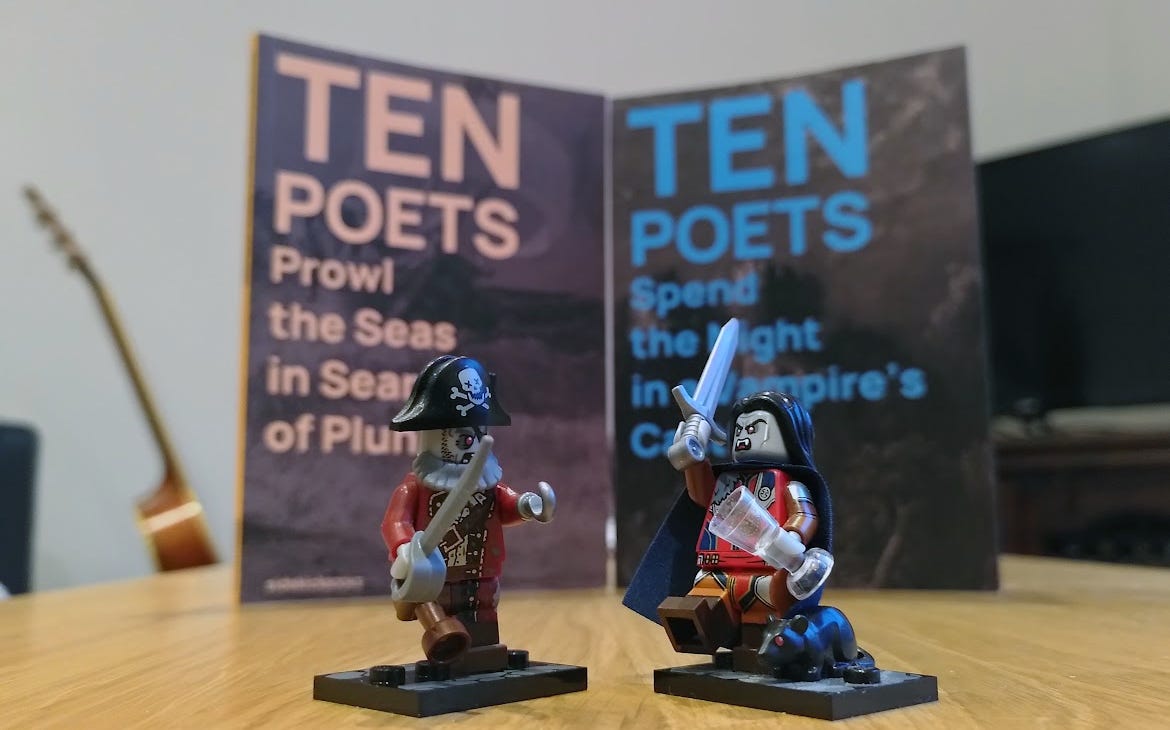
A zombie Lego pirate and Lego vampire clash swords in from of two books: Ten Poets Prowl the Seas in Search of Plunder and Ten Poets Spend the Night in a Vampire's Castle
From the ‘Foreword’ to Ten Poets Spend the Night at a Vampire’s Castle:
A tall figure descends the stairs at the centre of the great hall. He is the very picture of calculated languor and boredom, though passion burns in the depths of his bright, dissimilar eyes. He wears a frock coat like a second skin. His open shirt collar erupts from it like the spathe of an arum lily. He is himself peculiarly pale – not the pallor of death, but that of a beautiful alabaster vase. There are fine blue veins upon his features. He is possessed of a boldly prominent brow and delicately cut nose. The hairline recedes around the temples, but the hair itself is dark and thickly curled. The smile strikes at you like a knife – it is contemptuous, almost vindictive. Vampire? Or poet?
And from the ‘Cast Off’ of Ten Poets Prowl the Seas in Search of Plunder:
The last poem o’ this here book, Jim-Lad Womack’s ‘Admire Devaluates Scavenger (6, 2, 9, 8)’, finds sixteenth-century Spanish writer Cervantes poised o’er ‘is most famous novel, Don Quixote, wonderin’ ‘ow it be that such a blood-soaked thief an’ murderer as the pirate Blackbeard e’er came to be considered as loveable rogue. Indeed, mateys, piracy be a topic that raises somethin’ of a double quandary fer poets. On the one ‘and, it be the stuff o’ children’s parties an’ cheap fancy dress. Insufficient gravitas, ye might say. Pantomime patois twice as gratin’ as this one here. Parrots, posturin’, plastic-an’-elastic eyepatches (I once worn two o’ these, one on each o’ me good eyes, while steerin’ a canal boat, but that be a tale for another time). On the other ‘ook, if ye lean toward ‘istorical accuracy, all be grimness an’ squalor.
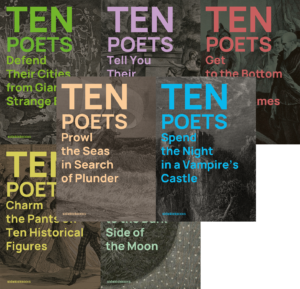
These are the latest two titles in our ‘10 Poets’ series, starring 20 poets we’ve never published before, many of them fresh to the scene. For those unfamiliar with the series, the premise is all there in the title of each book: contributing poets adopt a persona — lusty corsair, say, or hapless prey of some blood-sucking creature — in order to explore all manner of themes through a somewhat otherworldly lens. That’s it — plus a foreword/introduction and a surprise appendix. We’re seven books into the run, and we do think they look rather good together:
But it’s the poems, of course, which really count. Try a little spoonful of Nikki Marrone’s ‘Terms and Conditions Apply’, from Vampire’s Castle:
The invitation arrived folded in midnight. No envelope, just a note pressed to my chest: You’ve been chosen. Glow accordingly. I must have said yes. There’s no other way to explain how I got here. The hours between then and now were soft and slippery, like the ones gone missing when you look up and realise the light has changed. Now I’m seated between a duchess and a woman who used to be an actress (though no one mentions that anymore). The candlelight makes everything soft: the velvet walls, the blush on their cheeks, even the wine, which tastes like memory. “She arrived last week,” someone says, slicing a fig with the edge of her fork.
Delicious! You thought the poets would, in every case, find themselves alone with the vampire in question? The contents ae wilder than that. As noted in the foreword, “oddly enough […] this might be, as much as anything, a book of love poems.” And what about Prowl the Seas? Well, the idea of ‘plunder’ has been interpreted very cleverly, and while we do have a fair number of doubloon-addled ruffians aboard, there’s also room for poetry that plunges into the ‘broken, bent and battered’. Abigail Ottley’s ‘The Sea Always Wins, or, The Ageing Wreck Diver Speaks of the Ocean’ begins as follows:

The sea is an indifferent lover. She may be your delight, your mistress, your beloved, but she’s not the great prize you imagine. You, in your passion, your tender obsession, are smitten, held fast in her thrall. You see nothing but her beauty, her unplumbed depths, her colours endlessly shifting. But she is nothing if not sly, and her heart is full of perfidy and guile …

You can read the rest of the poem for free, on our website. Look out for more samples from our books on this Substack in the future, as well as further insights into the pieces and the processes behind their creation. In the meantime, choose your poison: grog from the belly of a hijacked sloop, or claret from the cobwebbed bottle cellar? Order it into your local booze-stop bookshop and help us stay afloat!

And if you are yourself a poet, check out our next calls for submissions to the 10 Poets series, closing 28 February 2026!

Submissions Calls 2026

NOW ACCEPTING SUBMISSIONS FOR OUR BRAND NEW ‘…&FRIENDS’ SERIES

DEADLINE: 15 August

In 2027, we’re aiming to publish four titles as part of an experimental new series of amalgamatic poetry – books in which individual author-editors collate, curate, adapt and remix, combining original composition with work they’ve solicited or borrowed from elsewhere.

This is a new concept in poetry publishing, so please read this call-out carefully. We’re inviting 200-word proposals along with a sample of 10-20 pages, not full manuscripts.

The format for the books will be as follows:

• Pocket-sized and perfect bound (11 x 16cm, the same size as our Hipflask Series, or Everyman’s Pocket Library books).
• 60-120 black-and-white pages.
• Typeset in 8pt Libre Baskerville, 13pt spaced (which means 9-12 words a line and roughly 26 lines per page).
• Attributed to ‘[Author Name] & Friends’ on the cover and spine. You will be listed as both editor and contributing author on databases.

What should I submit, and what is meant by ‘amalgamatic poetry’?

Amalgamism is a literary style which is conspicuously hybrid or patchwork in appearance, not just in terms of mixing genres and tones but also in terms of drawing on the work of multiple authors and/or editors, including comment and criticism alongside creative writing, utilising elements of non-literary media, and blurring the line between writer and reader.

Your proposed book should have your own original poetic compositions at the heart of it. But these should be supplemented by, and in conversation with, some combination of: 1) work you have solicited from other writers; 2) public domain works that you’ve remixed and recontextualised or otherwise reworked; 3) passages of editorial reflection and other kinds of writing adjacent to (but distinct from) lyric poetry.

There should also be a clear theme or thread of subject matter that frames the content. Our aim is to build a cohesive, collectible series with a shared aesthetic, where each title has a distinct focus.

To help you get a better idea of what we’re envisaging, we’ve put together two examples:

• Download Garden On Your Tongue Sample.
• Download The Hearth Sprite Sample.

And what exactly should my proposal contain?

• A working title for your book (this can be changed later).
• A description, including reference to amalgamatic elements (up to 200 words).
• A 10-20-page sample, giving a flavour of the contents.
• A short bio (100-200 words).

Why not just plain old single-author collections?

Since our inception, we’ve wanted to challenge the idea that single-author collections are the only viable format for books of new poetry. We believe that contemporary literature should ideally not be a contest to reveal and elevate certain individuals, but a means by which we become increasingly aware of, and empathetic toward, each other’s lives, experiences and imaginations, and enriched by these connections. To that end, we’ve explored various kinds of hybridity across our titles; this latest idea is essentially a hybrid of treasury, treatise and single-author collection.

What if I’m not UK-based?

We accept submissions from outside the UK, but be aware that bookshops near you may not be able to stock the book, and ordering extra copies will incur international postage fees.

Will I be paid?

The main author/editor of each book will be paid 40% royalties from profits (we will supply six-monthly statements), plus five copies of the book on publication and a 40% lifetime discount on all Sidekick titles. If we are successful in gaining additional funding we will disclose this and offer an advance. Our own finances don’t allow us to offer an advance without outside funding. All profits we make on individual titles at the moment are put back into the press.

What support will I receive to put this book together?

EDITORIAL: Jon and Kirsten will work with each author/editor to understand their vision for the book and act as sounding boards for layout, structure, copyright, illustration etc. If this is your first time curating/editing a full-length MS, we will be available to help with any questions or concerns, troubleshoot any challenges and make this as enjoyable a journey as possible. As part of the process, we will schedule regular check-ins and ensure you feel confident at each turn.

PRODUCTION: We will typeset, proofread, print and distribute the book, ensuring you are happy with the final files before we go to print.

PROMOTION: We work with the brilliant Inpress, who market Sidekick titles to bookshops, and we will promote the title through our website, social media channels and newsletter, as well as sending out review copies. We will help organise a launch for the title, and we attend book fairs throughout the year to get Sidekick titles out to new, enthusiastic audiences.

Can a book have more than one author/editor?

You are more than welcome to submit a collaborative proposal, but royalties from profits will be split between the main authors/editors.

Can I include previously published work/simultaneous submissions?

Please do not include submissions currently under consideration elsewhere. Up to 10% of your own writing or your commissioned pieces may have been published in journals, but please do not send your own writing or commissioned work that has already appeared in book form. Public-domain pieces are the exception here (hey, we can’t time-travel).

If the proposal contains collaborations, or curates/reuses other people’s work, should I be credited as author?

This is why we’re going with the ‘[Author Name] & Friends’ main attribution. We can list the names of additional contributors on the back cover and title pages.

Can Sidekick cover the cost of using copyrighted material in my book?

Unfortunately not. Any illustrations and texts by other authors should be copyright-free, unless you have agreed free use for commercial purposes with the author or artist. We can advise on sources, ensure Creative Commons compliance and even conduct a limited amount of picture research for you. You are welcome to commission original pieces for the book. All contributors will receive a copy of the finished product, plus a lifetime discount on Sidekick titles.

Does Sidekick accept collaborations with A.I.?

No. While creative A.I. collaborations are a valid experimental art form, we cannot consider work that makes substantial use of A.I.-authored components. Sidekick Books is a member of the Society of Authors’ Human-Authored Scheme, in recognition of the ethical issues A.I. raises around authorship and the feeding of copyrighted materials into LLM training datasets, as well as the social harms enacted by large A.I. corporations and the environmental impact of data centres.

We would also ask that neither you nor your contributors submit work that has been processed by writing tools like Grammarly, even if you are concerned about typos and spelling errors. We are interested in your voice and ideas, and as editors we would much prefer to fix mistakes than receive immaculate A.I.-generated writing.

We will check all material submitted to us, as best we can. No detection method is infallible, so we will use our best judgement and discuss any issues with you.

I still have a few questions…

Email contact@sidekickbooks.com and we’ll do our best to answer!

I’m ready! Where do I send it?

Send your submission as a single file (PDF or docx) to contact@sidekickbooks.com with the subject line ‘Submission: …&Friends Series’.


Submissions call: Vampires and Pirates!

What’s that on the horizon? Is it a bat? A ship? No, it’s our double open call for the next two titles in our Ten Poets series! Launch your best words our way for:

Ten Poets Prowl the Seas in Search of Plunder and Ten Poets Spend the Night in a Vampire’s Castle Decorative If you’re not familiar with the Ten Poets series, each title dips into a beloved pop-culture theme, from murder mysteries to ghost stories to erotica to monster movies. We want you to think creatively and show us your own take on the subject each time. Do you discover something strange? Do you think about your life on Earth? Do you make it to the moon at all? Submissions should have the general character of a poem or poem-adjacent text, but they do not have to be straightforward lyric pieces. You could create a prose poem, vignette, short lyric essay – in fact, we encourage you to think in terms of longer, looser forms (up to 500 words). This follows the trend established over our last eight anthologies, which mixed and combined poetry with elements of essay, guidebook, puzzle, flash fiction and so on. For more visual pieces, please note that all pages will be printed in black and white, and will be in portrait format.

Check out the submissions call for more information and FAQs, and feel free to email us with questions.

Deadline: 18 June

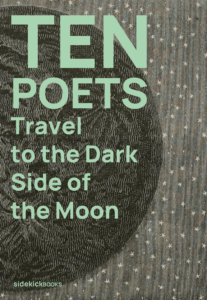
Submissions Call! Ten Poets Travel to the Dark Side of the Moon

Hot on the heels of our first four Ten Poets titles, we’ve gotten all fired up for another one! Launch your best words our way for

Ten Poets Travel to the Dark Side of the Moon! If you’re not familiar with the Ten Poets series, each title dips into a beloved pop-culture theme, from murder mysteries to ghost stories to erotica to monster movies. We want you to think creatively and show us your own take on the subject each time. Do you discover something strange? Do you think about your life on Earth? Do you make it to the moon at all? Submissions should have the general character of a poem or poem-adjacent text, but they do not have to be straightforward lyric pieces. You could create a prose poem, vignette, short lyric essay – in fact, we encourage you to think in terms of longer, looser forms (up to 500 words). This follows the trend established over our last eight anthologies, which mixed and combined poetry with elements of essay, guidebook, puzzle, flash fiction and so on. For more visual pieces, please note that all pages will be printed in black and white, and will be in portrait format.

Check out the submissions call for more information and FAQs, and feel free to email us with questions.

Deadline: 15 December

Spotlight: LOOK AGAIN

The call for submissions for our latest books, the Hipflask Series, is open until 25th October 2021. These are unusual titles, even by Sidekick standards, so we’ve put together a series of short posts, one for each of the four books, breaking down the ideas and influences behind the book and what we’re looking for from you. This time we’re squinting and spying to find the covert comms in the texts all around us, with…

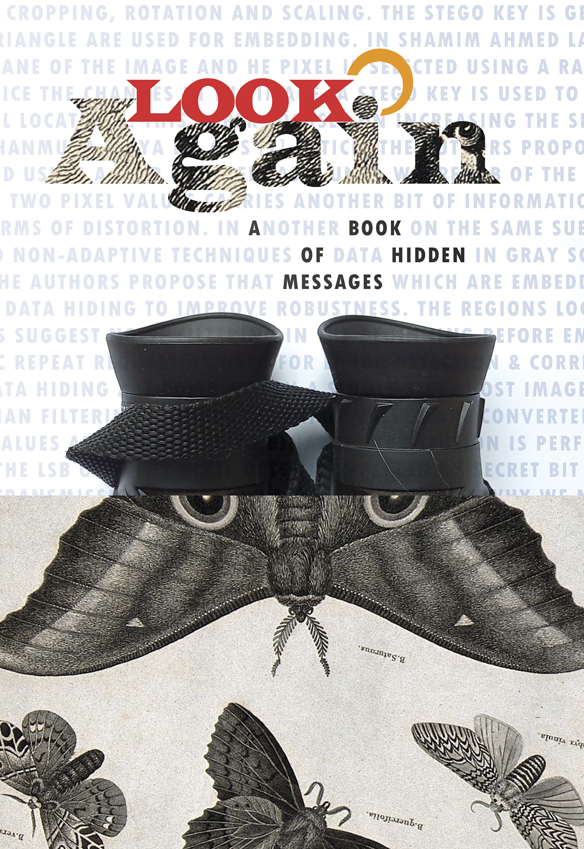
Book cover for Look Again, featuring a moth melded with a pair of binoculars

What’s the big idea?

“I carry my unwritten poems in cipher on my face!”
– George Eliot

We all want to be in on a secret, to have some subtle inside knowledge that gives us mastery over a subject. It’s the root of conspiracy theories, espionage and even honest translation. Just as we look for faces in everyday objects, even if the original author hasn’t planted a message in their work for someone to find, chances are we’ll spot one anyway.

Who and what gave us the idea for this book?

There’s a rich tradition of text-bothering in literature, and we’ve been keen to revisit this theme since our micro-anthology Korsakoff’s Paper Chain, which saw a hapless Meccano manual burned, eaten and dissolved, then painstakingly restored by poets making their best guess at its contents.

What are we looking for in submissions?

We’re after two different kinds of text for this title: firstly, pieces which conceal, typographically, a hidden message which an average reader stands a good chance of being able to figure out. Each piece should be no longer than 250 words, 25 lines of verse, or one page (see template for page size).

Secondly, we want your discoveries of hidden messages inside existing texts. You can send us high-res scans of texts you have annotated, blocked out or doctored to reveal the message, or you can send us an image accompanied by an explanatory text. The explanation should be no longer than 250 words, 25 lines of verse, or one page (see template for page size). The image should fit on one page. Bear in mind that the book will be printed in black and white.

There may be copyright issues with reproducing some texts, and we will have to examine these on an as-they-come basis. We recommend using texts that are in the public domain.

Please send us no more than three pieces per individual submission.

What are we not looking for?

Brand names, fleeting trends and adult content. We want the Hipflasks to be as enjoyable 20 years from now as they are today, and we want to take them to as large an audience as possible.

Where to look for inspiration?

• The New York Public Library has an excellent selection of text and image erasure art: https://www.nypl.org/blog/2015/04/20/erasure-literature

• Spycraft of all kinds, e.g. singer Josephine Baker’s secret messages to the French resistance, written in invisible ink on her sheet music.

• Vladimir Nabokov’s genre-dodging Pale Fire chooses not to deface or erase its core text (a poem by the fictional writer John Shade), but instead drowns it out with the pompous footnotes of his narrator, Shade scholar Charles Kinbote.

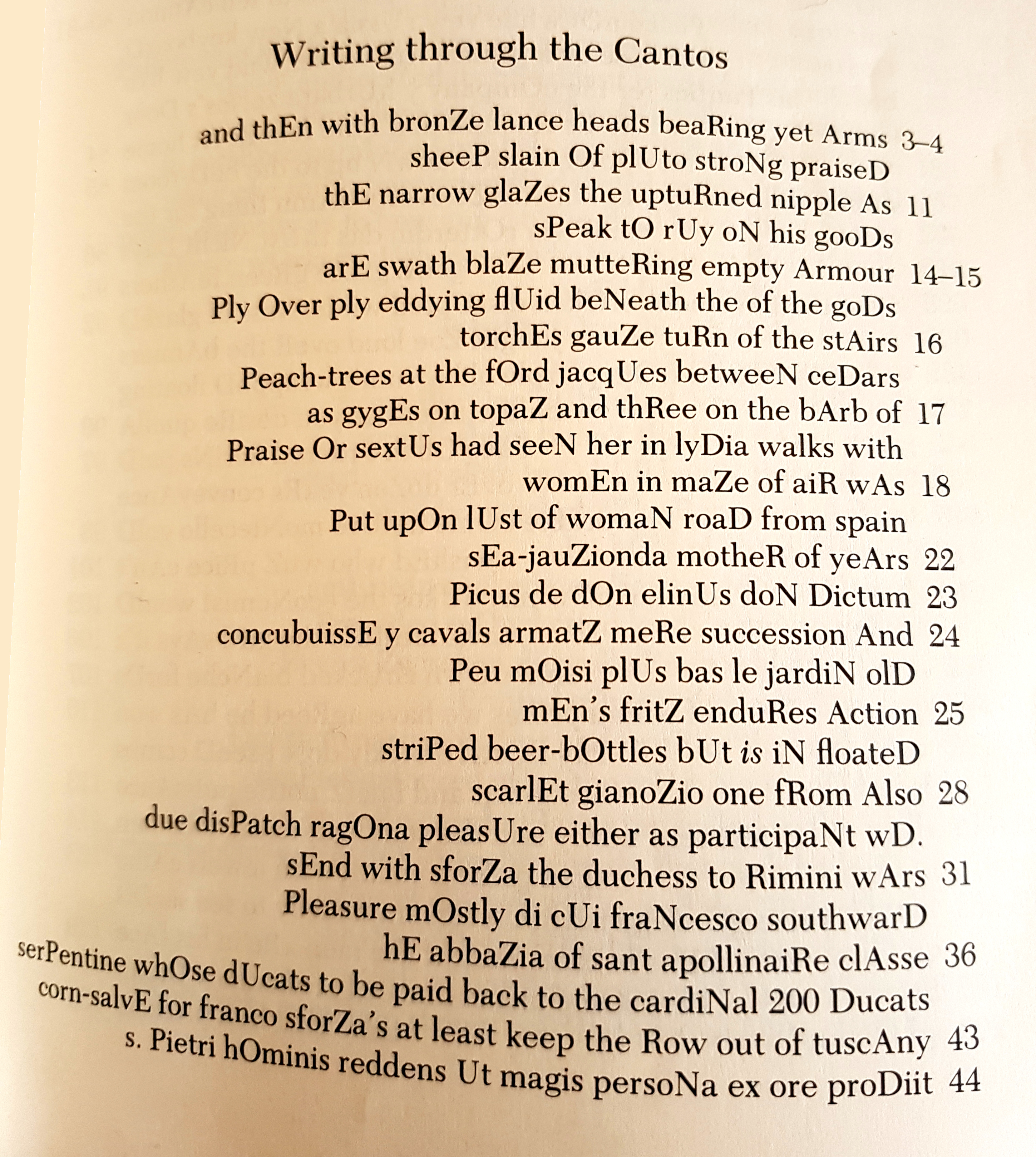
Writing Through The Cantos by John Cage takes a typically disruptive approach to Ezra Pound’s opus, as Cage seeks and caps up the author’s name hiding in various lines:
page from John's Cage's poem Writing Through The Cantos

Any further questions?

Check the call for submissions in case your answer lies there. If not, email contact[at]sidekickbooks.com or find us on Twitter @SidekickBooks.

Spotlight: YOU AGAIN

The call for submissions for our latest books, the Hipflask Series, is open until 25th October 2021. These are unusual titles, even by Sidekick standards, so we’ve put together a series of short posts, one for each of the four books, breaking down the ideas and influences behind the book and what we’re looking for from you. Today we’re encountering the mixed feelings, tense tangos and dark duels of…
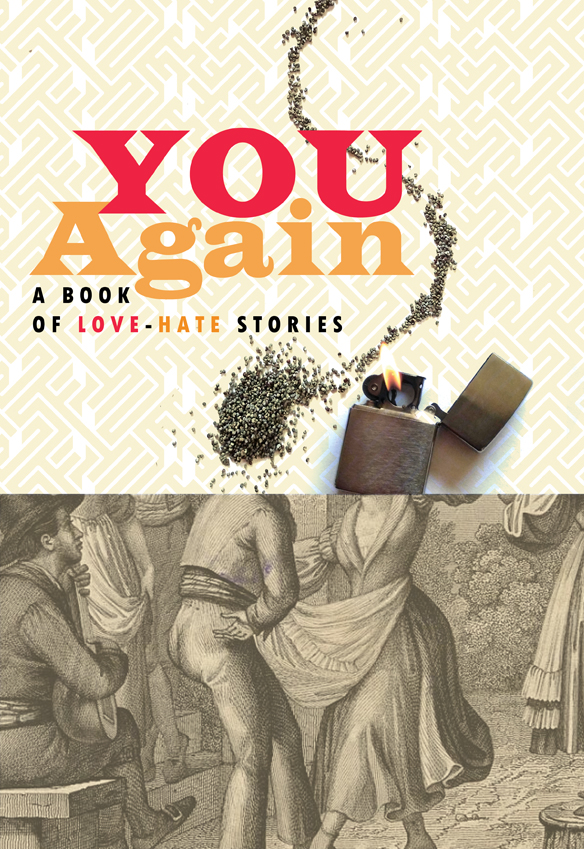
Book cover for You Again, featuring a dancing couple whose heads are a lighter and a trail of gunpower.

What’s the big idea?

Smeagol: [weeping] “I hate you. I hate you.”
Gollum: “Where would you be without me, uh? Gollum, gollum… I saved us! It was me! We survived because of me!”
Smeagol: [stops crying] “Not anymore.”
– Lord of the Rings: The Two Towers

You Again is a book bursting with romance and rows, magnetism and antagonism, sweet-sorrow partings and good-riddances. Contributors will each write about a person, place, idea, object etc. that both attracts and repulses them, raising both their heart-rate and their blood pressure simultaneously.

Who and what gave us the idea for this book?

Love-hate relationships have been written about since time immemorial. Roman poet Catullus’ in Carmina 85 (Odi Et Amo), wrote:

“I hate and I love. Wherefore I do this, perhaps you ask.
I do not know, but I feel it being done and I am tormented.”

More recently in history, we’ve seen non-romantic examples. Take the fraught dynamic between James Joyce and Dublin, the hometown he fled but could not forget. Or Michael Bluth’s bungee-cord attachment to his dysfunctional family in Arrested Development. Something about these relationships keeps us coming back time and again.

What are we looking for in submissions?

We want your lyrical narrative or critical writing on something you both love and hate. This could be a person, an institution, an abstract concept, or anything else. We want to see the conflict and complexity that characterises these relationships laid out on the page.

For structure, think prose poems and micro lyrical essays. Maximum length if submitting in prose form: 600 words per piece. Maximum length if submitting in verse form: 50 lines per piece, and a maximum of three pieces.

What are we not looking for?

Images, brand names, fleeting trends and adult content. We want the Hipflasks to be as enjoyable 20 years from now as they are today, and we want to take them to as large an audience as possible.

Give us an example.

William Wilson – Edgar Allan Poe’s short, sharp tale of paranoia and guilty conscience sees the eponymous speaker encounter an identically named man who follows the narrator throughout his life, seemingly to highlight his inadequacies and faults. The speaker begins by being dazzled by the other Wilson, and being mistaken for his brother, but this enchantment gradually turns to loathing and resentment, culminating in tragedy.

Wuthering Heights (Emily Bronte) – one of the best-known literary love-hate tales. The pendulum of affection between Catherine and Heathcliff swings in the winds of the rough moors, from romance to rage to ruin.

Here You Come Again (Dolly Parton) – a classic Dolly song about getting back on your feet after heartbreak, only for the heartbreaker to stroll back into town and undo all that hard work by smiling that smile.

No Children (Mountain Goats) – this lilting, caustic ballad tells of a marriage of mutual, unbreakable loathing. A surprisingly popular song choice for weddings.

Any further questions?

Check the call for submissions in case your answer lies there. If not, email contact[at]sidekickbooks.com or find us on Twitter @SidekickBooks.

Spotlight: ROLL AGAIN

The call for submissions for our latest books, the Hipflask Series, is open until 25th October 2021. These are unusual titles, even by Sidekick standards, so we’ve put together a series of short posts, one for each of the four books, breaking down the ideas and influences behind the book and what we’re looking for from you. Today it’s the turn of our Puckish playbook, full of rules and misrule…

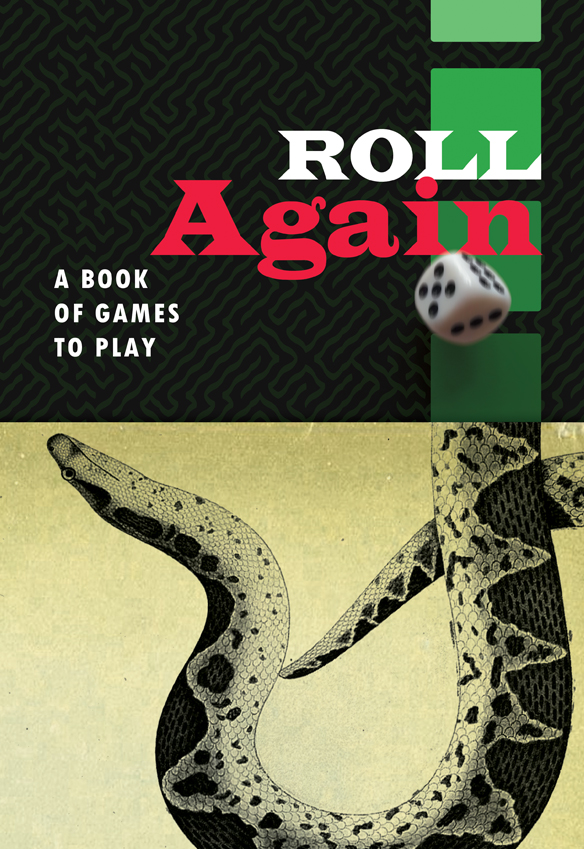
Book cover for Roll Again, showing a dice rolling along a game board path that turns into a snake.

What’s the big idea?

“Not only does God play dice, but… he sometimes throws them where they cannot be seen.”
– Stephen Hawking

Games are not just pastimes or diversions. They allow to us to bat about ideas, meet and overcome resistance, come together with others (or find new ways of being with ourselves), and create new works as by-products of our play.

Games and poetry cross over in these goals, and this book gathers together new games with creative, poetic elements, in a jostling, joyful compendium for rainy days, holidays – all days, really.

Who and what gave us the idea for this book?

Instructive, or didactic, poetry has been around for centuries. Ovid’s Ars Amatoria, Sei Shonagon’s The Pillow Book, Max Ehrmann’s Desiderata and even Mary Schmich’s ‘Wear Sunscreen’ speech (later set to music by Baz Luhrmann) all offer guidance on how to progress. This book gathers similarly instructive work, but instead of life, we want to know how to play games. Your games.

What are we looking for in submissions?

Send us the rules or explanations to your own invented games – up to three per individual submission. No game is too simple. They should be at least theoretically playable by readers, and as accessible as possible (i.e. not requiring expensive or exclusive equipment or staging). They can be reimagined versions of existing games, physical or mental, tabletop or outdoor, but the submission should consist mainly of a description of how the game is played.

You can include diagrams for illustrative purposes, but bear in mind that the book will be printed in black and white, and please take into account the page dimensions (see template in call). We’re looking for pieces not longer than 600 words for prose/prose-like text, 50 lines for verse, or three pages (again, check the template for the page dimensions).

What are we not looking for?

Brand names, fleeting trends and adult content. We want the Hipflasks to be as enjoyable 20 years from now as they are today, and we want to take them to as large an audience as possible.

Where to look for inspiration?

• Adam Dixon’s Gamepoems are a great place to start. Find simple ways of slipping poetry into your daily wanders.

•Sidekick’s own interactive Headbooks series includes puzzle and play pages linked to the poetry in the books.

Holly Gramazio has created a treasury of digital and analog games. Among her many projects is a website with accompanying book called New Rules, exploring modes of play during the pandemic.

House: Some Instructions by Grace Paley is a ladder or staircase of a poem, ushering us into the emotions of the house in question and guiding us in its care.

How to Make Stew in the Pinacate Desert by Gary Snyder takes the form of a recipe, seasoned and peppered with environmental details.

Any further questions?

Check the call for submissions in case your answer lies there. If not, email contact[at]sidekickbooks.com or find us on Twitter @SidekickBooks.

CONTACT:

contact [a] sidekickbooks.com

Sidekick Books Site assembled by Jon.
Wordpress TwentySixteen theme used to power the news and books sections.