News

Baguettes and Baccalaureates: or, French Poetry and the Problem of Academia

by the Judge

What is the best career for a person who aspires to write poetry? We have all asked ourselves this question at some point or another, seen how the business of verse seldom makes money, and more frequently takes it away. The answer is, inevitably, as subjective as poetry itself. Some will desire an occupation that in some way keeps them in touch with the art, like jobs in editing and publishing, or in libraries. Others will go for something that is wholly unrelated to writing, perhaps a little adventurous or proletarian, with the idea of bringing these interesting experiences into their work. Others yet will base their career around an ethical choice, one which informs and reflects the statement that is made by their poetry, and some will go for drudge work in exchange of spare time to read and write (say, a night receptionist). A few strongly driven individuals will put their professional career on an equal plane with their artistic one, choosing something difficult, remunerative and highly demanding, of the type that is seldom thought to be compatible with cultivating an art.

For many, though, the most obvious answer seems to lie in an academic career. Anyone who studies or has studied literature at university (and if you are reading this article, the odds are that you do or have) will know that the demands of an academic life on your spare time are not too burdensome. Sure, students complain all the time that their workload is full and that they are snowed under with books, but in reality the pace of life is nowhere near as hectic as that of someone working in a bank, in a real estate agency or for a major newspaper, to make three easy examples. Most importantly, an academic spends his or her time doing exactly what an aspiring poet loves doing in his or her spare time – reading and learning about literature.

For poets, in fact, there is something so ubiquitously seductive about an academic career that many published artists are found precisely in that field. Though there are examples aplenty from almost any country, the most representative case that I know of is found in France. The French have an exceptionally heterogeneous poetic scene, one that easily and frequently crosses over with other arts and mediums, and in which the performative aspect of poetry is very much cherished (the example I always enjoy putting forward is the way their poetry communicates with song-writing – an intimate relationship which would be worth its own article). When it comes to the more traditional ‘written word’, there is a surprising correspondence between the poets who adhere to that format and their common professional background.

I am anything but an expert on French poetry today, so what I say must be taken with a pinch of salt. It is only that every contemporary French poet I have come across so far seems to teach or be involved in teaching in one way or another. Pierre Alferi is the first son of Jacques Derrida, and he teaches at the École des Beaux-Arts in Lyon, as well as doing some translation. Olivier Barbarant teaches in high school. Philippe Beck teaches at the University of Nantes, and he too works in translation. Benoît Conort teaches at the University of Rennes II. Antoine Emaz teaches in middle school, and Sylvie Fabre G in high school. Jean-Marie Gleize directed the Centre d’Études Poétiques of the ENS (École Normale Supérieure) of Lyon, and now directs the experimental magazine “Nioques.” Emmanuel Hocquard coordinates public lectures at the Musée d’Art Moderne de la Ville de Paris. Jean-Michel Maulpoix teaches at the University of Paris X-Nanterre. Christian Prigent taught in secondary school. Valérie Rouzeau makes her living with ateliers in schools and translations. Martin Rueff teaches at the University of Geneva. Ryoko Sekiguchi teaches in the INALCO (Institut National des Langues et Civilisations Orientales) and the Parisian Centre of Research in Oriental Languages and Civilisations.

I have, of course, come across some exceptions – Nathalie Quintane is an actress – along with several poets whose profession I simply was unable to find out (Mathieu Bénézet, Olivier Cadiot, Gérard Noiret, Jean-Baptiste Para, André Velter – and I might as well add a memorandum to publishing houses, asking them to write poet bios which actually tell us what on earth that person does with his/her life, and not just the number of magazines in which they’ve been published!). On the whole, however, and as long as we consider only that ‘genre’ of poetry that is primarily written rather than performed, painted, or otherwise executed, the equation ‘poet equals professor’ holds in a great deal of occasions.

Though France is a bit of a borderline case, a similar story could be told in any other European country. In the UK, it’s become extremely commonplace in the last decade for debut collections to come out from poets who are either studying towards a poetry-related PhD or who have already taken up a University post, usually teaching creative writing. This is the case for three of the recipients of Faber’s recent New Poets awards, and a large number of the poets in the Salt Book of Younger Poets, most of whom are still working towards their first books. It is probably excessive to say that most poets in Europe are academics, but it is certainly true that no profession is more common among European poets than that of the academic.

Such a preponderance of professors among poets calls for some questioning – and the main reason is the effects that it has on poetry itself. The concern is that homogenization of the professional background for poets could result, at least partially, in a parallel homogenization of the poetic discourse. In simpler terms, if all poets do the same thing, it makes it more likely that they will write the same things. I have invoked France as an example, and I might as well continue along that road. My impression is that contemporary French poetry, while demonstrating great linguistic virtuosity of execution from one artist to the next, sees an abnormal amount of its production falling under the same genre – what we usually call ‘experimental poetry.’ Employing such a dubious expression in a sentence which is apparently critical of another’s poetic culture is the kind of thing that could get me stoned to death, but I repeat that these are no more than impressions – take them as you wish. I realise also that I should provide some evidence as to why I think French contemporary poetry is so especially experimental, but such a discussion would see me straying way off my topic. The most I can do is to encourage anyone to go out and read it and make up their own mind. If anyone can read the verse of someone like Alferi or Hocquard and contend that it is not experimental, then I have no idea where the expression can be used at all.

It is also worth asking ourselves whether academia is ideal for poetry from an individual point of view, as well as the collective one. It is true that academia leaves you a good deal of spare time, if you’re the type of person who knows how to organise his/her work-load. The downside is that the hours you do spend working are so intellectually intense that the brain comes out of them exhausted. It is hard to write an essay about the verse of Wallace Stevens and then go home and write your own poetry as well.

It will be noted that an academic career allows you to read many other poets, more than you would manage to go through while working in any other profession. While this can be helpful in terms of expanding your technique and your understanding of poetry, it doesn’t necessarily help your poetry itself. Too much breaks the bag, and an excess of time spent reading means less space for other work experiences, and perhaps life experiences in general. It is one’s life experiences that are most often the subject of one’s poetry, and not the poetry of other people. If you spend all your time in the library (and no, a holiday in Lisbon or a trip to go bungee-jumping does not count as evacuation!), then it will be harder for your own poems to get out of the library as well.

None of this is to argue that academia is ‘bad’ for writing, as much as to provide some objections to the seductive myth that academia is the best possible outlet for people with poetic aspirations. You cannot count the number of people who are not poets, of course, but in my experience I have certainly known numerous individuals who were talented and exceptionally prolific in creative writing as undergraduates, and who greatly slowed down or stopped their output altogether as they ascended in their professorship. Would they have done the same if they had chosen a profession that does not already immerse them in literature at every hour? We will never know.

The connection between academia and poetry is as old as Plato’s original Academy and it enriches both. The synergy between the role of the academic and that of the poet, on the other hand, is a societal construction with a rather short history. Poets five-hundred years ago used to be diplomats, warriors and spies. I say this with no affectation of nostalgia. I do not advocate swapping the societal constructions of today for those of yesterday (and there are no courts for us to be court-poets any longer!). It is only to say that there are no limits to what you can do alongside writing. Some may tell you that you probably won’t be a poet if you are an officer in Iraq, because the two things are spiritually incompatible. Others may suggest that you cannot write verse if you are going to be a professional athlete, because the demands it puts on your time are too intense to let you pursue your cultural interests as well. We say that’s nonsense. As long as you have access to a pen and paper, the only limits to what you can write are the limits of your imagination. If you feel that the best way for you to be creative is to become a professor, then go ahead. Just don’t be scared to consider the alternative. We already have many voices telling us what it’s like to write poetry from inside a library. If you want to write something original, consider doing something original: get out of that library.

The Return of Irregular Features!

Our features and reviews section is alive and kicking once more from this moment on. Under the editorship of ‘The Judge’, a raft of new reviewers will be setting their critical sights on new and recently released poetry books, with a new review going up every Sunday. Features will be posted on Wednesdays but may be a little more intermittent.

The first of the reviews is up now and sees our reviews editor taking on Sam Riviere’s 81 Austerities.

The Parrish Lantern reviews ‘School of Forgery’

A new review of School of Forgery is up at The Parrish Lantern blog. Gary Moon, the reviewer, writes:

“… beneath all that artifice, beneath the games there is a candour that resonates, a passion that hooks you in past the word-bothering puzzles and clever facade, past the glitter-ball and the wizard of Oz contrivances, you find the poet, obsessed with language, and who has the ability to use it, not just as poetic gesture but with a depth, a strangeness and a beauty that beguiles.” 

Thanks, Parrish Lantern!

Birdbook II/Coin Opera II update!

So a brief update is very much in order on our next two books, Birdbook II: Freshwater habitats and Coin Opera II. To accompany this, I’ve tried to find an image that captures both projects.


Birdbook II is very nearly ready to go printerwards. We’ve received a foreword from the fantastic Tim Birkhead, proofing has been done and it’s just minor tweaks to go. For the uninitiated, this is the second book in a series of four, in which we aim to gather one poem and one illustration for every species of British bird. Each book covers a group of habitats. Volume II is looking great, helped in no small part by the return of Lois Cordelia, who has once again provided her beautiful artwork for the cover.

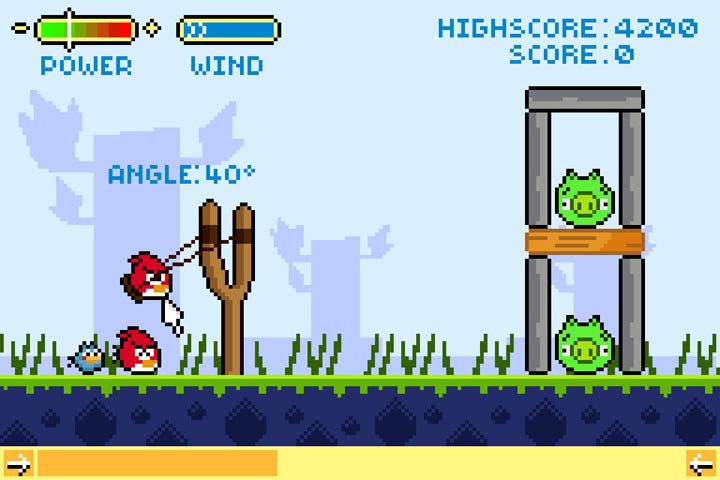
Coin Opera II, our second anthology of poetic tributes to computer games, is looking good too. With cover art by the very talented Mike Stone and a whole bundle of computer game-themed formal Easter eggs (including what may be the world’s first set of ‘boss’ poems), this is going to be a mighty power-up from our initial micro-anthology, back in 2009. A foreword from Uncanny X Men writer and video games journalist Kieron Gillen, a spot more collaging and rearranging, a good old proof and it’ll be off to press before you can say Hadouken.

More updates to come. Stay tuned!

Don’t forget you can follow us on Twitter.

YPN August Challenge draws to a close

The final of my 15 simple/weird formal exercises is up on Young Poets’ Network today and the deadline for mini-collection submissions is tomorrow!

Here, then, to recap are the 15 challenges, with examples by yours truly:

1. Bookshelf Poem
2. Squid Poem
3. Censorship Poem
4. Helicopter Poem
5. Skeleton Poem
6. Jungle Trail Poem
7. Hollywood Remake Poem
8. U-Boat Poem
9. DVD Extra Poem
10. Manga Poem
11. Scoop! Poem
12. Google Search Poem
13. Vampire Aubade
14. Earthquake Poem
15: Chinese Whisper Poem

Poets for Pussy Riot

Both Kirsty and I will be reading at this next week in support of the imprisoned members of Russian punk band Pussy Riot.

Poets for Pussy Riot
Wednesday August 29th 2012  – 7pm until late – Free entrance
at the Rich mix arts centre, main space venue,
35-47 Bethnal Green Road, London E1 6LA             020 7613 7498      
With the news that Nadezhda Tolokonnikova, Maria Alyokhina and Yekaterina Samutsevich of the Russian punk collective, Pussy Riot, were sentenced to two years in prison for a wholly necessary and valid political protest, contemporary poets in London will come together in a unique evening of readings, featuring original poetry and text, as well as the words of Pussy Riot themselves. This event is an act of solidarity through the medium of poetry – a celebration of the courage and spirit of fellow writers of this generation, writing for real political change in a country that needs it.
Featuring readings from over 30 poets including Tim Atkins, David Berridge, Becky Cremin, Kirsty Irving, Francesca Lisette, Chris McCabe, Reza Mohammadi, Sandeep Parmar, Tom Raworth, Jack Underwood, James Wilkes and many others. 
Email: steven@sjfowlerpoetry.com for further details

Self-esteem tips from beautiful rich people

I’ve been out of the loop musically for a while now, so forgive me picking up on a two-year-old song, but what spell has Katy Perry cast over the internet that I can’t find a single angry review of ‘Firework’?

Perry seems to have rehabilitated herself since the days of ‘I Kissed A Girl’ (slammed by Gossip singer Beth Ditto as a “boner dyke anthem”) and the ridiculously-defended ‘UR So Gay’, and decided that the real PR gold lies in Aguilera Hills. Xtina’s 2002 song ‘Beautiful’ basically did ‘Firework’ with a stronger vocal range eight years prior to Perry’s effort.

Let’s compare the two videos:

Beautiful (2002)
Negative female body image (skinny girl examining self in mirror)
Negative male body image (skinny boy lifting weights, surrounded by pictures of muscular men)
Bullying
Gay kiss
Suggested transgender issues (not clear whether the cross-dressing guy is meant to be a transvestite or a transgender woman)

Firework (2010)
Negative female body image (girl at pool party afraid to take off robe around her skinny friends)
Childhood cancer (how a bouncy pop song is supposed to help you cope with that, I ain’t sure)
Gay kiss
White gay getting mugged by group of mixed-race men (hmm, really breaking down the barriers here) and using – get this – magic tricks to see them off. Sound advice for urban dwellers.

So I guess let’s start with the kiss in each case. I was never a Christina fan and lyrically ‘Beautiful’ is still cloying and self-helpy in that all-American way, but hell, at least it was written by someone who understood what it was like to be gay. At the time, the video did piss some people off, for no reason other than that the kiss between two men was passionate and sustained. Aguilera has not been averse to the odd faux-gay stunt (snogging Madonna onstage with Britney while wearing a sexy wedding frock was particularly cynical), but this, as saccharine as it was, felt sincere. Aguilera herself never comes into contact with the characters, singing from a bare room while the action goes on outside.

In contrast, the characters in Perry’s video, watched over by their firework-boobed guardian angel, seem chucked in to show that KATY PERRY CARES ABOUT UGLY PEOPLE AND CANCER CHILDREN. All they need is her singing and pyrotechnics to teach them not to care that people want to kill them, or leukaemia wants to kill them, or that muggers want to kill them, or that they want to kill themselves. Don’t be a downer! Come and boogie your knife wounds away!

Perhaps if Perry herself had at least appeared in the video without a trace of makeup, it would have been a start towards sincerity or solidarity with the girl suffering low self-esteem, but no, she’s painted, coiffed and gowned, placed above them all as a guidance figure and ultimately assuming a role of superiority in magically granting them the self-confidence to rise above their situation. It’s dishonest. Life, our bodies and our minds simply do not work like that.

Money does, though, and brand awareness. And yes, both parties can be accused of this. Xtina got to reinvent the ‘Dirrrty’ version of herself with a serious ballad, just as Perry got to sing a clubworthy tune to try and get the gay community back on side after her unapologetic blunders. ‘Firework’ is more obviously cynical though, trying to crowbar serious issues into a jaunty soundtrack from an outsider’s perspective. Gaga’s ‘Born This Way’ did a similar thing, the difference being that that was worked more as a defiant call to arms than hurling a copy of Chicken Soup for the Soul at people in varying states of despair. ‘Born This Way’ and ‘Beautiful’ are, crucially, sung from a first-person perspective, placing empathy high on the agenda, not forgetting our problems with a big bowl of strawberry ice cream.

Following Ditto’s criticism, Katy Perry said that it was “tacky” to criticise someone else’s music. It’s not. That’s how progress is made. It’s tacky to colonise the suffering of other people in a 2-D way in order to make money.

Out of Hours reading – 19 August at Ham House


In possibly the grandest location we’ve experienced yet (seriously check it out in that picture there!), Jon and I will be joining the ever-awesome James Wilkes, whose neuroscience-based poetry has been meddling with our minds of late, at a rather glamorous reading at Ham House.


That’s right. On Sunday 19 August at 5.30pm, we’ll be descending on this beautiful National Trust property for Out of Hours, a seriously refined evening of poetry, music and performance. Well, we’ll shoot for refined, but we lost our one comb weeks ago and it’s a devil’s own job getting knots out with a shark’s jaw.

Come on down for an eclectic goody bag of entertainment!

Tumblr for the event!

Facebook event!