News

Balancing the Books: An Interview with Dennis Harrison from the Albion Beatnik


We take a break from our series on emerging foreign poets to pay our tribute to the Albion Beatnik book store, who are about to stage several poetry readings in Oxford. Judi Sutherland interviews their man-o’-the-moment Dennis Harrison. Any of you who happen to be in or around Oxfordshire these days, be sure to go and check them out!


Life is tough for booksellers these days, but one famous independent bookshop and cultural hub in Oxford is working extremely hard to boost sales and build its brand, with a programme of poetry readings throughout November. Judi Sutherland interviews Dennis Harrison from the Albion Beatnik, which sells a range of books, both new and second hand.

Dennis, why is bookselling so tough these days?

It isn’t only the rise of online book sales and e-book readers. I’ve been in the business thirty years now and I’d say that the book is no longer central to cultural life. Having said that, our poetry section is doing well.  Poetry books have remained tactile – those that sell well are also beautiful objects in their own right.

How do you choose the poetry you sell?

I don’t come from an academic standpoint. Some modern poetry I find difficult, and the best way to get to grips with is sometimes to learn it. My tastes are quite eclectic, I like Jamie McKendrick’s poems, and John Hegley’s rhymes are funny. I hope it isn’t old-fashioned to say I love John Fuller’s work for its form and construction. I buy in a lot of American poetry, and it flies off the shelves.  I’m not sure why that is (maybe the name of the shop? – JS), but it has something to do with the tactile quality I was talking about; American  books seem to be beautifully produced, and some British presses could learn from that.

The poetry scene is bewilderingly large.  I sell contemporary and local poets like Bernard O’Donoghue, Jamie McKendrick and Vahni Capildeo, plus all the 20th Century warhorses such as Eliot, Hughes, Heaney.  My choice might be rashly termed serendipitous.

In general, I think there is probably too much poetry being produced these days and the quality seems patchy. Some presses (who shall remain nameless) appear to publish anything they are sent… There’s probably not enough filtering by editors, but I suppose it is hard for publishers to know how to back a winner.

You put on a lot of readings in the shop.  How did that evolve?

It’s been a gradual process. To begin with, people came to me and asked if they could put on readings, but for our new series, ‘Sounds of Surprise’, I was quite pro-active, which allowed me to be more choosy; I’m aiming for consistency and high quality. This time I’ve done a lot of the asking. Not everything that reads well on the page sounds good out loud (fishes out ‘The Same Life Twice’ by Frank Kuppner) – this is fascinating, but I’m not sure how well it would go down as a reading!

The Albion Beatnik is a natural space for poetry; the wooden floors help with the acoustics. We can move back some of the free-standing shelves and put in benches, giving us an audience limit of about seventy people. I’ve always loved jazz, so we have some musical events too.

What are the highlights of ‘Sounds of Surprise’?

There’s a lot I’m looking forward to. We have something happening almost every night through into early December. Liz Berry and Isabel Dixon have both read here before.  I loved Liz’s work and I’m delighted that she will be reading here this time with Kevin Crossley-Holland. Not many people are familiar with Kevin Ireland, but he’s almost like the Larkin of New Zealand, and because Kevin knows Fleur Adcock, we will have the two of them reading together. David Herd and Simon Smith will be reading from their collaboration ROTE/THRU, with music from The-Quartet – that will be an exciting evening.

Will the readings boost your sales?

Not really. I don’t want to sound like a natural depressive, but putting on a poetry evening is a lot of effort to sell another five or six copies.  But it raises the shop’s profile, and it’s great fun to do.  People love reading here – it works.

And how does the future look to you?

The jury is out on independent bookshops.  People tell me that the future is dead but I don’t think that’s true – the book trade will adapt.  Shops will have to work harder at presenting themselves and fitting what they do into a commercial framework.  The world is always changing. And if the internet ever crashes – I’m quids in.

The Albion Beatnik Bookstore is at 34, Walton Street, Jericho, Oxford, OX1 3AA.

Details of the Sounds of Surprise programme can be found here.

Language and Shape: A Judge’s Report


Today the National Poetry Competition blog tour arrives at the Sidekick site for its seventh and final stop. We’re delighted to host the following short article by renowned poet and critic George Szirtes. Remember: the deadline for the competition is in one day. Entry details are here.


Language and Shape: A Judge’s Report

Reading individual poems among a mass of others is not like reading a book. Reading a book is reading a poet: judging competitions is reading poems. The poems have to stand out. The best poems – usually forty or fifty – do so for two main reasons: language and shape.

The poem will be fascinated by language, not in an overt or flashy way, but so you feel the words have come to the poet clear and fresh. Something will have struck the poets in a new way, tipped them slightly off balance, tipped them into language that is at some level a surprise.

A  poem is also a shape. It is a thought or feeling that has moved through language to attain an all but ideal form that takes your breath away. All but ideal is important. A shape isn’t a box that clicks shut. The shape is something that is capable of flight. It is a potential.

There are competent poems that have grace or originality of thought or feeling but don’t fully excite. They seem to be satisfied with elegant turns of phrase and some neat observations. They tend to concentrate on experiences that are in themselves touching or humane but insist on a certain propriety. They are substantial and decent but are never really off-balance.

Subject matter is secondary.  Being a good human being is secondary. Being full of passion is secondary. Being right is secondary. Being clever is secondary.

Language and shape are primary, or so it seems in the heat of judging when graces and virtues look to cancel each other out.

You choose the forty or fifty, you lose confidence, you grow whims, you lose concentration, you experience sudden blinding clarities of judgment that turn out to be wrong. Eventually you emerge with five or six and try to put them into order. You could still be wrong. You could still have missed the great poem among the good ones.  But here are some that seem gorgeously off balance, almost flying, whose language happens to have flown in, fresh as light. Or so you think. You are only human.

Then you face your fellow judges and hope.


George Szirtes has probably written thirteen books of poetry but by some counts it’s fourteen. Reel (2004) was awarded the T S Eliot Prize, for which his next single volume, The Burning of the Books (2009) was also shortlisted. His new book, Bad Machine will be published by Bloodaxe in January 2013. Bloodaxe also published his New and Collected Poems (2008) which weighed in at 1 kilo. It is now available as an e-book that weighs 1 kilo less. He is also a translator of poetry and fiction from the Hungarian and has edited a number of anthologies, as well as the Summer 2012 issue of Poetry Review.

He has judged the National Poetry Competition twice, the first time with Jonathan Barker and Edwin Morgan in 1988, the second time with Deryn Rees-Jones and Sinead Miorrissey in 2010. He has also judged the Faber Prize, the Eliot Prize, the Independent Foreign Fiction Prize and many other prizes. His full-bottomed judge’s wig is currently at the cleaners.

Sunday Review: Jonathan Steffen’s Exposure

posted by the Judge


It’s Sunday, and Sunday derives from the original Greek Sunday, meaning ‘a time for reviews’. To honour this ancient order, here at DrFulminare we publish our review of the day: Exposure by Jonathan Steffen, a bold attempt at synthesis of the poetic and photographic arts. Harry Giles is the man to tell us if it works.

It’s a bit late in the day to wish you a great Sunday, so have a great Sunday evening, whether at home or in da street.

Something for Halloween: Psycho Poetica!


Arriving ahead of schedule! Simon Barraclough‘s multi-poet extravaganza Psycho Poetica is now available to buy from the Sidekick website, and will be orderable from bookshops soon! Illustrated with stills from the film, and presented in full colour, with all 12 originally commissioned poems, plus bonus ‘alternative takes’. Go here for more details.

Emerging Foreign Poets #2: Louise Dupré

written by the Judge.

  
Poetry in French, when it is not from France, tends to receive little attention. The preponderance of the ‘real’ French intellectual culture may have a natural way of eclipsing those around them, in particular their numerous historical colonies in Africa, Asia and Canada. The latter represents an interesting case-study – we are so used to thinking that literature in English is mostly produced outside of England (just like literature in Spanish is mostly produced outside of Spain), that Anglophone Canadian writers have often replicated their success internationally. Names such as those of Margaret Atwood, Michael Ondaatje or Alice Munro are familiar to high-school students all over Europe. On the other hand, how many Francophone Canadian writers can you name? They are so under-represented, in fact, that I think it’s worth bending the rules a little bit for this entry in our series. Though ‘emerging’ is not necessarily a synonym for ‘young’, I expect it may crease a few brows to learn that today’s poet was born in 1949.

After picking up Louise Dupré’s most recent poetry book Plus Haut Que Les Flammes (Higher than the Flames), winner of the Grand Prix Quebecor du Festival International de Poésie 2011, I have been given a taste of what her rather obscure literary world can produce. It certainly made for an interesting introduction. The book is not a collection but a single long poem, just topping one hundred pages, divided in four parts. At the heart of it are a woman’s meditations as she puts her baby to sleep, torn between the anguish and violence of past history on one side, and the sense of hope simultaneously afforded and demanded by the child on the other. It is a surprisingly readable text, partly because the choice of form is such a natural free-fall: each section is composed of a single long sentence drawing on and on, with every brief stanza (usually two or three lines) connected by endless conjunctions. An example will give a better idea of what it reads like, so I’ve included a small extract from Part III, of my own translation, at the bottom of this article.

Dupré’s book makes for a fresh reading experience from the start. There is a certain apprehension that she may just mess it all up when she first references Auschwitz, but the theme and question of concentration camps comes up periodically in her poem, and eventually becomes one of the book’s central motifs. It is handled remarkably well. The first of the book’s four parts makes it a point of counterpoising the (hi)story of Auschwitz to the fairy tales that she tells her child – two issues that are in turn reflected in the child’s double nature as something extremely lovely and extremely fragile. The central conflict in both cases seems to be that between an unacceptable history and an indispensable future.

As the mother puts the child to sleep in part two, and then wakes to console the child from a nightmare, we follow the poet into a more careful construction of what we may call an ideology of the future (or should I say a deconstruction? It is hard to tell whether we are dealing with an architect or with a subtle arsonist here). For brevity, we may refer to such an ideology of the future simply as ‘the Dream,’ though this is not a term used by Dupré herself, especially not in relation to the ever-too-wakeful mother. Her argument is led to a solid and interesting conclusion: that the Dream, and the sentiment of hope for the child, are necessary for the mother, and not for the child him/herself. Without this concern for the Other, she herself cannot withstand the burden of history. At the very least, she cannot make sense of it, as her memory remains ‘a white frame over a white background / a terrifyingly abstract painting.’

Part III comprises a series of meditations on the concept of pain, with emphasis on the salvational ‘caress’ of the child. There are some gorgeous metaphors in this section, though one is left wondering how Dupré will close such an ambitious and momentous discussion on the relationship between motherhood and history. Unfortunately, the ending is the only bit that is somewhat disappointing. Dupré speaks of the ‘dance’ as the way of salvation, the method by which we redeem our present from past and future history. Obviously the dance is a metaphor, standing in for a type of performative gesture, an active rather than passive way of engaging with our history. That poetry should be an example of what the ‘dance’ represents is suggested with a certain sleight of hand. The first three sections all open by discussing some mysterious ‘poem’ coming to the mother from within, and the fourth begins with the lines, ‘And you want to learn / how to dance / on the calcinated rope / of words.’ In conclusion, then, Dupré responds to the problem of history by means of a salvational aestheticism.
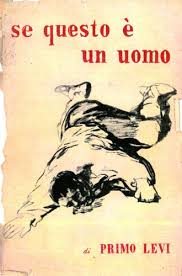

In my opinion this paradigm is hollow. Aesthetical answers do not satisfy ethical questions, as the first historical precedent of the Book of Job exampled as far back as three-thousand years ago. Moreover, it misses the point that Auschwitz, culturally speaking, represents precisely an attack on the precondition of the aesthetic – something so brutal and intolerable that you cannot write poetry (or ‘dance’) anymore. In the words of Primo Levi (who in turn was paraphrasing Adorno), ‘[a]fter Auschwitz there can be no more poetry, unless on Auschwitz.’ That Dupré should demonstrate little or no awareness of this historical impasse is an important shortcoming for someone who wishes to bring the problem of the holocaust into her meditations.

I don’t want to overstress this type of weakness in PHQF because it’s a very common one in contemporary poetry – like many of her peers, Dupré can point to the problem with great lucidity, but she is less able when it comes to showing us a solution.

All that said, and aside from the final let-down, the execution on the whole is very strong. The idea of projecting the timeless historical problem through the mother-son relationship gives it a visceral and original representation, and the choice (and use) of form is brilliant. I cannot speak for the rest of Quebecois poetry, but this little volume is certainly one worth hunting down.


Plus Haut Que Les Flammes, extract from Part III.

no story, no face

your memory is a frame
white on white background

a terrifyingly abstract
painting

a regret
that you scratch with the end of the nail

down to the blood
of words

because words also leave
fragments under
the skin

when the finger touches
the deadwood
of language

and the ghosts that sleep there […]

Find out who our Emerging Foreign Poet #3 is next Wednesday.

Sunday Review: Idra Novey’s Exit, Civilian

posted by the Judge


This Sunday, Rowyda Amin reviews Exit, Civilian, by Idra Novey, selected for the National Poetry Series in the US of A. You can find the review here. An entire collection dedicated to the American prison system – you don’t get poetry much more socially engaged than this.

Have a great Sunday!

Kirsty’s book is loose – catch it quick!

Never Never Never Come Back is out now from Salt Publishing! Available initially in a limited hardback run, with gorgeous hotfoiling under a dust jacket featuring artwork by the very talented Matt Latchford.

Here’s the spiel!

Don’t go over the hill, or look too long into the well, or go carousing with strangers, or you’ll never never never come back. With the haunting quality of nursery rhymes but the complexity of a dark and smoky wine, these poems brood on absence and abandonment, outcasts and anomalies, monstrosity and mistakes.

At the heart of the collection are a suite of tightly focused, often impressionistic character studies ranging from cannibals to schoolgirls, but Irving also finds space in the shadows for desperate love songs to pilots and robots, satiric odes to tyrants and deft engagements with popular and literary culture. Whether turning the features of a pinball table into an emotional debris field or recounting unnerving sexual encounters, these are rich and rangy poems of a defiantly unusual character that linger in the mind as much for their controlled dissonances as their uncompromising subject matter.


Huge thanks to Salt Publishing’s Chris Hamilton-Emery and my editor Roddy Lumsden. I could not be more stoked.

Stay tuned for launch details!

For review copies, please contact me on kirsten.irving@gmail.com.

Emerging Foreign Poets #1: Marianna Geyde

The first in a series of articles in which the Judge discusses some of the most interesting young poets writing in languages other than English. Today’s candidate comes from Russia.

Born in Moscow in 1980, Marianna Geyde is yet another entry in the apparently endless list of precocious Russian writers, from Irina Denezhkina to Alina Vituchnovskaja. I’m going to introduce her by turning straight to the opening of one of her poems. It has no title, and the translation is my own:

may my hand be crumbled, like Sunday bread,
in twelve and two phalanxes, ordered
five by five with shields carved from bone,
and may all remain this way, until peace comes and
my bread once more turns into my hand.

I’ve singled out this stanza because it demonstrates, I think, the biblical economy of her language. When I say ‘biblical,’ I am not referring to the taste of her imagery (or, not just). It’s easy to say that the first and last line recall Christ’s miraculous crumbling of the bread-loaves, reversing the roles of hand and bread (and by extension, agent and object). It’s also obvious that the line ‘and may all remain this way, until peace comes’ is alike to biblical verse in both syntax and style, including the opening with the conjunction ‘and.’ What I mean, over and above all of this, is her ability to charge very simple words with profound symbolic meaning, and then sustain that charge throughout.

The resonance between the first and last line, which seem to attract and repel each other magnetically, containing the rest of the stanza within their field, leaves room for a great deal of interpretation. The ‘hand’ is metonymic for the poet’s agency, and the mutation into ‘Sunday bread’ (meaning festive bread) suggests the same agency’s surrender into a sacred order which is at once religious, cultural, and historical (even domestic, as bread has special connotations of hospitality in Russia). The term ‘Sunday’ recalls Christian traditions (mass, for instance), but it also has teleological implications as the last day of the week, and thus the last step of the cycle. So surrendering the ‘hand’ into the bread of Sunday may refer to the hand’s ultimate destination – the agent (and its actions) ending their journey in sublimation with an historical identity. Read this way, the extract is biblical even without being Christian (there are, note well, no explicit references to Christianity anywhere in the poem), in the sense that its choice of words suggests great richness of meaning without imposing any specific reading on the receptor. In fact, the whole point of the term ‘bread’ may be its polyfunctionality, turning the mysterious, alchemic last stanza (with the return to the concept of the cycle), into an equally sophisticated open end. The bread is turned back into the hand (or at least takes its role, as the word притворится means to transform but also to pretend, to act), returning harmony between agent and object, poet and Christ, present and myth. I shall refrain from bringing the whole central part of the stanza (much less the whole poem) into the discussion as well, but hopefully the brightness and conceptual fertility of Geyde’s work has been aptly exposed.

Geyde is not, of course, the only artist to deploy this type of intertextual sensitivity. Even restraining our search to her own country we find other poets engaging with mytho-theological themes (Olga Grebennikova, for example). But she is the only one I have encountered who can execute it with such technical simplicity. The stanza above includes no erudite references to saints or historical events or past writers, of the type we so commonly find in modern and contemporary poetry. There is no recondite vocabulary at all. And the turn of phrase is a simple one, which lends itself to being followed serenely.

To be clear, I am not suggesting that she is in any way bland, or unwilling to play games with words – the two lines immediately following our extract are as follows:

you, palm-tree branch on the palm,
palm on the palm and palm-tree branch,

Here the playfulness of the verse doesn’t cloud the symbolic richness (again) of the words themselves. The lines suggest a sort of subjectivity falling into itself, as the palm holds itself and also the ‘branching’ of itself, and then turns back into the branch. This convolution is staged in a relationship between flesh and plant which seems to involve the idea of nature, even while suggesting that nature may itself be a construct held in the ‘palm.’ It is also expressed rather musically, though this aspect of the verse goes beyond my powers of translation.


Having introduced Geyde’s verse in this article, I feel I should add – on the run – a note on another poet. Readers who are a little familiar with contemporary Russian poetry may ask themselves why, when choosing to introduce a representative from that country, I should have turned to Marianna Geyde when the most obvious choice is Boris Ryzhy. The latter, born in 1974, was a geophysicist from the Urals, apparently even a member of a number of geological expeditions to the North. Published in magazines by the age of twenty, he hung himself at twenty-seven and left behind a disordered collection of brilliant, candid and utterly heart-breaking poems. His reputation as one of Russia’s greatest contemporary poets is already considerable.

The reason I chose to write about someone other than Ryzhy is that he probably doesn’t need it – a film about his life has already been made, and his legend seems to be growing every year. If a selection of his work were to appear in English within the next decade, I would be the last to be surprised. Marianna Geyde, on the other hand, is a young poet of extraordinary promise who could remain anonymous for many decades if no-one takes the bother to research her (and possibly translate her works). And while Ryzhy’s verse is poignant precisely because it is relatively straightforward, Geyde instead develops this dense apocalyptic symbolism along the lines of Blake or Rimbaud that could provoke endless readings and debates. The only cause of complaint, really, is that her work is so infuriatingly difficult to find. Of the half-dozen poems that I have managed to put my hands on, none suggests that her oeuvre as a whole may be weaker than that selection, but that can only be ascertained if someone translates her books of verse, and maybe bothers to publish them in the UK. Anyone willing to give it a go?

Find out who our Emerging Foreign Poet #2 is going to be next Wednesday.

Sunday Review: Maria Taylor’s Melanchrini

posted by the Judge


Time for our Sunday review! This week it’s Maria Taylor’s turn to get under our spotlight in our review of her collection Melanchrini, a book of poems heavily concerned with mythology and memory.

The book is published by Nine Arches Press and the review is expertly handled by Anthony Adler.

Enjoy!