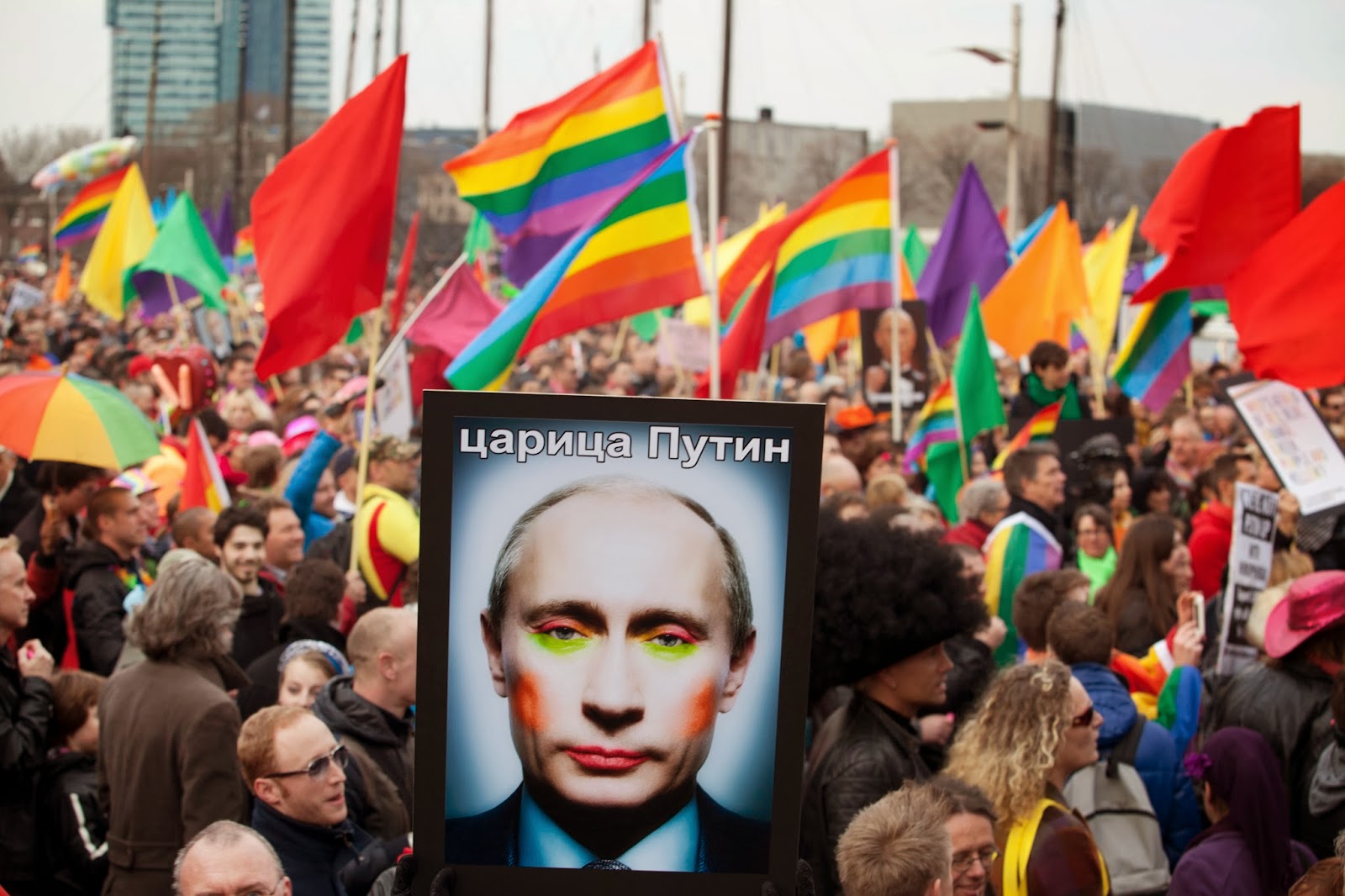
I was recently lucky enough to feature on Jude Cowan Montague and Rob Edwards’ Resonance FM show The News Agents (you can listen to the recording here). Mark Waldron and I were asked to create new poetry in response to specific news events. Mark can be heard reading his excellent piece on North Korean photo censorship via the above link.
I wrote in response to the Russian gay ‘propaganda’ laws in the run-up to the Sochi Winter Olymics, which begins today. In particular, I focused on the entrapment, kidnapping and videoed torture of gay Russians, which has escalated since the law was passed. You can hear me reading it on the show, and here’s the poem in readable form. I recommend following English PEN for updates on the campaign to repeal this law.
Troika
A scared boy before the video camera:
all Vasilisa, broomed into the woods
to fetch a light. To tell Mother Russia
what he likes. They say, tell them
what you like. And his face is burning,
is a landscape of purple mountains.
And his ribs are raw, and he says, Russia,
you may as well kill me.
Or he may as well have done.
Or this one, dragged into a van
and sped out by a would-be hookup
who turns, in the dark and the rumble of traffic,
into a six-armed, hard-handed insect;
is legion; is painting him
blue, white and bloody; is beating him
hard like a balalaika; is smiling and waving;
saluting the morning;
is forcing him open
with a bottle and a bat.
Or this one. Or this one.
Naked on their knees
or gagged with a watermelon,
shaved, doused in urine.
What the state does not allow
they do not do. And it is
all for the children.
For Russia. So see him
admitting his devilry,
rainbowed in bruising; made to
brandish a dildo like a slow-dying torch.
News
Sunday (Video) Review: Mean Time by Carol Ann Duffy
Sunday Review: The Last Wolf of Scotland by MacGillivray
The coincidences of life. Would you believe that while I was uploading Harry Giles‘ review of MacGillivray‘s The Last Wolf of Scotland, I also happened to be listening to Wolf (& Fytch)? You don’t know what I’m talking about? You wouldn’t, of course. Most people consider this topic boring, and the result is that when I speak of it whoops look how late it is I’ve gotta go to the Post Office. You get me.
Read Harry’s review here, and enjoy your Sunday!
Mini-Reviews: Elliott, Lindenberg, Johnson
1. MORTALITY RATE by Andrew Elliott
Published by CB Editions; buy here.
Reviewed by Jon Stone
Mortality Rate contains an abundance of the kind of pieces that are really half poem, half something else. The something else in this case is seedy, surreal, almost noir-ish microfiction, taking place at night, in cities and liminal spaces, in Europe and America. Long, loping lines abound, sex is handled in a kind of rough, frank way, and the same pair of female characters turn up in multiple poems, stripped to various states. It’s a very generous volume, written mostly in a voice that delights in taking winding detours. Highly recommended for quiet winter nights with a whisky.
2. LOVE, AN INDEX by Rebecca Lindenberg
Reviewed by Ian Chung
Since its founding in 1998 by Dave Eggers, McSweeney’s has grown into a publishing empire in its own right, with flagship literary journal Timothy McSweeney’s Quarterly Concern being joined by other titles like the monthly The Believer, food quarterly Lucky Peach and sport journal Grantland Quarterly. One of the publishing house’s most recent imprints is the McSweeney’s Poetry Series, of which Rebecca Lindenberg’s Love, an Index is the first title. The collection chronicles Lindenberg’s relationship with fellow poet Craig Arnold, who disappeared in 2009 during a solo hike in Japan. A strong debut for Lindenberg and the series, Love, an Index embraces the elegy form, and in poems like ‘Status Update’ and ‘Status Update (2)’, reworks it for the Facebook generation. The standout moment of the collection, however, is the titular sequence that occupies the middle third of the book. An alphabetical indexing of Lindenberg and Arnold’s relationship, the poems are brutally beautiful, ruthlessly detailing minutiae in the wake of her loss. Joining other poetry collections about losing a partner like Douglas Dunn’s Elegies and Paul Monette’s Love Alone: 18 Elegies for Rog, Lindenberg’s Love, an Index shows the mind of the poet at work, transmuting personal tragedy into powerful art.
3. TREEDS: POEMS IN SHETLAND DIALECT by Laureen Johnson
Published by the Hansel Cooperative Press; buy here.
Reviewed by Harry Giles
Treeds is one of a small but rich crop of chapbooks from Hansel Co-operative Press, a small-scale outfit publishing and promoting writing and art of Orkney and Shetland. Printed on good thick stock and gorgeously hand-finished, the chapbook is pocket-sized but big-hearted. The writing is vernacular Shetlandic – not a synthetic Scots, but a language very much alive and rooted in place and culture. The fine glossary is a neat guide to those new to the language, though not burdensome or pedantic, making the poems an excellent route into Shetlandic for those willing to put in some small effort.
The poems cover family and livelihood, land and water; the title piece (meaning “threads”) describes a weaving together of place and person into a poetics of sense and feeling. The unrhymed lines advance in breaths, matching the everyday language used; the sense is of being given stories and wisdom honed by time and wind, though never is this hoary or slight. The tone is as much humorous as delicate, and often very sad in its simplicity – as in Gynae Ward:
“Nae prenk, damned little pent,
nae comouflage,
Here da oppenin bud, da faded leaf,
da prunin shears.”
Pamphlet publishing is a source of diversity in contemporary poetry, and local presses a way to meet outlying poetics on their own terms. Treedsis a long way – in style and language – from what you’re likely to find in more urban-centred anthologies and magazines, and so, along with Hansel’s wider output, demands your attention for its particular music and beauty.
Video Review: ‘The Ninjas’ by Jane Yeh
Jon Stone dons his tabi boots, grips a tanto in his teeth and slinks into the night with Jane Yeh‘s latest adventure…
Buy The Ninjas from Carcanet
Hitler rants about the state of British poetry criticism
Sunday Review: ‘Dear Boy’ by Emily Berry
It’s amazing the things you can come across when you type poetry titles into Google Images. I’ve just found out that Dear Boy, which is a book by Emily Berry, is also a manga series about young Japanese men playing basketball (I’m not going to make fun of that, you can’t, it would be like shooting on the red cross). Go figure the connection. I was wondering whether Berry might not have been inspired by that particular comic, but Judi Sutherland assures me that’s not the case in her review.
It’s about something else entirely. *sigh* …still waiting for someone to pull off an epic poem about Naruto…
Dr F loves the following people:
(Well, as much as it’s possible for his charred heart to feel something akin to love.)
We want to say a big, big thank you to the 97 people who Kickstarted our Coin Opera II anthology all the way to the printers. Poetry meets computer games in a dual-covered, multi-levelled spectacular that’s hot-foiled like a demon. It’s everything we hoped it would be, and it’s thanks to you.

The main books have been sent already and we’re working on the finer details of the deluxe editions for higher-level backers. Expect those as soon as they’ve wriggled from the cauldron.
So here is a rundown of the kindly souls that caused Dr F to twitch in a smile-like fashion. There are lot of very deserving Kickstarters out there, and we really appreciate your backing. So without further ado, COII: Fulminare’s Revenge was brought to you by:
Chris Larkin
Megen de Bruin-Molé
Robin Beitra
Stuart Lister
Ian Cartland
Katy Whitehead
Christopher Webb
Abigail Parry
Matteo Gilebbi
Alex MacDonald
Bob Thulfram
John Clegg
Aiko Harman
Angela Cleland
Isobel Dixon
Paul Duggan
Kathryn Lewis
Dana Bubulj
Claire Trévien
Rob Jones
Robert Sneezum
Kate Whaite
Dan Griliopoulos
Dean Bowman
Tori Truslow
Peter Keogh
Richard Penlington
Jens Theeß
Erica Marfell Lewis
James Burt
Team Minecraftia
Maya Berger
Carly Lightfoot
Christopher Kelly
J Henderson
Daniel Holmberg
Chris Pressl
John Saylor
Rab Green
Ben Wilkinson
Alex Brown
Ryan Van Winkle
Geoffrey Scaplehorn
James Ward
Joy Stone
Rod Whitworth
Coral Dyer
James Midgley
Alister Wedderburn
Michael Nørskov
Patrick Vickers
Harry Giles
Darren Grey
Alex Spencer
Samuel Prince
Esther Saxey
Simon Richards
Al Kennedy
Nigel Gilbert
Helen Lewis
Thomas Sieben
Cliff Hammett
Dan Whitehead
Harry Man
Chris McCluskey
Chris Hogan
Michael Nanthachack
Francine Rubin
Patrick JS
Chelsea Cargill
Ian Chung
Oliver Burrows
Sam Williams
Greg Young
TeraTelnet, aka Nathan Darcy
Alex Pena
Vladimir Roth
Taylor Morris
Paul Smout
Elliott Finn
Henry Osadzinski
Barry Donovan
Neil Aitken
Eloise Stonborough
Matthew Haigh
Theodoros Chiotis
Chrissy Williams
Andrea Tallarita
Matt Cummins
Robert Harper
Alex Moser
Richard Watt
Skye Nathaniel Schiefer
Mark Taormino
James Love
Laurie Wilson
and last but not least, the legendary Violet Berlin.
***
Stuck for a present for the gamer or poet in your life? Coin Opera II: Fulminare’s Revenge can be ordered at drfulminare.com/coinoperaii.php.
We want to say a big, big thank you to the 97 people who Kickstarted our Coin Opera II anthology all the way to the printers. Poetry meets computer games in a dual-covered, multi-levelled spectacular that’s hot-foiled like a demon. It’s everything we hoped it would be, and it’s thanks to you.

The main books have been sent already and we’re working on the finer details of the deluxe editions for higher-level backers. Expect those as soon as they’ve wriggled from the cauldron.
So here is a rundown of the kindly souls that caused Dr F to twitch in a smile-like fashion. There are lot of very deserving Kickstarters out there, and we really appreciate your backing. So without further ado, COII: Fulminare’s Revenge was brought to you by:
Chris Larkin
Megen de Bruin-Molé
Robin Beitra
Stuart Lister
Ian Cartland
Katy Whitehead
Christopher Webb
Abigail Parry
Matteo Gilebbi
Alex MacDonald
Bob Thulfram
John Clegg
Aiko Harman
Angela Cleland
Isobel Dixon
Paul Duggan
Kathryn Lewis
Dana Bubulj
Claire Trévien
Rob Jones
Robert Sneezum
Kate Whaite
Dan Griliopoulos
Dean Bowman
Tori Truslow
Peter Keogh
Richard Penlington
Jens Theeß
Erica Marfell Lewis
James Burt
Team Minecraftia
Maya Berger
Carly Lightfoot
Christopher Kelly
J Henderson
Daniel Holmberg
Chris Pressl
John Saylor
Rab Green
Ben Wilkinson
Alex Brown
Ryan Van Winkle
Geoffrey Scaplehorn
James Ward
Joy Stone
Rod Whitworth
Coral Dyer
James Midgley
Alister Wedderburn
Michael Nørskov
Patrick Vickers
Harry Giles
Darren Grey
Alex Spencer
Samuel Prince
Esther Saxey
Simon Richards
Al Kennedy
Nigel Gilbert
Helen Lewis
Thomas Sieben
Cliff Hammett
Dan Whitehead
Harry Man
Chris McCluskey
Chris Hogan
Michael Nanthachack
Francine Rubin
Patrick JS
Chelsea Cargill
Ian Chung
Oliver Burrows
Sam Williams
Greg Young
TeraTelnet, aka Nathan Darcy
Alex Pena
Vladimir Roth
Taylor Morris
Paul Smout
Elliott Finn
Henry Osadzinski
Barry Donovan
Neil Aitken
Eloise Stonborough
Matthew Haigh
Theodoros Chiotis
Chrissy Williams
Andrea Tallarita
Matt Cummins
Robert Harper
Alex Moser
Richard Watt
Skye Nathaniel Schiefer
Mark Taormino
James Love
Laurie Wilson
and last but not least, the legendary Violet Berlin.
***
Stuck for a present for the gamer or poet in your life? Coin Opera II: Fulminare’s Revenge can be ordered at drfulminare.com/coinoperaii.php.
Sunday (video) review: ‘Memorial’ by Alice Oswald
Confronting the Danger of Sales
written by Ian McLachlan
Angela, Sidekick Books’ latest team-up pamphlet, was recently launched at Drink, Shop & Do, King’s Cross. The event took place in a room divided from the main bar by an open doorway. The sound system broadcast to the whole floor, so when Sidekick took the mic, those in the main bar who were not attending the launch, could nonetheless both see and hear it. This set-up struck me as symbolic of the poetry market. In the event room were people who bought poetry books. They were mainly poets, I think. In the bar area were the general public – not poets, not buyers of poetry books. They could apprehend what was going on, but they were not part of it. Nor did they attempt to enter the event room. That night at least, they could see poetry was there, but it wasn’t for them.
Recently, I have been trying to cross this divide, to find out if the public will buy poetry pamphlets. My motivation stems primarily from a feeling that the poetry scene is too insular. I imagine we all get into writing because we want to communicate. However, communication with an apparently indifferent public requires a great deal of effort, and it can seem like many professional poets refocus their aspirations on playing pass-the-parcel with prizes and arts jobs. Accepting prize money as a consolation for reaching a tiny audience doesn’t seem to me satisfactory. We have to work harder to communicate, to reach the non-poetry-buying public.
Angela has a Sidekick stable-mate, a spoof public information booklet created by myself and Phil Cooper entitled Confronting the Danger of Art. Over the last few months, I have taken a microphone and a portable amp down to Southbank, and busked the pamphlet outside Tate Modern. This is one of the few spaces in London which can be worked by street performers and I regularly have to compete for attention with bands, Hare Krishna dancers, soap bubble makers and a man dressed as a Viking. I’m not a natural performer, but draw encouragement from the fact that my poet/pamphleteer predecessors include Milton, Blake, Shelley.
So far, I’ve sold around 60 pamphlets this way. Who buys the pamphlet? Art teachers, students, tourists, especially European tourists (which surprised me, given it’s not their native language), general passers-by of all ages. Often people stop to find out what I’m doing. Some ask me if I’m preaching, or say they thought I was a religious nutter. I get a bit of attention from vagrants. There are people who want to take over my microphone and perform to the public. And some think the pamphlet’s anti-art arguments are genuine. One well-spoken old lady who described herself as a journalist and musician told me I was a very dangerous man. When I explained the pamphlet was a spoof, ‘Oh yes, I can see that,’ she said. ‘Who is allowing you to do this? Do the police know?’ Finally, turning to depart: ‘I don’t think you’ll be doing this for much longer.’
I’ve never worked in sales but I’m picking up technique as I go along. I find potential buyers like to be talked to about the pamphlet. It’s not enough that they hear me reciting it, or flick through a copy. They want to have a conversation about it, an interaction with the performer. At first I used to hold back on certain details concerning the pamphlet’s creation, for example the fact that the opening chapter is based on arguments in Plato’s Republic, out of a fear that this might seem over-intellectual. However, often this seems to be the detail that clinches a sale.
The night of Angela’s launch, I took copies of Angela and Confronting the Danger of Art out into the main bar area, and upstairs, to see if I could find any buyers amongst those who were not attending the event. It turned out I could. Overhearing the launch had piqued curiosity. Books, badges and Angela Lansbury masks changed hands. Rather than being fearful of the public’s indifference I think we have to be prepared to go out and approach non-poetry-buyers. How often do we have an opportunity to do this? Well, to quote Angela:
Every day –
Every day –
Every day.
Ian McLachlan’s pamphlet Confronting the Danger of Art is available from Sidekick Books. He tweets @ianjmclachlan
SPECIAL OFFER:
Buy Confronting the Danger of Art, Angela and our third Sidekick team-up, Riotous, all for £10.00 + postage
Angela, Sidekick Books’ latest team-up pamphlet, was recently launched at Drink, Shop & Do, King’s Cross. The event took place in a room divided from the main bar by an open doorway. The sound system broadcast to the whole floor, so when Sidekick took the mic, those in the main bar who were not attending the launch, could nonetheless both see and hear it. This set-up struck me as symbolic of the poetry market. In the event room were people who bought poetry books. They were mainly poets, I think. In the bar area were the general public – not poets, not buyers of poetry books. They could apprehend what was going on, but they were not part of it. Nor did they attempt to enter the event room. That night at least, they could see poetry was there, but it wasn’t for them.
Recently, I have been trying to cross this divide, to find out if the public will buy poetry pamphlets. My motivation stems primarily from a feeling that the poetry scene is too insular. I imagine we all get into writing because we want to communicate. However, communication with an apparently indifferent public requires a great deal of effort, and it can seem like many professional poets refocus their aspirations on playing pass-the-parcel with prizes and arts jobs. Accepting prize money as a consolation for reaching a tiny audience doesn’t seem to me satisfactory. We have to work harder to communicate, to reach the non-poetry-buying public.
Angela has a Sidekick stable-mate, a spoof public information booklet created by myself and Phil Cooper entitled Confronting the Danger of Art. Over the last few months, I have taken a microphone and a portable amp down to Southbank, and busked the pamphlet outside Tate Modern. This is one of the few spaces in London which can be worked by street performers and I regularly have to compete for attention with bands, Hare Krishna dancers, soap bubble makers and a man dressed as a Viking. I’m not a natural performer, but draw encouragement from the fact that my poet/pamphleteer predecessors include Milton, Blake, Shelley.
So far, I’ve sold around 60 pamphlets this way. Who buys the pamphlet? Art teachers, students, tourists, especially European tourists (which surprised me, given it’s not their native language), general passers-by of all ages. Often people stop to find out what I’m doing. Some ask me if I’m preaching, or say they thought I was a religious nutter. I get a bit of attention from vagrants. There are people who want to take over my microphone and perform to the public. And some think the pamphlet’s anti-art arguments are genuine. One well-spoken old lady who described herself as a journalist and musician told me I was a very dangerous man. When I explained the pamphlet was a spoof, ‘Oh yes, I can see that,’ she said. ‘Who is allowing you to do this? Do the police know?’ Finally, turning to depart: ‘I don’t think you’ll be doing this for much longer.’
I’ve never worked in sales but I’m picking up technique as I go along. I find potential buyers like to be talked to about the pamphlet. It’s not enough that they hear me reciting it, or flick through a copy. They want to have a conversation about it, an interaction with the performer. At first I used to hold back on certain details concerning the pamphlet’s creation, for example the fact that the opening chapter is based on arguments in Plato’s Republic, out of a fear that this might seem over-intellectual. However, often this seems to be the detail that clinches a sale.
The night of Angela’s launch, I took copies of Angela and Confronting the Danger of Art out into the main bar area, and upstairs, to see if I could find any buyers amongst those who were not attending the event. It turned out I could. Overhearing the launch had piqued curiosity. Books, badges and Angela Lansbury masks changed hands. Rather than being fearful of the public’s indifference I think we have to be prepared to go out and approach non-poetry-buyers. How often do we have an opportunity to do this? Well, to quote Angela:
Every day –
Every day –
Every day.
Ian McLachlan’s pamphlet Confronting the Danger of Art is available from Sidekick Books. He tweets @ianjmclachlan
SPECIAL OFFER:
Buy Confronting the Danger of Art, Angela and our third Sidekick team-up, Riotous, all for £10.00 + postage
| Shipping Options |