News

Sidekick Shodown: Letters to a Young Poet

An occasional (possibly one-off) series in which members of the Sidekick team take on received wisdom and unchallenged proclamations from on high.


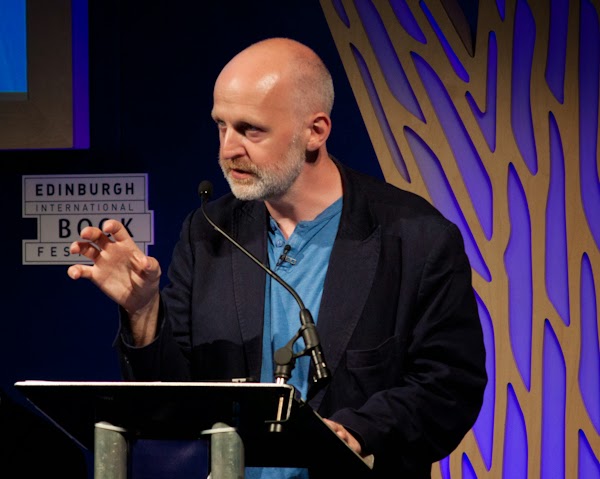
When writing about the craft of poetry, there’s a popular mode of address which mingles mystagoguery with aphoristic instruction, often eschewing (or even contradicting) practical advice in favour of the ear-pleasing commandment. Don Paterson’s entry in the Letters to a Young Poet series on Radio 3 is an example of such an address. Throughout its 13 minutes, Paterson juxtaposes a lugubrious, teacherly tone with the pseudo-profundities of a pub philosopher. He is drunk, of a fashion – that is, intoxicated with reverence for the methodology that produces a particular strain of poetry, with love of the paradoxical and the dramatic, with the sense of his own authority.

The italics below are transcribed from the broadcast.

Young friend, you ask me if your verses are any good. The answer is: no, not yet. You knew this because you had to ask.

Paradox has a way of sounding like wisdom, but “You knew this because you had to ask” falls far short of the insight it aspires to. Level of reassurance sought is in no way related to the quality of a person’s writing or their awareness of it. Some people are brilliant and don’t know it. Others are insulated by confidence against the chill of their own mediocrity. It isn’t foolish to ask for a second opinion, just so long as you learn to cultivate your own sense of when a piece of writing is sufficiently accomplished, which will happen in time.

Those youthful geniuses we like to invoke mostly had foreknowledge of their own early deaths.

Very romantic, very unlikely. A more realistic explanation for the apparent brilliance of a few very young poets of past eras is the relative lack of distraction and the right context, the right emotional make-up, for obsessive devotion to an art, coupled with our cultural tendency to shape our aesthetic values around what they wrote.

The world needs more readers, not more poets.

At this early point in the address, Don begins to entertain (and later returns to) the seductive idea of poetry as a mad and dangerous pursuit, undertaken only by the fever-ridden few, the damned. It’s a clever kind of circle-pissing that avoids looking like elitism by making grotesques out of the implied elite.

But it’s perfectly acceptable to experiment lightly with writing poetry or to find your way towards it gradually. Attempts to warn people off, particularly from the incumbent hegemony, should be regarded with skepticism.

Poetry is not a calling but a diagnosis.

I liked it when Leonard Cohen said “Poetry is a verdict, not an occupation” and I like this. But neither is anything more than a playful aphorism. Comparing poetry to dyslexia and bipolar disorder, as Don goes on to do, is crude and untruthful. Being hopelessly predisposed towards an activity is not the same as having a mental illness or a disability.

If you feel you can choose, then choose no …

Make no mistake: Don Paterson chose to write poetry. If writing poetry in this culture were punishable by death or castration, he may very well not have done so.

Firstly, and most importantly, don’t ever think of yourself as a poet.

Or do. It isn’t important whether you think this or not, except to the degree it makes you comfortable or uncomfortable. Just don’t believe that because you’re a poet, whatever you write is poetry, that the status itself imbues your words with authority. Too many established poets make that mistake.

‘Poet’ describes an activity, like ‘murderer’, not a permanent disposition.

This stands in apparent contradiction to his ‘poetry as diagnosis’ position, and makes for a strange comparison, because a murderer doesn’t stop being a murderer mere moments after he’s done murdering. Don’s ensuing extended metaphor of the murderer-poet is appealing because we like to characterise ourselves as creatures of dramatic action and bloodiness. But there is little truth here. A statement like ‘unlike other artists … we do other things too’ is bafflingly opaque. What ‘other artists’? What do we do that they don’t? He then suggests that you should plan your first published poem like an assassination, expecting not to get away with it if it’s anything less than perfect. In fact, poets get away with bad published poems all the time, and you will too. Expect your most carefully crafted poems to be passed over by editors in favour of something you tossed together at the last minute. Expect to have to change your mind repeatedly about any work that is important to you, particularly when it appears in print for the first time.

Also, because the investigator of the successful poet becomes more relaxed and accommodating, while the investigator of the murderer grows ever more determined and scrupulous, poets also have a tendency to get sloppier with time, while murderers become more proficient – the exact opposite to what Don asserts here. It’s a terrible series of points.

Skipping to the more fundamental parts:

To write poetry is the ultimate presumption. It says ‘I have something important to say’.

There is no reason to apply this to poetry in particular over other art forms. Nor is there any reason to suppose a poet means to say something ‘important’, rather than something merely interesting or pleasing.

Don is betraying here his own predilection for poetry of proclamation and revelation. It’s the first big clue that he’s not really talking about poetry at all; he’s talking about ‘poetry in the style of Don Paterson’.

You can’t steal a poem, even from yourself.

But you can steal a poem, both in the sense of appropriating words already written, and in the sense of the poem flowing easily from a sentiment, conceit or compulsion. Perhaps Don is advising here that we don’t rely on these shortcuts because they are few and far between. More realistically though, he is suggesting that a poem isn’t a poem (in the Don Paterson mould) until it has been through the forge of writerly concentration, been won through labour.

As advice, this is about as helpful as being told that wealth can only be acquired by starting at the bottom of a company and working your way up. It just doesn’t engage with the nature of creative writing – particularly a short form like the lyric poem, which can slide into view or throw itself upon you just as much as it can be forced to work through hours, days, weeks or months of careful attention.

Subject matter is mere pretext to write about something else.

It’s hard to disagree entirely with this because it describes an approach that works for many poets. But this absolutism is phony. He’s showing us the source of a river and telling us it’s where all the water in the sea comes from. Sometimes a poet who decides to write a poem about a fox writes a poem about a fox, and sometimes the poem ends up being about something else entirely.

If you sit down already knowing what you’re going to write, stop, because so does the reader.

Don says this after dispensing another colourful-but-reductive analogy – humanity as coral reef, all thinking the same thought. In Don’s eyes, the ‘unexpected’ – that element of poetry that ought to be treasured – can only arrive through process, and thus the point of a poem is only discovered as the writer nears completion, having written it ‘backwards’. I don’t see any reason for his making this assumption on behalf of other people, even if it’s how his own mind works. It strikes me more as ex post facto justification than intellectual discovery, and an excuse for a lack of ambition (or perhaps narrowness of ambition) when starting out with a blank page. It is entirely possible to begin writing with a grasp on how the poem will move towards the unexpected.

One should also not treat Don’s methodology as a guarantee against the drift towards banality. It is still a formula, and like all formulae, it returns results that grow more familiar as they accumulate.

The darker truth is that you will stand out in thunderstorms flying a kite, or in bad weather be tempted to summon your own tempest.

Yes, cognitive bias means that people who are too greedy for ‘poetic’ subject matter will tend to find melodrama wherever they look. Don seems to be going so far, though, as to suggest that poets create problems for themselves in order to write about them. I’d suggest that most people have enough problems and merely suffer from thinking that they ‘should’ write about them, even when not particularly inspired. This is the fault, I’m sorry to say, of too many prizes given to poems about dead parents. It doesn’t mean you should distrust genuine inspiration.

Remember, form is your friend. It makes poems both easier and harder to write. Harder because it will prevent you from saying the one thing you wanted to say, which is often dull, weak and commonplace, and easier, because form forces you to say something else …

Although he lays it on with a trowel (up to and including the claim that this is what your reader ‘demands’ of you), I agree with Don about form. I suspect he may be talking only about traditional form, though, rather than form in all its possibilities.

Remember your unconscious is your unconscious for a good reason. 

The conscious/unconscious isn’t a very useful dichotomy when talking about writing. I would suggest that there are things toward the edge of one’s mind, things that hide in plain sight, and things that can and ought to be drawn further into the light.

The truly original idea must be part familiar, so that it can take the reader on a journey from the known to the unknown.

Ah, this business of taking readers on journeys. Here, as far as I can tell, Don is railing against writing anything that is too overtly alien, but how does he, or anyone else, know what is familiar or unfamiliar to a particular reader? What if the reader is in search of the alien? The trap Don has fallen into is identifying a pleasing effect and imagining (a) it is the pleasing effect, and (b) that it can be planned for. But anyone who has ever found themselves baffled and dismayed by other readers’ enthusiasm or glowing testimonials will know that there is no formula for emotional impact. Advising us to set out to perform this particular trick is like telling us to develop a rapport with everyone we meet, and to do so using only gentle and placatory gestures.

The most fruitful risks will involve writing at the extremes of emotion just before it shades into sentimentality, writing simply just before it shades into foolishness and with prophetic force just before it shades into pretentiousness.

This, again, looks a lot like wisdom – because of course one should always stop short of sentimentality, foolishness and pretentiousness, if one can. Don goes on to use the analogy of the puffer fish being prepared so that just a little toxin from the poison sac seeps into the flesh – just not enough to kill. It is, again, a dramatic and appealing analogy. But really, there is no such fine line. Most poetry, I would suggest, finds itself appearing sentimental, foolish or pretentious to some readers as the necessary price for impressing others. That’s the nature of spellcasting. Gunning for prophecy, simplicity and/or profundity, meanwhile, is as natural an instinct as there is in writing, so that this very elaborate and neatly worded passage of Don’s address really amounts to “Aim to reach the finish line as fast as you can, but try not to stumble”. It has nothing to do with risk.

Risk in poetry is a more fiddly thing to unpack. It might mean, for example, writing to a form or in a manner or on a subject that you know is unfashionable or overtly disapproved of so that there is very little chance of meeting the criteria set forth by those with the most influence, who are in a position to promote or deny your work. It means being prepared to write a poem that is unlikely to get any airing at all unless you are able to smuggle it in under the watchful eyes of the gatekeepers, or unless you catch a wave of changing fashions.

Being ignored, having something to say but finding no one prepared to listen – this is a deeper punishment than simply being seen as pretentious or foolish by a proportion of a small readership. That is why, after all, too many poets conform to the aesthetic expectations of Don and his peers too readily. Some bets are safer than others.

I note at this point that the way in which Don has set about characterising his imaginary correspondent in this address is as someone overtly seeking Don’s approval. Don is really envisioning himself being asked, “How do I write the sort of poem you might consider publishing?” Naturally enough, then, he doesn’t wish to consider the risk of writing a poem that he himself wouldn’t touch. So when he thereafter talks of ‘readers’ or ‘the reader’ –

Readers read poetry to take them closer to something powerful and dangerous that they will not usually be prepared to let themselves feel.

– he is talking about himself. We know readers come to poetry for a whole variety of different reasons. But Don is interested in telling us what he wants from a poem. Earlier in this article, I said it was important to develop your own sense of when a piece is sufficiently accomplished. It’s also important not to mistake that sense for a universal doctrine, which is the mistake Don makes here.

Risk is also bound up in compromise and negotiation. It’s not the case that one simply ‘takes risks’, but that one risks something specific in return for something else. Whose criteria, for example, do you seek to meet, and to what extent, in order to win them over? Don’s correspondent risks ending up lacking individual character in his poetry as a result of seeking guidance as to how to impress Don the reader, how to write poetry in the style of Don Paterson.

We have to take Occam’s Razor and then use it to murder our darlings.

I admire the welding together of two cliches, but this doesn’t mean anything.

Only write half the poem, but precisely the half that will prompt the reader to supply the rest of it …

This is just a cute way of advising against over-explicating. Poets write the whole poem and the part that reader supplies isn’t the poem.

A poem is like an ecosystem – a complex interdependency between a finite number of agents …

This is also true of a bicycle or a table lamp.

Such a poem has harmony as well as melody, and creates the rich context in which we can read its symbols.

What he appears to be saying here is that deftly handled rhyme, repetition and other literary devices can add to the meaning and functionality of a piece as well as looking and sounding pretty. This is true, but we’ve arrived at a point where he’s reiterating the obvious.

And don’t advertise the strange by making it sound strange.

There’s no reason outside of personal preference to follow or ignore this advice. Some people enjoy strange sounds.

The brain will entertain anything that is sung to it first, even things it vowed not to let pass.

Pertinent – this whole essay is an exercise in singing sweetly in order that the listener’s brain entertain (and perhaps accept) what are often very wild assertions. So point proven, I guess.

But never forget that poets are not your audience … There are too many poets for whom the reader is an inconvenience.

‘The reader’ here, once more, is Don himself, so these two statements don’t sit easily with one another. He is counselling against navel-gazing, against writing for the precious few, but his notion of the poor, undoted-upon general reader is a vision of himself in the throne room of every individual’s brain. If there are too many poets for whom the multiplicity of real readers with conflicting and exacting tastes are an inconvenience, Don is one of them.

If you’re a poet, poets may well constitute the bulk of your audience, as it happens. Or they may be a slim wedge of your audience, or all of it or none of it. They certainly constitute the bulk of Don’s audience. And, as he was earlier keen to point out, poets are only poets when they’re writing poetry. You can treat them as people the rest of the time. It’s no crime to write for a small audience, or even an audience of one. Tastes are easily changed, so that the niche becomes mainstream. Plenty of popular artists and entertainers are idiosyncratic enough that it’s possible they’re not thinking of any audience, let alone some nebulous, faceless ‘reader’.

Kurt Vonnegut suggests writing for one person only as a fundamental rule. I suggest writing for someone out there very much like you, and taking the risk that you’re entirely on your own, rather than pandering to inevitably wrong-headed assumptions about what some average person may want or need from you. Alternatively, I suggest writing for an imaginary jury or parliament of individuals, and having some real fun (by which I mean adventures, by which I mean crises) trying to negotiate their irreconcilable differences in taste.

Sabotage Awards, Angela Lansbury and new Sidekick Cat!

Finest acolytes! Much news from Sidekick HQ!

Firstly, Sidekick Books has been nominated for THREE Sabotage awards! We’re up for (drumroll):

Most Innovative Publisher

Best Collaboration
 (for our hand-sewn tropical zoo sonnet sequence Riotous)


So if you like what we do, please remember we need your vote to win! No registration gubbins needed. It’ll take less than a minute (or more if you’d like to elaborate on why you dig our strange creations). The Sabotage Awards are a big deal for small presses, so thank you in advance for casting your ballots!


Secondly, if you’re in London this week, get thee to Waterstones Hampstead this Tuesday 13th May at 7pm for some Angela Lansbury lovin’, featuring Twin Peaks, murder and     shunds. If you missed the launch, or simply need your Jessica hit, join Chrissy Williams as she takes us deep into the world of ‘Angela’


The King’s Cross launch event last year was packed, so this is a great opportunity to see one of London’s wittiest, warmest and most innovative poets share her darker Cabot Cove obsessions. 

Tickets: £5

Facebook event here.
Buy the book here, with free Angela pin badge!

Thirdly, please wish a warm welcome to Mitchell the Cat, who has moved from a prominent position with lots of responsibility at Battersea Cats and Dogs Home to our Silvester Road HQ, and is currently on photocopying duties.


Have a fantastic Eurovision, everyone! Let’s wish Conchita Wurst all the best!

Classical versus Modern Poetry in Football


The Criteria

I’ve set the demarcation line between classical and modern at the year 1700, picking poets born before and after that date to compose my teams. I’ve also been kind of liberal with the term poet, in that I’ve included playwrights in there. And as long as I’m making arbitrary decisions I might decree that every paragraph has to end with the phrase “in accordance with the prophecy”, just to get on your nerves.

With no further adue, then, this is what the two teams look like, in accordance with the prophecy.

1. The Classical Poets.


The formation, what else could it be, is a classical 4-4-2. The goalie selects itself, really. Homer is at the back of any poetry team in the West and no-one else could take that position in his place (ok, so he’s blind, which doesn’t really help a goalkeeper, but still…). Virgil and Petrarch also represent the bedrocks, and they’d make for great defenders. Virgil has the technical ability to play in several other positions as well, so he could potentially play as a libero, while Petrarch is somewhat more limited in terms of his tricks on the ball, but far more influential: it’s really very difficult to get past him, which makes him an ideal centreback. His talent for throwing long balls ahead can come in handy too.

Placing those three together makes for a defensive triangle of exceptional talent and authority. Arguably the world’s greatest goalkeeper and two legendary centre-backs – on the whole this would be a daunting prospect even for a team as talented as that of modern poetry.

And yet the classical team’s fulcrum of strength lies in central midfield: Dante and Shakespeare put me in the embarrassing position of having to describe two players in terms of propagandistic hyperbole. They are inarguably the most dazzlingly skilled pair of players in the game. Dante’s position in the midfield is a given – his obsession with the (typically medieval) notion of centrality draws him to a spot where he can make full use of his tremendous arsenal of skills. We’re talking about a player who has quite possibly the best sense of tactics and vision in the history of the game, a tremendous passer and play-maker, domineering in possession, and with a murderer’s long- and short-range shot to boot. It is true that he is not the fastest player around, and at 747 years, he may be a touch old for the frantic pace of the modern game – at the very least, he could lose some energy in the last parts of the game, which opens some opportunities for the younger team of the moderns. Nonetheless, a genius midfielder whose only parallel is perhaps his own team-member – a Mr William Shakespeare.

Shakespeare needs no presentation unless you’re teaching advanced literary history to Liberal Democrats, who don’t have a clue about not having a clue. Potentially the number 10 of this team (but the position is not quite right for that), Shakespeare’s versatility is compounded with a set of dazzling tricks that are effective both defensively and offensively. Unlike his fellow, he is anything but slow, and his abilities allow him to create danger from virtually any position on the field. The presence of Dante alongside him suggests that Shakespeare’s duties would be more offensive, with the Italian acting as the playmaker and Ol’ Will making runs into space (the combinations between the two would be gorgeous to watch). But it would be a shame to waste his defensive skills, and the man can be counted on even if the game is just about defending a result.

The wings are tough. While the classical poets have greater players overall than the moderns, they do suffer from a comparative lack of variety – you can throw in such talent as Milton, Lucan or Lucretius, but what are they adding to the game that isn’t already provided by Virgil and Dante? Hence the controversial decision of fielding Ronsard on the left, mainly for his abilities at running into his space and his speed on the dash. Ariosto and Lope De Vega are both ambidextrous, but the former was preferred behind Ronsard for his defensive skills – the Frenchman’s forays going ahead are likely to leave his flank exposed to counters, meaning that someone is required who can hold the line on his own. Ariosto is a player who has the potential for some truly damaging and creative runs, but in this formation he’d probably have to curb them back in favour of his defensive abilities – which are truly great. By writing an epic that’s as long as War and Peace but rhymes and scans everywhere, Ariosto has created one of the great fortresses of literature. If he can bring the same qualities to the actual pitch, there is no doubt that he’d make for a great complement to Ronsard’s harmonious offensive runs. (Incidentally, Ronsard’s ability to cut himself a space – even when he is outclassed, as he was in international Renaissance literature – is one of the reasons he earned himself a spot among the starters. You need some unpredictability out there).

The other side sees in Lope De Vega an enormous resource for the team. A better and more balanced fullback than Ariosto, De Vega can be expected to move more in the offence, liaising with Ovid’s sustained runs. Both of these players play a very beautiful game (the latter too much so, perhaps – some cynicism may sometimes be desirable). De Vega is in fact one of those multi-talented players who would have fared very well in the midfield, had the spots not been occupied by the Big Two. His positioning as fullback is mainly due to his stamina – De Vega is the Gareth Bale of poetry, able to run twice as fast and as long as anyone else on the pitch. He is not perhaps the most original player, but coupled with Ovid, it should mean that offensive opportunities (or just openings for the passes of Dante and Shakespeare) should always be provided on the left hand.

The coupling of Ovid and Lope De Vega is untested and questions remain as to whether it would work properly.

Finally, the offensive duo represents a bit of a gamble. Neither Sappho nor Sophocles are pure strikers, and their nimble build suggests they might struggle against more physical defences. They are, to some extents, limited players – and sort of similar, not just because they’re both Greek and both of them have names that begin with the letter S. Sappho has a better shot from the distance, Sophocles is better at playing on both sides of the pitch. In the end, however, they’re both electric strikers – able to create sudden chances by dashing in and freezing everyone. Their middle- and short-range shots are piercing and they’re both outstanding in one v one scenarios.

Sophocles would probably play a little further back and help in connecting gameplay, with Sappho charged with finishing plays. Their ability to swap positions might be a real asset, but their partnership is even more uncertain than the one between De Vega and Ovid, and there is some internal evidence that the players do not get along with each other. Personal differences may in fact be one of the weaknesses of this apparently impregnable team – if England can fail with a midfield composed of Gerrard and Lampard, maybe even the duo Dante / Shakespeare might turn out to be abortive in spite of the enormous individual talents of the two players. But that’s something that only practice can tell.

(I imagine most people by now will have figured out that this is one of those articles where I write and drink simultaneously… and I’m about halfway through my stack, and halfway through the article. The pace is working out.)

2. The Modern Poets

The modern poets are less talented individually, but they provide a much wider array of skills – allowing, at least in principle, for a stronger overall team. Let’s take a look.


There are plenty of candidates for the position of goalkeeper, but Pablo Neruda, if only for his tremendous international reach, probably takes it. I can’t imagine anything that he would not be able to “reach” in that sense, never mind an adversary’s shots. The guy’s fucking Dhalsim.

The central defence is handed to Jorge Luis Borges and TS Eliot, my personal favourites from this team, and also the two guys who would much rather have played for the other side. Eliot may come across as the kind of poet who would play as a striker, but really he is the most conservative and backward-looking guy out there, and Borges is not very different in this sense. Together they make for a fine defensive pair (allowing for the fact that, again, Borges is blind). Rainer Maria Rilke is a very defensive choice as far as fullbacks go, but he is probably necessary as the formation is on the whole slanted going forward. John Keats, possibly not the most obvious choice for a defender seen how he could barely defend his own self in his time, makes it into the team for his altruism – something quite rare and therefore most welcome in this team.

On to the midfield, it’s worth spending a few words to discuss the formation – the 4-2-3-1 is much more original and complex than the archaic 4-4-2, but it demands players with very specific attributes from the midfield upwards. The right wing tends to fall back with the midfield trio, while the central offensive midfielder is expected to make a great deal of runs both forwards and back. The left winger is in some ways a decoy – s/he functions as a wide striker, really – while the actual striker plays in a false nine position. The two midfielders need to be a playmaker and a defensive mid.

Goethe’s position is obvious – he’s possibly the only one in the post-1700 pool of talent who can stand to the classical midfielders in terms of sheer multi-tasking abilities. He’s the playmaker here, with Federico Garcia Lorca as the defensive mid (another guy who wasn’t especially good at defending himself, but he should be fine on the pitch if nobody decides to shoot him). Lorca is a splendid talent, strong both in breaking another team’s offensive traditions and also in imposing his own game. There’s no way that the modern midfield pair can hold in a comparison against the duo of Dante and Shakespeare, but their slick players might be able to dominate the game by relying on the numerical superiority offered by the 4-2-3-1 in that part of the pitch – especially when they can count with the French pairing of Baudelaire and Rimbaud.

Rimbaud is a highly imbalanced player, being extremely offensive and quite poor at covering spaces, which is why Rilke is clearly a necessity behind him. Yet his ability to do unpredictable things with the ball makes him an asset that even Lope De Vega might have trouble dealing with. If the classical team is caught on the counter and Vega is left alone to cover Rimbaud, this may result in some very real goal opportunities. As for his partner, Baudelaire (will there be chemistry?) is clearly more wide-ranging, which makes him a better fit for the position. Technically he’s one of the better players in the team, and his presence in the advanced middle should allow him to bring that technique to bear in combination with any of the players that surround him. The results are anyone’s guess, though he does tend to get dispirited when he’s losing, and his athletic condition – like Dante’s, but for different reasons – is not of the best.

The moderns are playing with fire by placing Dickinson on the right and Plath as a striker. They are, in some ways, similar players. Plath is somewhat mono-dimensional, a great striker, but not necessarily the best fit for the false nine position (Baudelaire himself might have taken that role). In a different formation, she would have been the perfect striker, but here she’s a gamble. Still, no-one can close quite as effectively as she can, and faced to the defence of the classicals, a single moment of poaching genius by the American poet might just make the difference. As for Dickinson, in the right-wing position she’d have to provide a lot of breath to the team – if Rimbaud goes forward all the time on the other side, then Dickinson will have to compensate for that by offering support to Goethe and Lorca when they need it. Considering that she’s got Keats behind her it’s unlikely that most of the opportunities will emerge from that side of the field, but they’re both very fast players, meaning that they should at least be dangerous on the counter.

CONCLUSIONS

Who would win? I actually don’t have a clue. I suppose I could try finding out, but by this point I’m all out of wits and beers, and I’m expected somewhere. Plus, I suspect not everyone will agree with my decisions in terms of who should play and where – plenty of options on both sides. I think I’ll close this article here.

26 Characters: Cry havoc and unleash the badgers and witches!

I’ve been thrilled to be part of the latest collaborative venture between writers’ collective 26 and the Oxford Story Museum, called 26 Characters. For this fantastic exhibition, the museum asked famous authors to choose their favourite character from children’s literature and pose for a portrait dressed as that figure.

As a teaser, see if you can identify this well-loved writer getting all wicked and westerly:


For our part, we writers were each given a letter of the alphabet and asked to write a sestude (a 62-word poem) beginning with this letter, about one of the photos in the museum.

This project combined three of my favourite things in the world: children’s literature, poetry and dressing up. How could I resist? I was given the fantastic illustrator Ted Dewan, who posed with his daughter Pandora as Pod and Arrietty, from Mary Norton’s The Borrowers. They also gave me the letter X to begin my poem with, the rogues, but I managed to find a way to get it in there.

We were also asked to pose as our own favourite children’s character, and I too was a witch. The Worst Witch, aka Mildred Hubble. Here I am after yet another failed potion class, and you can read about my love for this character on the museum blog here:


The exhibition has been featured in Design Week and the Huffington Post, and is on at the museum until 2nd November 2014. For more information on this and other amazing exhibits, see the Oxford Story Museum’s website.

A wonderful way for children to discover books, and adults to remember why they fell in love with reading in the first place.

War Poetry. I Mean Today


Let’s talk war poetry. Not Wilfred Owen, not Giuseppe Ungaretti, not any of the poets who wrote of that old war (it is a hundred years ago now, so I guess it counts as old). Let’s talk of war poetry today, and how it differs and resembles the efforts that defined the category, set a standard, and laid out the rules.

Among the various books that I’ve been (very kindly) sent to review, I count two that belong to the genre. One is Letter Composed During a Lull in the Fighting by Kevin Powers, which David Clarke reviewed not too favourably last week. The other is War Reporter by Dan O’Brien, which I didn’t send out to my critics because I wanted to review in person. I’ll have to base my article on these two sources because, I liberally admit, I don’t know any other contemporary war poetry – if you have suggestions, my e-mail’s at the end of this page.

I’m less than halfway through reading O’Brien’s book and my inclination to review it is already dwindling. It’s not that the verse isn’t good. Not at all: O’Brien has a real talent for imagery and his poems are subtle and rich, evoking the poet’s own life as well as his strange relationship with war photographer Paul Watson. Perhaps it’s just the fact that I was looking for something else. I was looking for war poetry, and neither of the two books delivered (yes, I read Powers as well before sending it to David, though not with the same levels of concentration I’d dedicate to something I’m reviewing).

Hold on a second – how are these books not war poetry? Isn’t Powers a genuine veteran of the war in Iraq, speaking / writing from lived experience? Aren’t O’Brien’s poems stark and real and full of the unchanging horror of war? Take these lines by the latter poet:

On a bed we discover the body
of a child at the bottom of a pile
of dead children. Quartered like chickens. Outside
another’s buried alive. The hand is
like a tuber. At the refugee camp
a girl stumbles barefoot into a ditch
of corpses. Some wrapped in reed mats. Looking
for help, crying. But nobody’s coming.
I say to myself, This will make a great
picture. This is a beautiful picture
somehow. Raising my camera to my face
I step on a dead old woman’s arm: it
snaps like a stick. In Nyarubuye
we open a gate on a courtyard
of Hell. Tangles of limbs junked. They’d come to
this church hoping God would protect them but
it only made things that much easier
to be hacked to pieces. […]
(‘The War Reporter Paul Watson on Suicide’).

Isn’t this just the gruesome reality of war? Aren’t these the words of someone who jumped down the black shaft of war and came back to tell us what it’s really like? Isn’t this enough? What more do you want? How horrifying does it have to get before you recognise it as genuine war poetry?

No more words.
It’s probably a good idea at this point to state my respect for Powers, O’Brien, the photographer Paul Watson and anyone else who lived through this unspeakable inferno. As David noted in his review, there is only silence that makes for an appropriate response to this suffering. I don’t know what they know, and in this particular case I am grateful for not knowing.

That being said, there is a problem here and our inability – our unentitlement – to respond to this kind of imagery is part of it. Contemporary war poetry is not unlike World War I poetry in its occasional tendency to make a catalogue of horrors. But one of the crucial differences between the two canons is context. WWI poetry was written at a time when war was highly romanticised and patriotism was seen as a basic moral standard. Indeed, war poetry of the times includes the writings of young romantics like Rupert Brooke who extol the beauty and the nobility of war (before they saw it, anyway).

The merit of the war poets was that of reinventing the imaginary of war (or, should I say, erasing the ‘imaginary’ bit). It said that war was hell at a time when people were saying that war was god. Reproducing the crude horror of war was part of that task of reconfiguration.

Off to war with a smile. Yeah, it doesn’t fool anyone any longer, does it?
Contemporary war poetry appears at a time when society speaks in a very different voice: the lines on limbs flying and children torn to pieces are horrifying, yes, but also kind of a given. They feed the reader of war poetry what s/he wants to read from war poetry, which is what s/he thinks people don’t want to read. Not only are they customary, they also risk falling somewhat short of their peers in other media: no matter how good your language is, it’s a damn challenge to reproduce the visceral impact of seeing the effects of steel and fire on flesh as we get them in every war movie since Saving Private Ryan (so much so that it’s hard to even shock us anymore – carnage may leave us dumb, but sometimes it leaves us dumb with boredom, because we’ve seen so much of the ‘mutilated arm’ and the ‘hand holding his own guts’ and the ‘neck torn open so I only have a line of breath to say write to my family dear brother’ and so on).

If war poetry from one hundred years ago was radical, contemporary war poetry is conformist. Certainly, it has more levels of reading (O’Brien is especially subtle, but from what I’ve read so far his subtlety doesn’t invalidate any of my criticisms), and it is more delicate in its approach than Spielberg’s bombast, but it’s still treading much of the same ground, where you know that nobody hid any mines.

You may ask, what more can be said of war? What more should be said of horror but to say that this is the horror? Again, I must qualify my arguments by saying that this is not about the experience of the war poets in and of itself. I’m not discounting that – how could I? The problem in this case is not the poet, it’s the reader.


War poetry changes because war changes. The classical war poets were responding to a new form of war – a mechanical type of warfare that brutalised the mind to the point that even a body all in one piece could be made useless, that blasted the land and made the skies permanently grey, that corroded your insides with chlorine gas. It was a new type of war – of course it called for a new type of poetry.

War, in the last hundred years, has changed again. It has changed more radically than poetry has. Notin the way that people die – that’s the crucial thing. It’s not that Powers’ statement, that ‘war is just us / making little pieces of metal / pass through each other’ is substantially dated. It was as true a hundred years ago as it is true today. It may well be true a hundred years from now, if nobody’s taken war seriously enough that (you know the rest, & God forbid).

But here’s the thing: it’s not the experience of soldiers that has changed, it’s the way that society metabolises that experience that is different. Calls to patriotic fervour no longer take the shape of softness – they seduce with hardness, with violence, with the same language that supposedly should deter you from war – the same language, of course, invented by the classical war poets. Old war propaganda was a lap-dance: it seduced by suggestion. Contemporary war propaganda fucks you hard and tells you that you like it. It tells you that you know you like it. It doesn’t sugar-coat its product: it makes it as hard to swallow as possible and then challenges you to down it. It borrows the manly contest from bars, where it really works because everyone loves it.


From this point of view contemporary war poetry is just another form of war propaganda. You’re not going to convince young people not to go to war by describing piles of dead bodies because that’s exactly what young people are setting out to see. The spectacle of war has replaced war: it is the idea of going to hell and back, of being able to say ‘I’ve been to hell and back’, that defines the beauty of war (and yes, it’s beauty – for in the words of Alessandro Baricco, ‘no pacifism today should forget or deny that beauty or pretend that it never existed; only when we will be capable of a different beauty shall we be able to dispose of the beauty of war’.)

The reality of contemporary warfare may still involve blood on the bricks, but the experience of war that really matters, the experience that sells and motivates us and keeps us interested, the experience that lets war happen, belongs to those who live at home. In the West, where we write and read our poetry, war no longer invades our land. It no longer burns down our cities or rapes our women. When the ‘enemy’ does make an appearance in our cities we call it terrorism, which is something else. War today happens far away and to a restricted number of people. It happens on a TV screen, which is kind of like saying that it doesn’t happen. In the sense of human loss one may be justified in saying that war is a business of negligible import to the Western countries: compare the 5000 American soldiers that died in Iraq since 2003, with the 383,000 that died in car accidents in that same country starting from the same year. One almost wonders whether the war really worth fighting is not in our roads, rather than in the desert. And let’s not get started on workplace deaths. Let’s not get started on drugs.

These numbers do not include the real victims of war, that is to say, the people who did not do the invading – the civilians, who die by the hundreds of thousands. I’m not forgetting about them, at least no more than the war poets themselves are – both Powers and O’Brien seem more interested in their own experiences and what war says to them or their friends like Watson. The victims only matter to the extent that they inform the experience of the poets: like war itself, they’re just images.

But the material reality of these civilians is another expression of how war has changed. It used to be a conflict between two sides subject to equal conditions, it is now a conflict with no mutuality in which only one part does the invading, the killing, the filming, the TV reporting, and – on the long run – the war poetry.

In my opinion, which is as humble as it can be without being tacitly conformist for that, the mistake of contemporary war poetry is that of being about war. If it is true that the Gulf War did not take place, then it is reasonable to assume that all the other wars since then have not happened either: that they took place in the media, and not in the battlefield; that they exist not for the lands that they invade but for the share of audience that they annex; that the role of the modern war is not to conquer: it’s to convince.

If that’s true, then what should war poetry do? I don’t know, of course, but one possible answer is: the opposite. Like in the old days: say the opposite of what is being said by everyone else. Don’t convince me that war is terrible, cause everyone is already doing that: convince me not to be convinced. Show me that war is there because of me, thanks to me, not me the soldier, but the one who stands on the side-lines looking at the soldier as though he were an athlete, or an actor. Show me that the story of war is best sold when it is most authentic and it is most authentic when it is most brutal and it is most brutal when it is most distant. Show me the war that takes place not worlds away but in my taxes and in my passport and in my internet. Show me not the experience of battle but this new and very silent type of war that makes do with experience and replaces it with media reports. Show me that the horror is not what is shown through their videos, it’s what is created by them. Show me war in the 21st Century. And I’ll believe you.


Kevin Powers’ “Letter Composed During a Lull in the Fighting”


A long and really quite interesting review by David Clarke this Sunday, who takes a look at Kevin Powers’ Letter Composed During a Lull in the Fighting.

Powers’ is a war poet who writes about his experience in the conflict in Iraq. It makes for interesting material, of course, but also, as David argues, rather problematic. Read the review to find out why.

Leopardi’s Canti: The Most Difficult Book of Poems Ever Written?


I’ve been meaning to write about Giacomo Leopardi’s Canti for a good while. Actually I’ve been meaning to write a series on the most difficult books of poetry out there, which was going to include an article about Nikos Kazantzakis’ Odyssey. Eventually that idea proved itself too difficult, so I wrote one piece on the latter epic and suspended Leopardi – who was most definitely going to be in there – for a later stage.

Naturally the question behind this article is rhetorical. I’m sure there are collections of experimental and/or ancient verse that are even more impermeable than the Canti. Pound’s homonymous text, for example, may be even harder than old Giacomo’s (though I certainly haven’t read the whole of that, and don’t intend to, unless I get locked in a space prison and the alternative is trying to escape with Christopher Lambert). And I’m sure there are French poets who must have produced especially long and difficult works, because of course that’s what French poets do.

The thing that makes the Cantidifficult, however, and which accounts for their relative obscurity (at least by comparison with other poetic masterpieces of international fame), is that their difficulty is deceptive. There is little that is ‘experimental’ about them. They aren’t grammatically disconnected like some works by Eliot, Rimbaud or Mallarmé, where just making sense of a phrase can take away an hour of your reading time (or more, of course – though it’s worth noting that the difficulty of these particular poets I mentioned is allayed by the fact that their works are mercifully brief). The Canti, for all that may be said of them, are straightforward. Upon first touching them, they may look to be easy.

And that’s exactly why this article is worth writing.

For those who are unfamiliar with the text, the Canti represent the collected poetic output of Giacomo Leopardi (1798 – 1837), who can grossly be introduced as Italy’s third greatest poet (after Dante and Petrarch, and on an equal footing, perhaps, with Tasso and Ariosto – I’m leaving the Latins out of this). Leopardi’s work must be read under the lens of his life-story – even for a Romantic poet, the poor man’s health was exceptionally fragile, and his spinal problems turned him into a hunchback long before he could experience any ‘romantic’ (I mean amorous) relation. His outlook became profoundly, cosmically pessimistic, comparable to that of his contemporary Schopenhauer: he was convinced that life is essentially an experience of pain, and all of his poems treat or rotate around this topic.

What makes the Cantiso difficult? Not the length of the book, which is considerable but not overwhelming (certainly not near as intimidating as the same guy’s two-thousand page strong collection of philosophical meditations, the Zibaldone). Not the grammar, as you can follow Leopardi’s sentences with relative ease. The subject matter? That certainly plays a part in it, as the idea that all life is shit gets burdensome after a while (not to mention that it seems a bit outdated, philosophically). And the format of the poems isn’t particularly welcoming: other than a few exceptions (especially the legendary The Infinite), they usually go on for several pages, making multiple, elaborated arguments that aren’t always easy to connect to each other. Leopardi sees the poem as more than a lyric; to him, it’s also a philosophical treatise with a complex rhetorical construction, embracing a variety of topics and interests. It takes a lot of effort to read more than one or two Canti at a time, and the book as a whole deters casual reading.

But there is something much more essential than the mere length of the poems. I think the simplest way of putting it is to say that, in my opinion, Leopardi’s Canti are the most difficult text to translate ever written, even topping virtuoso works such as, say, those of Joyce or Mallarmé. It is not that the meaning is hard to render. It is the language itself that is so stylistically unique that I cannot think of how it could be transposed without losing the effect. Leopardi is virtually unreadable in the original language to anyone who does not have the most advanced command of Italian: the vocabulary and the syntax are so archaic that even mother-tongue Italians normally read the poems with a dictionary by their side. What’s tricky is that Leopardi’s archaisms do not belong to Romanticism – it is not language that is archaic because, y’know, it was written two centuries ago. Instead, Leopardi is (very deliberately) being archaic relative to his own time. He is embracing Classicism as a rejection of most of the values that typically define the other Romantics. It is the equivalent of a contemporary poet who uses ‘thou’ and ‘thee’, and not ironically, but as a serious stylistic choice. To a hypothetical reader of the distant future, this archaism may seem congenital to the age (as Leopardi’s archaisms do today), but in reality they grate with it. Such a contemporary poet would be hard to translate in his/her own right – but when it comes to a Romantic, you’d have to repeat (in the target language) the voice of someone from two-hundred years ago who assumes the voice of someone from three- or four-hundred years before him. How the hell do you do that?

The result is that all translations of Leopardi – and I’ve read them in English, in French and in Spanish – sound nothing like the original, however hard they try (and they do try, no argument, they really try). The Canti are exceptionally inaccessible to an international audience.

On top of that, the structure of the book is unwelcoming by necessity. The beauty and the merit of the Cantilies in the way that the book draws and encapsulates a universal lyric trajectory; closing the book after you’ve followed Leopardi from his teenage nationalist fervours to his profound, disillusioned reflections on the universe and the stars leaves one with a sense like you’ve just lived ninety years of life. But this does not change the fact that the best poems are (mostly) contained in the second half of the book, and much of the early content – when deprived of the counterpoint that comes later – seems uninspired, much like the later poems are impoverished if they are not approached as a conclusion to a narrative.

In spite of the fact that the Canti are really meant to be read front to back, the task would take so long that I’d advise new readers against that. My personal opinion is that the book only comes alive when you reach the ninth Canto, called The Last Song of Sappho, and I would recommend newcomers to start from there. The opening is much more accommodating as a Romantic poem:

Placid night, and unsullied ray
of the declining moon, and you who tip
midst the silent woods above the cliff,
messenger of the day…

Beyond that, Leopardi’s Cantirequire a lot of careful handling, and while the purpose of this article was, to a substantial extent, to throw away an evening cause I’m shit out of weedto promote this masterwork, I find myself closing with a warning rather than a recommendation. There are some poets who make it worth learning a language just to read their work; Leopardi is exactly one such poet, but he is distinct from others like Dante, Baudelaire or Rilke in that the translations are more likely to obscure than to illuminate your understanding of his ultimate book. In order to approach Leopardi, and to unlock the unparalleled lyric heights that he reaches in some of his poems, the investment required is enormous. Even if you can skip the hurdle of the language, there is a lot of wading through philosophy, bitterness, old-world ideas, rambling, and unusual formatting before you begin to sense the incredibly modern and powerful core of this book. You may think that I’m making up excuses but I’m not making up excuses: this is quite simply the most difficult core to access of any book I’ve read, and the reason this book will most likely remain (relatively) obscure in the bookshelves outside of the man’s own country. Still, what a core.