Books | Poems | News | About

sidekickBOOKS

Meet the &Friends authors for 2027/8!

After a long ponder, some probing questions and a lot of coffee, we’ve confirmed our first crew for the Text reads &Friends Series

Our authors are:

  • Eoin & Siobhan Campbell

  • Martin Kratz

  • Anita Slater

  • Daphne Smith

  • Chrissy Williams


    Before we get to know our guides, huge thanks to everyone who read our call for amalgamatic books and submitted thoughtful, creative proposals. Extra thanks to shortlistees for answering our questions and clarifying points to help us make that final decision. It was very hard to choose between so many strong pitches – so much so that we failed to stick to just four, and picked five to take forward for this first round.

    We’ll do a deep-dive post soon on what makes a work amalgamatic, but the short version is a work that explores a clear theme using contrasting elements. These might include multiple contributors, genre hops, mixed media, a range of poetic forms, interactive sections and more.

    (You can see why Dr Fulminare, ever the alchemist*, gave us the green light for this one.)

    *Currently barred from practice pending ARA audit of ‘mongoose incident’.


    Right. Let’s see who has tempted us down the rabbit hole, into the poppy field and inside the labyrinth with them…

    Eoin & Siobhan Campbell

    on the traditional and RPG folklore of night-time and threshold beings
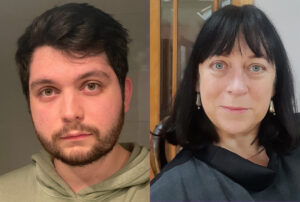
    Eoin and Siobhan Campbell proposed a mother-son collaboration, writing on one theme through their different chosen genres. Siobhan is a poet and Eoin writes original fan supplements for the World of Darkness RPG series.

    Together they will explore British & Irish folklore of the night-time world and the unseen borders, through traditional poetic storytelling, prose and gaming mechanisms, drawing in other materials along the way.

    We loved the collaborative structure of this proposal, and the marrying of ancient and modern narratives. The hybrid nature of folkloric creatures and the shifting details of oral stories made this a great fit for the amalgamatic brief, while the different techniques and interpretations the two writers apply to familiar legends bring harmony and contrast to a subject that attracts poets and gamers alike.

    The informal, subversive nature of fan-made narratives and characters also echoes the ungovernable nature of folk stories and songs, as acts of creativity and resistance, and as ways of interpreting a world.
    Follow Siobhan

    Martin Kratz

    on negative biographies, and what remains when the subject vanishes
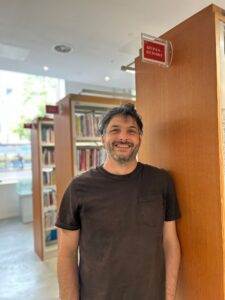
    Martin Kratz pitched us a deliciously strange concept album of a book: what happens when we try to write a biography, but remove the subject from its core?

    The idea stemmed from John Keats’ notion of negative capability: “when a man is capable of being in uncertainties, mysteries, doubts”. In Martin’s original proposal, he describes reimagining “Keats’s life without him in it, after reading numerous biographical retellings of his death… There was something morbid about the way biographers were constantly resurrecting him, only to let him die again. Eventually, I came to feel the same about what I had done.”

    To reinvigorate his own troubled text, Martin gave his words to other writers to play with. In a workshop setting, the source material was erased, cut up and collaged, and the Negative Biographies project began to take shape.

    In addition to Barthes’ ‘death of the author’ idea, in which authorship itself is dropped down a trapdoor, this project builds on serious works and pastiches alike, from Samuel Johnson’s Lives of the Most Eminent English Poets to Marcel Schwob’s surreal Imaginary Lives.

    From an amalgamatic perspective, we really liked the idea of disrupting the traditional biography form, as well as the satire on sacred cows and poetic canon. Keats himself has been decentred in this proposal, as Martin draws other famous figures into the vortex. The form of each biography mimics the use of negative space in drawing: by focusing on the white spaces and absences around a scene or figure, we might actually find a truer image of them left behind.
    More about Martin

    Anita Slater

    on guidebooks of all kinds, from city guides to self-help bibles

    Anita Slater loves guidebooks. All kinds of guidebooks. In fact, she wrote her master’s thesis on contemporary witchcraft and self-care books, and the fascination kept growing. Anita’s &Friends proposal played with the structures, features and tropes of guidebooks (themselves quite fragmented and amalgamatic), and looked at how the idea of a guidebook is changing (Could a TikTok skincare reel be the new Make-up by Virginia Vincent?) .

    Two things struck us about Anita’s pitch:
    1. This was a fantastic subject for an amalgamatic book, which a huge range of materials and approaches to draw on.
    2. The sheer enthusiasm Anita had for the subject, which was infectiously joyful.


    In addition, the subject was inviting and familiar to all readers, which left countless options for using and subverting that familiarity. Guidebooks are something we have all encountered, from parenting manuals to board game instructions to furniture assembly to tours of Paris catacombs. Readers can dive right in and enjoy being both led and misled by the author.
    Follow Anita

    Daphne Smith

    on procrastination, productivity and the siren-song of cosy games
    The working title for Daphne Smith’s &Friends book is Don’t You Have Things To Do? This will be a familiar internal voice for many people, and it’s easier than ever now to find yourself spirited away by distractions, before coming to in an avalanche of clutter and despair.

    If the title hadn’t already intrigued us, the second strand of Daphne’s pitch brought in the cuteness and ostensible comfort of the ‘cosy game’ genre (think Animal Crossing, Pokémon etc.). At once a source of comfort and time-poverty, these gentle, colourful games have a much less cosy side. As Daphne puts it, they are “often coloured by perfectionist, completionist, efficiency-driven, productivity-obsessed, resource-hoarding, compulsive, addictive impulses.”

    I referenced the poppy field in The Wizard of Oz at the start of this post, and Daphne’s proposal describes a similar space of both comfort and danger. Are the in-game illusions of milestones and achievements helping us stay sane, or preventing us from making progress in life – and is real-world ‘productivity’ any more meaningful?

    Daphne’s proposal was a really striking take on amalgamism, offering mixed-media potential as well as structural opportunities (surely this is a blank cheque to interrupt and disrupt the reader’s flow), and we loved that the specific game references (which could have alienated non-gamers) were brought back each time to a relatable emotional space.
    Follow Daphne

    Chrissy Williams

    on the wild works of David Lynch
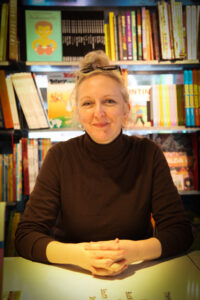

    If we were to name an artist who embodied the amalgamatic spirit, David Lynch would be right up there, but so would Chrissy Williams. Both have worked in a range of media, and allowed it to colour their other work.

    Lynch began as a painter and described his movies as “moving portraits captured on celluloid”, while also creating music, comic strips and furniture.

    Chrissy’s poetry has drawn on her work as a video games journalist and comic book editor, and plays with different kinds of text, from scripts to collage. She is also the author of her own graphic novel series, Golden Rage, and co-edited Over The Line: An Introduction to Poetry Comics for Sidekick, with artist Tom Humberstone.

    In a way, an amalgamatic approach might be the only proper way to celebrate Lynch’s output. His narratives are often fractured and conflicting, full of doubles, dreams and strange interventions, and he will celebrate a vinyl-clad American diner with the same reverence as a Van Gogh painting.
    Follow Chrissy

    That’s our squad for this pilot &Friends run. Excited? We are!

    Follow us at the links below to see how these books take shape, and to hear about future calls!

    Instagram | Bluesky | Not a fan of the socials? Try the good old mailing list!

  • Five Fixes For Contemporary British Poetry Culture #1: Prize Culture

    General introduction: What are we ‘fixing’?
    I WOULD characterise the major problem with contemporary British poetry culture like so: I have, on my shelves, a growing collection of  intensely idiosyncratic, vibrantly multifarious books, almost resonating with the small power of their grimoire-like content, connecting me to myriad lived experiences, intelligences and lives of the mind. They’re filled with play and dance, wisdom and strangeness, violent shifts in temperament and technical virtuosity. It’s a relatively modest treasury, but there is enough wealth there that I don’t expect I’ll bleed it dry in my lifetime. And that’s assuming I don’t keep adding even more books. They are talismanic; to carry one with me on a jaunt, or into work, is to shield myself just a little against the creep of anxiety and despair. They do not all agree with each other. They do not all agree with me. Some of them are vexing. Some are frightening.

    At the same time, beyond my bookshelf, in the public sphere, there is this thing called poetry. Supposedly it is the same thing. When you look at the individual words and names and titles, by god, it is the same thing. But in the public sphere, where it is acknowledged and talked about, it seems to amount to the vague and unaccountable indulgences of the sentimental and the terminally comfortable. It dithers. It all looks the same. It is oddly pleased with itself, at the same time as squirming with insecurity. It constantly insists that it is Important and Brilliant, but when asked why, it sulks and storms off to its bedroom. It doesn’t want to surrender its stories or dirty its dress; it simply wants to be gazed at. The warlocks become burghers, the cosmonauts streakers. It looks like an isolated empire in opulent decline.

    I don’t see any natural reason why this stark disconnect between realities should exist, why it can’t be changed. It isn’t to do with the quality or health of the art itself; it is entirely a problem of how poetry chooses to present itself to the world, a collective failure to grasp that what makes a medium rich, what draws multitudes to it, is not its common character but its genetic complexity, its resistance to easy summary. Every time poetry tries to tell the world what it ‘is’, or boasts of its vitality, or proposes its practitioners as a ‘type’, or elects a representative, it further closes itself off.

    I say at the outset that the purpose of this exercise is not to assign blame, and certainly not to suggest that no one else is aware of the problem or trying to do anything about it. Systemic, cultural problems are the sum of millions of unintentionally complicit individual behaviours. In The Man Who Was Thursday, the entire anarchist council turns out to be composed of spies who are trying to destroy it from within. Similarly, I’m prepared to believe that most of the individuals comprising contemporary British poetry culture are allies in the same struggle.

    So with that in mind, the first ‘fix’ on my list is

    1. Acknowledge prize culture for what it is and what it does, and make it do its job better.

    It shouldn’t be a surprise that prize culture features first on my list, but since it’s such a tediously contentious and oft-visited area, I’ll need to be exact about what I mean. Prize culture is poetry as a spectator sport, but one which takes place through darkly tinted glass, goes out of its way to avoid spectacle and advertises itself fraudulently as an evaluative process.

    The effect of the fraud is to cause practitioners to discuss the problems with prize culture in an entirely confused way, forgetting its real purpose. The effect of the opaqueness is to make rancour out of the healthy conflicts that exist within poetry because practitioners are left guessing – or piecing together rumours – to understand a decision-making process that refuses to account for itself and its powerful aftershocks. It’s WrestleMania held at a secret location, with most of the contestants absent.

    Starting further back, no poetry prize exists merely to reward ‘the best’ of anything, even if such a function could be scrupulously performed. Smaller prizes exist to raise funds for their organisers. The big ones, however – the Forward and the Eliot in particular – are primarily a service to what we might call ‘the poetry industry’. They are mechanisms for publicity, and for pot-stirring. One of the remits of the Forward Prize is “to make people who don’t usually read it more aware of poetry” (quote attributed to one of last year’s judges).

    It’s important to understand this, firstly because it’s a waste of time, therefore, to spend too much time worrying about whether the selections really represent the ‘best’ of any given category. Even if you believe such objectivity is possible, that mission is completely overridden by the more measurable purpose. If the Forward or the Eliot mysteriously stopped producing spikes in sales for shortlisted books, a serious reform would be undertaken immediately, as a matter of emergency, no matter if the entire world agreed on the correctness of the selections.

    The second reason it’s important to understand this is because the prizes should be much better at this task than they are. The shot in the arm they give ought to be longer-lasting and felt across the wide field of contemporary British poetry. In other words, they should be creating more readers of poetry. They are not.

    Prizes could better work towards achieving this purpose, however, if the debate about strategy were more inclusive and not held behind closed doors. It’s clear to anyone with their ear to the ground that judges and officials regularly wrangle with the politics of their decisions in private, and it doesn’t take a powerful intellect to guess that part of the reason so much of a shortlist is composed of books by non-independent publishers is that these publishers are best able to supplement the resulting publicity with their own marketing muscle. Even if individual judges swear blind that this didn’t cross their mind for a moment, the panel itself will often represent a bias towards the range offered by these publishers, with at least one representative from their lists.

    Strategy is certainly something that needs to be urgently revised. There is a fundamental crudeness to the way the prizes attempt to make news (and, therefore, readers) out of their processes. The appeal of any contest lies in the narratives that spring from it, but year on year, prizes return to the same tired plots: eminent poet cements reputation. Or: hotly tipped young poet still on a roll. That’s it. These are boring stories, and that’s why, in recent years, we’ve seen the announcement of shortlists flavoured firstly by weak proclamations of ‘a great year, a mammoth task’, then by controversial statements. Where are the upsets? Where the uproar that X would have won but for a quirk of circumstance? Where the rivalries between different houses, or movements, or ideas of poetry?

    In answering this last question, it becomes obvious that one of the major strategic failings of prize culture is its disavowal of the fracturedness of British poetry, its aspiration towards a smooth meritocracy, free of tribal conflict. But there’s a reason why movements are remembered, why they are born, beyond generational tensions, and it is this: movements make for stories, with characters, with success and failure, and stories make for contexts in which – or through which, rather – poetry can be discovered by readers. This also helps explain why a proportion of poetry readers turn away from the present with a sneer but embrace the often more difficult poetry of the past, long-dead poets having settled into their narrative/mythological bedding.

    Contrast with Fiona Sampson’s approach to current day poets in Beyond the Lyric: A Map of Contemporary British Poetry. The subtitle tells all: a ‘map’ presumes a static landscape. The nomadic tribes that move across it, meeting and mixing, are left undocumented. That is to say, clearly, our poetry is fractured, and battles are fought in key territories, but considerable effort is made to draw a veil over proceedings, to manufacture instead the image of a wholesome family perpetually engaged in warm celebration. Is it any wonder no one finds this interesting? The real story of British poetry – one of passions thwarted and rewarded, of new challengers, blacklists, alliances, ambitions, affairs and mad hopes dashed – is relegated to the realm of pub gossip while the official account reads: All calm, no ships sighted, everyone lovely. The carefully managed events surrounding the prizes, meanwhile, are designed to be condensed down into a single line in a poet’s biography. Look at what was of markedly more interest to journalists and other commentators over the last two years: the fallout from Christian Ward’s multiple plagiarisms, or the shortlistees John Kinsella and Alice Oswald withdrawing books due to ethical misgivings. Both times too many poets were eager to wave away stories which, unlike the well-worn narrative of wholesomeness, piqued people’s interest. (Here’s a joke for you: is poetry brown bread?)

    It ought not be this way. The staged contest should be a mechanism for revealing the variety and energy and, yes, obsessiveness, that lies behind this art form. It should be a chance for those normally interested in poetry to find something or someone to identify with and cheer on amongst the flinting of differing ideas and ideals. The objection I sense bubbling up goes something like this: But it should be about the poetry, not personalities, not egos. What you’re suggesting is that the poetry itself be subsumed by scandal and cheap theatrics. I don’t believe, based on the lively discussions I’ve seen poets engage in, that it need be like this either. There must be something in between theatrics and fixed smiles, something which offers a wide open window to the poetry behind the posturing. And how many readers discovered Rimbaud through his reputed scurrilousness, Catullus through his obscene gossipmongering? The zealousness in dismissing drama and histrionics as beneath our contempt speaks of a failure to recognise that one of the sources of such embarrassments is deeply felt passions being diligently, ritualistically stifled. Only some of that passion is egotism; the rest is artists’ passion for their medium.

    “Why isn’t the story ‘UK poetry in great shape’?” poets often ask when a journalist alights on some grubby escapade. Because that’s not a story; that’s a press release.

    So to bring this section to a head, I’m calling for this:

    (1) that the organisations behind larger prizes express their purpose more openly and straightforwardly, and instigate contributions and discussion around achieving that purpose;

    (2) that the affiliations of all judges be loudly announced – the better to provoke them to account for any decision which may appear overly partial, the better to quell rancour that such partiality is kept hidden;

    (3) that judges openly admit to and discuss the political or strategic element of their decisions – whereby a newcomer is pitted against an old hand, or a poet is included to ‘represent’ a certain strain of poetics, and so on – so that these decisions can be further discussed, and more enticing narratives can come out of the contest;

    (4) that we anticipate and welcome the conflict that comes with our choosing who and what to promote and reward, instead of valorising a politeness that borders on the obsequious.

    In finer summary: poetry already tries hard to be a spectator sport. It just does it badly. Do better, and people will then come on to the poetry itself.

    ***

    Still not got your fix? Find the full post series here.

    Poems in Which


    Jon and I have poems in the latest issue of new poetry magazine Poems in Which. The concept is simple but fantastic. Remember all those poems that begin in this way? So do editors Amy Key and Nia Davies.

    The manifesto for PiW reads:
    Poems In Which is an occasional poetry journal edited by Amy Key and Nia Davies. Poems published here share a common title, ‘Poem in Which’ and they must be new, written for this  journal, rather than post-titled to fit. Beyond that there are no constraints, nothing is true, everything is permitted.

    As a challenge, writing a piece along these lines was at the same time was a free but focused experience. Given those three words as a kick-off, your brain immediately starts building scenarios. I worked with three possible titles before hitting upon ‘Poem in which I am captured. Again.’, and in the end I wrote something out of character/voice, which is always mighty satisfying.

    Check out issues one and two here!

    CONTACT:

    contact [a] sidekickbooks.com

    Sidekick Books Site assembled by Jon.
    Wordpress TwentySixteen theme used to power the news and books sections.