Books | Poems | News | About

sidekickBOOKS

Amy Key’s “Luxe” and Camellia Stafford’s “Letters to the Sky”


For your joy, ’tis not one but two reviews that you get this weekend! Well, one review, but about two books.

We’re taking on Amy Key and Camellia Stafford, authors of Luxe and Letters to the Sky respectively. Our own Judi Sutherland happened to be at the event in which both of these books were launched, and she decided to treat them together. Found out what she thought in her review.

Have a great Sunday!

Mini-Reviews: Finlay, Petrucci, Celan

1. SELECTIONS by Ian Hamilton Finlay


Published by The University of California Press; buy here.
Reviewed by Simon Turner

Published as part of the University of California’s Poets of the Millennium series, this is a generous and necessary selection of the Scottish concrete poet’s work.  Necessary because of Hamilton’s methods of publication, as he favoured for the most part either fugitive forms (posters, broadsides, postcards), or permanent site-specific pieces in gardens and public places, meaning that much of the work gathered here has not been previously accessible to the general reader.  An excellent introduction by the poet’s son, Alec Finlay, proffers a wealth of biographical and critical material (including generous quotations from Finlay’s vigorous correspondence), which is vital for any appreciation of a writer such as Finlay, who seemed to thrive on contradictory extremes.  Provincial and internationalist, conservative and revolutionary, classical formalist and avant garde rabble-rouser: Finlay was all these things, and the real achievement of this selection is that a functioning continuity is delineated, whereby these disparate modes can be incorporated into the larger narrative of Finlay’s work.  If the concrete pieces here are not as immediately accessible or fun-loving as the comparable work being carried out by, say, Edwin Morgan during the same period, they have a severe beauty of their own, whilst Finlay’s more cantankerous aphorisms (“Tolkien is a teashop Wagner”, for example) are genuinely entertaining.  Finlay himself provides, in Camouflage Sentences, perhaps the most fitting summation of his aesthetic: “To camouflage a tank is to add what Shenstone calls ‘the amiable to the severe’ – the beautiful to the sublime, flutes to drums”.       

2. ANIMA by Mario Petrucci

Published by Nine Arches Press; buy here.
Reviewed by the Judge.

The guy above me already wrote a full review of this book, which is kind of a load off my shoulders – summing up this verse in the six/seven minutes of a video review would have been a Batmanian task (the adjective substitutes ‘Olympian’ – it’s 2014, noobs!!). But, repetita iuvant: I can’t help but throw in an extra recommendation for one of the best books of poetry I’ve read the whole of last year, Mario Petrucci’s anima. I’m generally not too fond of poetry which hammers the line-break (many of these poems have only two words per line or thereabouts), but here it is so skilfully pulled off that you almost breathe in tune with the words. I’ve seldom read poetry that so successfully reproduces the intimate rhythms of the human heart (literally and metaphorically). The poetry in anima is built on concatenation – each line extends the word or the sentence before it, which you thought a moment ago to be complete, and this continuous alternation between plenitude and flux results in an organic, breathless and intensely lyrical ‘narrative’ (for lack of better words). It’s kind of like Guitar Hero, you can’t really describe it, it’s got to be experienced.

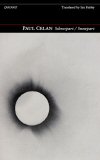
3. SNOW PART / SCHNEEPART by Paul Celan, translated by Ian Fairley.


Published by Carcanet; buy here.
Reviewed by Jon Stone.

Celan, as translated by Fairley, is my go-to poet for poems that are pure jagged fragments of song – glowing, alien meteorite slivers – and Snow Part contains a bracing blizzard of them. I just can’t get enough of the portmanteaus and coinages – ‘vinehooks’, ‘intercurrent’, ‘watershabrack’ ‘woodenvisaged’, ‘templesplinters’ and on and on. Celan is sometimes called cryptic, and you certainly don’t go to these pieces for stories or discursives. What you get instead is these small, incredibly strange flashes from another world, one frightening image melting into the next.

Troika: A Poem for the Sochi Winter Olympics

I was recently lucky enough to feature on Jude Cowan Montague and Rob Edwards’ Resonance FM show The News Agents (you can listen to the recording here). Mark Waldron and I were asked to create new poetry in response to specific news events. Mark can be heard reading his excellent piece on  North Korean photo censorship via the above link.

I wrote in response to the Russian gay ‘propaganda’ laws in the run-up to the Sochi Winter Olymics, which begins today. In particular, I focused on the entrapment, kidnapping and videoed torture of gay Russians, which has escalated since the law was passed. You can hear me reading it on the show, and here’s the poem in readable form. I recommend following English PEN for updates on the campaign to repeal this law.


Troika

A scared boy before the video camera:
all Vasilisa, broomed into the woods
to fetch a light. To tell Mother Russia
what he likes. They say, tell them
what you like. And his face is burning,
is a landscape of purple mountains.
And his ribs are raw, and he says, Russia,
you may as well kill me.
Or he may as well have done.

Or this one, dragged into a van
and sped out by a would-be hookup
who turns, in the dark and the rumble of traffic,
into a six-armed, hard-handed insect;
is legion; is painting him
blue, white and bloody; is beating him
hard like a balalaika; is smiling and waving;
saluting the morning;
is forcing him open
with a bottle and a bat.

Or this one. Or this one.
Naked on their knees
or gagged with a watermelon,
shaved, doused in urine.
What the state does not allow
they do not do. And it is
all for the children.
For Russia. So see him
admitting his devilry,
rainbowed in bruising; made to
brandish a dildo like a slow-dying torch.

Sunday Review: The Last Wolf of Scotland by MacGillivray


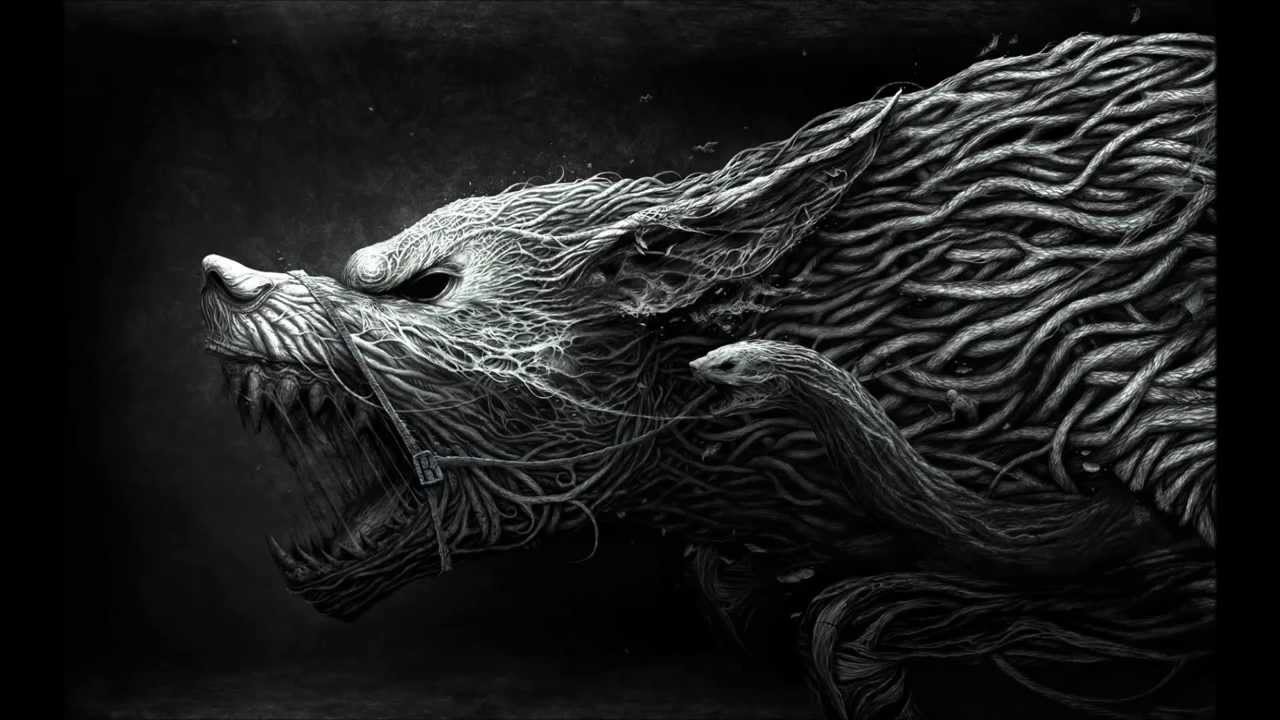
The coincidences of life. Would you believe that while I was uploading Harry Gilesreview of MacGillivray‘s The Last Wolf of Scotland, I also happened to be listening to Wolf (& Fytch)? You don’t know what I’m talking about? You wouldn’t, of course. Most people consider this topic boring, and the result is that when I speak of it whoops look how late it is I’ve gotta go to the Post Office. You get me.

Read Harry’s review here, and enjoy your Sunday!

Mini-Reviews: Elliott, Lindenberg, Johnson


1. MORTALITY RATE by Andrew Elliott


Published by CB Editions; buy here.
Reviewed by Jon Stone

Mortality Rate contains an abundance of the kind of pieces that are really half poem, half something else. The something else in this case is seedy, surreal, almost noir-ish microfiction, taking place at night, in cities and liminal spaces, in Europe and America. Long, loping lines abound, sex is handled in a kind of rough, frank way, and the same pair of female characters turn up in multiple poems, stripped to various states. It’s a very generous volume, written mostly in a voice that delights in taking winding detours. Highly recommended for quiet winter nights with a whisky.

2. LOVE, AN INDEX by Rebecca Lindenberg


Published by McSweeney’s; buy here.
Reviewed by Ian Chung

Since its founding in 1998 by Dave Eggers, McSweeney’s has grown into a publishing empire in its own right, with flagship literary journal Timothy McSweeney’s Quarterly Concern being joined by other titles like the monthly The Believer, food quarterly Lucky Peach and sport journal Grantland Quarterly. One of the publishing house’s most recent imprints is the McSweeney’s Poetry Series, of which Rebecca Lindenberg’s Love, an Index is the first title. The collection chronicles Lindenberg’s relationship with fellow poet Craig Arnold, who disappeared in 2009 during a solo hike in Japan. A strong debut for Lindenberg and the series, Love, an Index embraces the elegy form, and in poems like ‘Status Update’ and ‘Status Update (2)’, reworks it for the Facebook generation. The standout moment of the collection, however, is the titular sequence that occupies the middle third of the book. An alphabetical indexing of Lindenberg and Arnold’s relationship, the poems are brutally beautiful, ruthlessly detailing minutiae in the wake of her loss. Joining other poetry collections about losing a partner like Douglas Dunn’s Elegies and Paul Monette’s Love Alone: 18 Elegies for Rog, Lindenberg’s Love, an Index shows the mind of the poet at work, transmuting personal tragedy into powerful art.

3. TREEDS: POEMS IN SHETLAND DIALECT by Laureen Johnson


Published by the Hansel Cooperative Press; buy here.
Reviewed by Harry Giles

Treeds is one of a small but rich crop of chapbooks from Hansel Co-operative Press, a small-scale outfit publishing and promoting writing and art of Orkney and Shetland. Printed on good thick stock and gorgeously hand-finished, the chapbook is pocket-sized but big-hearted. The writing is vernacular Shetlandic – not a synthetic Scots, but a language very much alive and rooted in place and culture. The fine glossary is a neat guide to those new to the language, though not burdensome or pedantic, making the poems an excellent route into Shetlandic for those willing to put in some small effort.

The poems cover family and livelihood, land and water; the title piece (meaning “threads”) describes a weaving together of place and person into a poetics of sense and feeling. The unrhymed lines advance in breaths, matching the everyday language used; the sense is of being given stories and wisdom honed by time and wind, though never is this hoary or slight. The tone is as much humorous as delicate, and often very sad in its simplicity – as in Gynae Ward:

                “Nae prenk, damned little pent,
                nae comouflage,

                Here da oppenin bud, da faded leaf,
                da prunin shears.”

Pamphlet publishing is a source of diversity in contemporary poetry, and local presses a way to meet outlying poetics on their own terms. Treedsis a long way – in style and language – from what you’re likely to find in more urban-centred anthologies and magazines, and so, along with Hansel’s wider output, demands your attention for its particular music and beauty.

CONTACT:

contact [a] sidekickbooks.com

Sidekick Books Site assembled by Jon.
Wordpress TwentySixteen theme used to power the news and books sections.