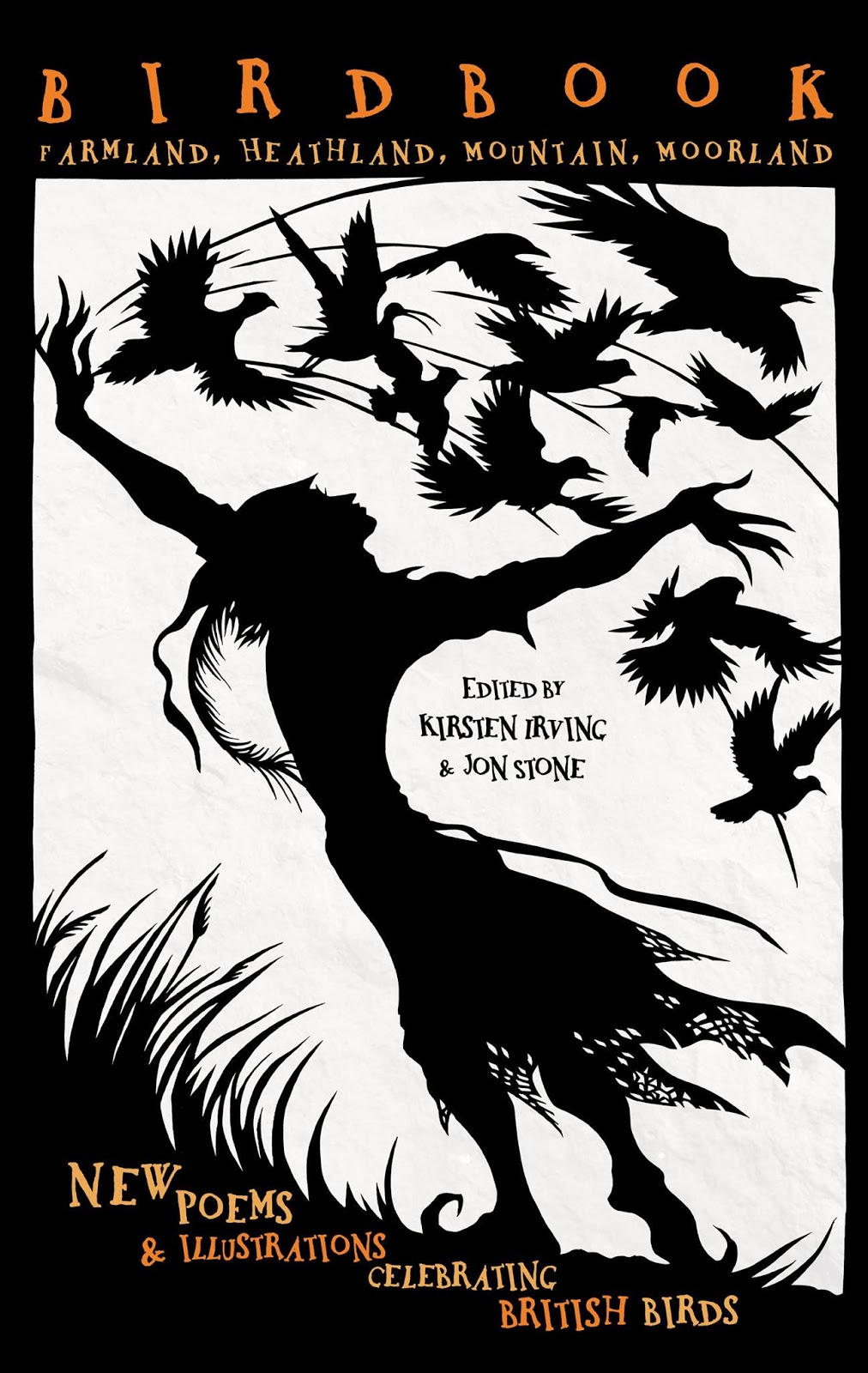
Today on the Sidekick Play-Poem Archive, we’re releasing more birds! This time, it’s the turn of Alison Brackenbury, with her resonant, fleeting tribute to the wintering fieldfare.
Author: Kirsten Irving
The Sidekick Advent Calendar: Day 7
Christmas is a time for following stars, and on the Sidekick Play-Poem Archive today, we’re following Simon Barraclough out into the reaches of space, with an excerpt from science-poetry collaboratorio, Laboratorio.
Meanwhile, over in my commentary, I wax on about the loneliness of the vast great yonder, with bonus Kubrick.
Blast off!
Meanwhile, over in my commentary, I wax on about the loneliness of the vast great yonder, with bonus Kubrick.
Blast off!
The Sidekick Advent Calendar: Day 6
A slight change of pace for Day 6, as we interview artist Lois Cordelia about her work on the Birdbook series and her stunning live demos.
Here’s a taster!
Kirsten: Who are your major artistic influences?
Lois: My major artistic influence has been children’s illustrator Jan Pienkowski (born 1936, in Warsaw), in whose West London studio I have worked part-time as an artist’s assistant since the days of my GCSE art reference project (1999). Jan is best known for his Meg and Mog series, and for his pioneering pop-up books, including Haunted House, but he has also created many volumes of silhouette illustrations with a strong fairy-tale emphasis. His intricate silhouettes were originally hand-drawn, until I began cutting them out for him, based on his drawings, using a scalpel.
The most valuable thing I have absorbed from working so closely with Jan all these years is not the knowledge of art techniques, but rather his eccentric, sometimes completely ‘crazy’ approach towards art, and more generally towards life.
Most refreshing of all is his attitude towards so-called ‘mistakes’: Jan does not believe in mistakes. When something has just gone horribly ‘wrong’, he exclaims: “Wait! Maybe it’s better like that!”
You can read the rest of the interview here on Lois’s site.
Here’s a taster!
Kirsten: Who are your major artistic influences?
Lois: My major artistic influence has been children’s illustrator Jan Pienkowski (born 1936, in Warsaw), in whose West London studio I have worked part-time as an artist’s assistant since the days of my GCSE art reference project (1999). Jan is best known for his Meg and Mog series, and for his pioneering pop-up books, including Haunted House, but he has also created many volumes of silhouette illustrations with a strong fairy-tale emphasis. His intricate silhouettes were originally hand-drawn, until I began cutting them out for him, based on his drawings, using a scalpel.
The most valuable thing I have absorbed from working so closely with Jan all these years is not the knowledge of art techniques, but rather his eccentric, sometimes completely ‘crazy’ approach towards art, and more generally towards life.
Most refreshing of all is his attitude towards so-called ‘mistakes’: Jan does not believe in mistakes. When something has just gone horribly ‘wrong’, he exclaims: “Wait! Maybe it’s better like that!”
You can read the rest of the interview here on Lois’s site.
The Sidekick Advent Calendar: Day 3
Day 3! Time to get out your exploring hat and go digging through the cultural sediments with Giles Goodland and Alistair Noon. Yes, today’s Sidekick Play Poem comes from the Team-Up Surveyors Riddles, and takes a dance with Dante.
The Sidekick Advent Calendar: Day 2
Day Two, and the next entry in the Sidekick Play Poem Archive comes from cinematic bestiary Lives Beyond Us, in the guise of Rebecca Wigmore‘s ‘The Lion Handler’s Advice to a Young Melanie Griffith’.
This interactive poem includes a commentary from LBU‘s poetry editor Kirsten Irving.
Get prowlin’!
![]() |
| Melanie and Neil at home |
This interactive poem includes a commentary from LBU‘s poetry editor Kirsten Irving.
Get prowlin’!
Laboratorio Interrogatorio: an interview with Simon Barraclough
On 12th November, the Royal Observatory at Greenwich is hosting ‘Laboratorio’, a live reading from our book of the same name, featuring editor/poet Simon Barraclough and a number of the real life astrophysicists who contributed work. Tickets are £8 and can be bought from the Royal Museums Greenwich website here.
Ahead of this exciting trip into other realms, we thought we’d explore the inside of the editor’s head, interviewing Simon about spare spaceships, kamikaze deer and smashing the science/art binary.
Where did your interest in space sciences come from and what led you to combine it with poetry?
I think I was into space before I knew anything about the science behind and around it. When I was a little boy I used to lie on my back on the huge unlit playing field in front of my house in Huddersfield and marvel at the night sky, the Milky Way (which was very visible on the darkest, clearest nights), the bright planets and the satellites (which I hoped were alien spaceships). I also spent hours in the library pawing over books on cosmology and astronomy. I just loved the beauty of it all and the unidentifiable yearning it provoked: a yearning to explore, to disappear, to change my life, to be abducted into the infinite.
As I grew older I learned more about physics, astronomy and space exploration but by then I was so immersed in art and literature that I neglected the more scientific path I might have taken. I must admit though, that while my physics was strong, my maths began to fail me around the age of 15 or so and that nudged me towards literature and history and creative writing.
How did you become involved with the Mullard Space Science Laboratory?
As with many good things, it happened almost by chance. I took part in an event with Marek Kukula (our wonderful Public Astronomer) called ‘Notes from the Universe’ at the South Bank in early 2013. I was talking about a sequence of ‘micro-poems’ I had written for Arc Magazine called ‘From Big Bang to Heat Death’, and also presenting work from my then-current book project ‘Sunspots’. Marek is very keen on bringing art and literature and science together and while we were chatting I asked him if he knew any solar physicists I could speak to about ‘Sunspots’. He suggested Dr. (now Professor) Lucie Green, who presented ‘The Sky at Night’ for several years. Lucie studies the Sun and our shared obsession meant led to some enthusiastic emails and phone call and we eventually met at her place of work, UCL’s Mullard Space Science Lab out in the green Surrey Hills.
My initial aim in all this was to augment my Sun research with the help of the Solar Group at the lab but I found the whole place so quirky, rich, diverse, and fascinating that I started thinking about doing something more inclusive and outgoing than simply working on my own book. So I began chatting to Lucie about some kind of ‘writer in residence’ role for myself, in which I would write about the laboratory and its inhabitants but, more importantly, I would try to generate new work and new forms of communication between the staff and students of the lab and its many different departments. We were lucky enough to receive a small grant from the Science and Technology Facilities Council, and I took up the role in January 2014.
What was the most surprising part of the residency for you?
Deer jumping into the path of the car that drove me through the narrow winding lanes to the lab. Less viscerally, I was surprised by how many people took time out from their incredibly busy and fascinating jobs to read, write, discuss and enjoy poetry with me every couple of weeks. I was also pleasantly surprised that they were willing to do the strange things I asked them to: like automatic writing, reading Beckett plays in the blazing Sun and recording a site-specific poem in a cramped, resonant observatory. I wasn’t surprised that our discussions were so thoughtful and entertaining or that the work people produced was of such high quality.
Give us your favourite space fact from your time at the laboratory.
Something I hadn’t thought about was how, when a spacecraft is designed, tested and prepared for flight, two of them are made but only one sent on its mission. The remaining craft is used for further testing and comparison should the space-bound version encounter problems. Matt Hill, a PhD student working on cryogenic physics, wrote a gently poignant poem called ‘Flight Spare’ about this less favoured also-ran.
What was the idea behind mixing the work of poets with space science interests and researchers comparatively new to poetry?
The ‘official’ idea was to explore new ways for the members of the lab to communicate, work together, step out of possible ‘silos’, and play with new ways of thinking and writing. I also wanted the lab to become a little more ‘conscious’ of itself and also to find a new way for the facility to engage the public. At our ‘Sun and Moon’ event with Liane Strauss, many local fans of astronomy and literature came up to the common room for poetry, films, wine and nibbles. It was the first time that some of the scientists had read their creative writing in public. The ‘unofficial’ idea was to do something a little different and enjoy ourselves.
So what’s with the silverfish on the cover?
A few weeks into my residency we discovered an infestation of silverfish in the library, assiduously devouring a century’s worth of astronomical research right under our noses. This led to many discussions about knowledge, data, ‘higher’ and ‘lower’ intelligences and how, if we had to, we might recoup vital scientific knowledge from the innards of silverfish. Also, silverfish are such intricate, beautiful creatures that took billions of years to get here: through a certain lens they looked to us like alien beings or exquisite spacecraft. The anthology is dedicated for spaceships and silverfish, which I find quite moving and very apt.
Why do you think there is such a tendency to segregate artistic and scientific practice, culturally, and to categorise people as left-brained or right-brained?
I think we have a great need, perhaps an ancient need, to make quick decisions, sweep away nuance, and act. For this reason, binaries are very attractive: go one way or the other; get out of trouble quickly; choose ‘yes’ or ‘no’; don’t look back, don’t regret (if you can avoid it). We love to put things in neat boxes, to categorise each other, and to lay arguments to rest. You see it all the time in current obsessions with personality charts; right-brain/left-brain surveys; which Star Wars character are you?; are you on the left or right of the party? and so on. Digital technologies and the very means by which we communicate today are grounded on ones and zeros. Only this morning I read an interesting piece by Jonathon Coe about humour in which he writes, “The internet seems to be making our brains more binary, reducing everything to the polarised options of “Like” or “Dislike”, thereby thwarting the human impulse to entertain two contradictory responses at the same time, which seems to be one of the cornerstones of humour”
Such binaries tend to fall apart when you get to interact with people up-close, of course, although their traces have an impact. Modern education has a way of dividing and channeling people down the two classic cultural pathways of Science and Humanities, and with those paths come all kinds of assumptions, anxieties, and unfortunate blockages to certain types of knowledge. My masters degree was in Critical Theory, which in many ways was grounded in an attempt to bring the humanities and science together (think Levi-Strauss, structuralism, poststructuralism, Lacan’s unconvincing flirtation with maths and scientific formulae). Although a certain amount of this was, at least to my mind, tortuous sophistry, I suppose I was always open to bringing these different approaches to culture together.
Part of the whole point of ‘Laboratorio’ was to merge and blend the worlds of space science, engineering, scientific writing, creative writing, performance and interpretation. While there was a certain amount of fear on both ‘sides’ during my year at the lab, the results are a resounding testament to how all these fields and dichotomies can intermingle. Although I now feel even worse about my limited maths than ever. A good question that needs much more space than this to discuss.
Describe the appeal of Laboratorio to someone new to poetry and someone new to planetary science.
I would say to both parties: dive into this beautifully produced book for fun and challenging tales about ‘the multiverse’; read beautiful meditations upon what an ‘observatory’ is for; explore the poignant connections between the space lab and its Iron Age foremothers; get to know Aimee Norton, a brilliant guest-poet and astronomer from Stanford University; feast on a couple of Liane Strauss’s juicy Moon poems; read a tribute to Rik Mayall; and have fun with the plucky Rosetta probe. There’s a lot more going on in this generous anthology, and it has beautiful photos of the lab too! To quote the blurb: “Laboratorio revels in the poetry of science and the science of poetry.”
What advice would you have for other artists interested in doing a residency with scientists?
Be open, inclusive, enthusiastic, supportive and open to new ideas. And always have a trick or two, or a tricky exercise, in your back pocket. Also, make sure you accommodate those who may prefer quiet or solitary work to the more extrovert, group-based approach. But don’t worry about reaching everybody: some will appreciate your work silently and some won’t even realise you’re there! And do check out the STFC for possible funding. Without them, we couldn’t have made ‘Laboratorio’ happen.
Finally, tell us about the event at the Greenwich Royal Observatory!
On Thursday November 12 we are officially launching the anthology at the fantastic Peter Harrison Planetarium at Greenwich. Marek Kukula will chair a discussion between myself, Lucie Greene, Julia Gaudelli and Matt Hills and there will be short readings and visuals to boot. I launched Sunspots at the Planetarium and it’s a wonderful venue for mixing art and science in a dramatic setting.
Ahead of this exciting trip into other realms, we thought we’d explore the inside of the editor’s head, interviewing Simon about spare spaceships, kamikaze deer and smashing the science/art binary.
Where did your interest in space sciences come from and what led you to combine it with poetry?
I think I was into space before I knew anything about the science behind and around it. When I was a little boy I used to lie on my back on the huge unlit playing field in front of my house in Huddersfield and marvel at the night sky, the Milky Way (which was very visible on the darkest, clearest nights), the bright planets and the satellites (which I hoped were alien spaceships). I also spent hours in the library pawing over books on cosmology and astronomy. I just loved the beauty of it all and the unidentifiable yearning it provoked: a yearning to explore, to disappear, to change my life, to be abducted into the infinite.
As I grew older I learned more about physics, astronomy and space exploration but by then I was so immersed in art and literature that I neglected the more scientific path I might have taken. I must admit though, that while my physics was strong, my maths began to fail me around the age of 15 or so and that nudged me towards literature and history and creative writing.
How did you become involved with the Mullard Space Science Laboratory?
As with many good things, it happened almost by chance. I took part in an event with Marek Kukula (our wonderful Public Astronomer) called ‘Notes from the Universe’ at the South Bank in early 2013. I was talking about a sequence of ‘micro-poems’ I had written for Arc Magazine called ‘From Big Bang to Heat Death’, and also presenting work from my then-current book project ‘Sunspots’. Marek is very keen on bringing art and literature and science together and while we were chatting I asked him if he knew any solar physicists I could speak to about ‘Sunspots’. He suggested Dr. (now Professor) Lucie Green, who presented ‘The Sky at Night’ for several years. Lucie studies the Sun and our shared obsession meant led to some enthusiastic emails and phone call and we eventually met at her place of work, UCL’s Mullard Space Science Lab out in the green Surrey Hills.
My initial aim in all this was to augment my Sun research with the help of the Solar Group at the lab but I found the whole place so quirky, rich, diverse, and fascinating that I started thinking about doing something more inclusive and outgoing than simply working on my own book. So I began chatting to Lucie about some kind of ‘writer in residence’ role for myself, in which I would write about the laboratory and its inhabitants but, more importantly, I would try to generate new work and new forms of communication between the staff and students of the lab and its many different departments. We were lucky enough to receive a small grant from the Science and Technology Facilities Council, and I took up the role in January 2014.
What was the most surprising part of the residency for you?
Deer jumping into the path of the car that drove me through the narrow winding lanes to the lab. Less viscerally, I was surprised by how many people took time out from their incredibly busy and fascinating jobs to read, write, discuss and enjoy poetry with me every couple of weeks. I was also pleasantly surprised that they were willing to do the strange things I asked them to: like automatic writing, reading Beckett plays in the blazing Sun and recording a site-specific poem in a cramped, resonant observatory. I wasn’t surprised that our discussions were so thoughtful and entertaining or that the work people produced was of such high quality.
Give us your favourite space fact from your time at the laboratory.
Something I hadn’t thought about was how, when a spacecraft is designed, tested and prepared for flight, two of them are made but only one sent on its mission. The remaining craft is used for further testing and comparison should the space-bound version encounter problems. Matt Hill, a PhD student working on cryogenic physics, wrote a gently poignant poem called ‘Flight Spare’ about this less favoured also-ran.
What was the idea behind mixing the work of poets with space science interests and researchers comparatively new to poetry?
The ‘official’ idea was to explore new ways for the members of the lab to communicate, work together, step out of possible ‘silos’, and play with new ways of thinking and writing. I also wanted the lab to become a little more ‘conscious’ of itself and also to find a new way for the facility to engage the public. At our ‘Sun and Moon’ event with Liane Strauss, many local fans of astronomy and literature came up to the common room for poetry, films, wine and nibbles. It was the first time that some of the scientists had read their creative writing in public. The ‘unofficial’ idea was to do something a little different and enjoy ourselves.
So what’s with the silverfish on the cover?
A few weeks into my residency we discovered an infestation of silverfish in the library, assiduously devouring a century’s worth of astronomical research right under our noses. This led to many discussions about knowledge, data, ‘higher’ and ‘lower’ intelligences and how, if we had to, we might recoup vital scientific knowledge from the innards of silverfish. Also, silverfish are such intricate, beautiful creatures that took billions of years to get here: through a certain lens they looked to us like alien beings or exquisite spacecraft. The anthology is dedicated for spaceships and silverfish, which I find quite moving and very apt.
Why do you think there is such a tendency to segregate artistic and scientific practice, culturally, and to categorise people as left-brained or right-brained?
I think we have a great need, perhaps an ancient need, to make quick decisions, sweep away nuance, and act. For this reason, binaries are very attractive: go one way or the other; get out of trouble quickly; choose ‘yes’ or ‘no’; don’t look back, don’t regret (if you can avoid it). We love to put things in neat boxes, to categorise each other, and to lay arguments to rest. You see it all the time in current obsessions with personality charts; right-brain/left-brain surveys; which Star Wars character are you?; are you on the left or right of the party? and so on. Digital technologies and the very means by which we communicate today are grounded on ones and zeros. Only this morning I read an interesting piece by Jonathon Coe about humour in which he writes, “The internet seems to be making our brains more binary, reducing everything to the polarised options of “Like” or “Dislike”, thereby thwarting the human impulse to entertain two contradictory responses at the same time, which seems to be one of the cornerstones of humour”
Such binaries tend to fall apart when you get to interact with people up-close, of course, although their traces have an impact. Modern education has a way of dividing and channeling people down the two classic cultural pathways of Science and Humanities, and with those paths come all kinds of assumptions, anxieties, and unfortunate blockages to certain types of knowledge. My masters degree was in Critical Theory, which in many ways was grounded in an attempt to bring the humanities and science together (think Levi-Strauss, structuralism, poststructuralism, Lacan’s unconvincing flirtation with maths and scientific formulae). Although a certain amount of this was, at least to my mind, tortuous sophistry, I suppose I was always open to bringing these different approaches to culture together.
Part of the whole point of ‘Laboratorio’ was to merge and blend the worlds of space science, engineering, scientific writing, creative writing, performance and interpretation. While there was a certain amount of fear on both ‘sides’ during my year at the lab, the results are a resounding testament to how all these fields and dichotomies can intermingle. Although I now feel even worse about my limited maths than ever. A good question that needs much more space than this to discuss.
Describe the appeal of Laboratorio to someone new to poetry and someone new to planetary science.
I would say to both parties: dive into this beautifully produced book for fun and challenging tales about ‘the multiverse’; read beautiful meditations upon what an ‘observatory’ is for; explore the poignant connections between the space lab and its Iron Age foremothers; get to know Aimee Norton, a brilliant guest-poet and astronomer from Stanford University; feast on a couple of Liane Strauss’s juicy Moon poems; read a tribute to Rik Mayall; and have fun with the plucky Rosetta probe. There’s a lot more going on in this generous anthology, and it has beautiful photos of the lab too! To quote the blurb: “Laboratorio revels in the poetry of science and the science of poetry.”
What advice would you have for other artists interested in doing a residency with scientists?
Be open, inclusive, enthusiastic, supportive and open to new ideas. And always have a trick or two, or a tricky exercise, in your back pocket. Also, make sure you accommodate those who may prefer quiet or solitary work to the more extrovert, group-based approach. But don’t worry about reaching everybody: some will appreciate your work silently and some won’t even realise you’re there! And do check out the STFC for possible funding. Without them, we couldn’t have made ‘Laboratorio’ happen.
Finally, tell us about the event at the Greenwich Royal Observatory!
On Thursday November 12 we are officially launching the anthology at the fantastic Peter Harrison Planetarium at Greenwich. Marek Kukula will chair a discussion between myself, Lucie Greene, Julia Gaudelli and Matt Hills and there will be short readings and visuals to boot. I launched Sunspots at the Planetarium and it’s a wonderful venue for mixing art and science in a dramatic setting.
Blackout Poems: A National Poetry Day Downloadable Anthology
It’s National Poetry Day, and the theme this year is ‘Light’. To celebrate, Dr Fulminare has resurrected five ex-Poet Laureates, and we’ve commissioned them, along with a raft of still-living Sidekick poets, to contribute to a new, free, downloadable pdf anthology, ‘Blackout Poems’.
The poems are all written in the traditional ‘blackout’ style, which simulates reading in the dark. With iridescent page numbers.
Prize Poetry Cosplay competition at Free Verse this Saturday!
In what may well be a world-first, this Saturday, Free Verse Poetry Book Fair is hosting a Poetry Cosplay competition, with splendid poetic swag for prizes! Sidekick Books are stoked to be judging this versquerade, which will take place at the Square Pig & Pen, Holborn, just after the thrills and spills of the main fair.
For those of you curious, but with a budget reserved strictly for books, or a shopping bag that will not accommodate a full bodily replica of Purgatory, here are some suggestions:
1. Poets like writing about objects.
From W.H. Auden’s stopped clocks to Dorothy Parker’s red dress, there are stacks of adornments and gubbins with which to decorate yourself. Gertrude Stein’s Tender Buttons is chock-full of little bits and bobs. The title alone lends itself to a little simple craft.
2. Home-made and ramshackle wins the race.
No need to spend much – just raid the cupboards! Cover yourself in tinfoil to recreate ‘Silver’ by Walter de la Mare, or don a sheet for Donne’s ‘The Apparition’. It’s all about the walk-off in the end.
3. Puns are your friend.
Yes they are. And since I come from Grimsby, I am absolutely biased if you rock up in a GTFC football shirt and white beard,using the team’s nickname to be ‘Ryme of the Ancient Mariner’. Or something. What I’m trying to say is, you’re a wordsmith. Get smithy.
4. Team up!
Here at Sidekick, we’re all about collaboration, and if you’re shy, camaraderie might give you the boost you need. So whether you’re the Twa Corbies, the Owl and the Pussycat, or one man and his corvine nemesis for The Raven, it’ll be more fun with a friend.
5. If all else fails and you’re blessed with a strong chin, Ted Hughes is your spirit animal.
Disclaimer: Free Verse and Sidekick Books accept no responsibility to cool impartiality, should someone walk in in a full-on Jabberwocky outfit.
For those of you curious, but with a budget reserved strictly for books, or a shopping bag that will not accommodate a full bodily replica of Purgatory, here are some suggestions:
1. Poets like writing about objects.
From W.H. Auden’s stopped clocks to Dorothy Parker’s red dress, there are stacks of adornments and gubbins with which to decorate yourself. Gertrude Stein’s Tender Buttons is chock-full of little bits and bobs. The title alone lends itself to a little simple craft.
2. Home-made and ramshackle wins the race.
No need to spend much – just raid the cupboards! Cover yourself in tinfoil to recreate ‘Silver’ by Walter de la Mare, or don a sheet for Donne’s ‘The Apparition’. It’s all about the walk-off in the end.
3. Puns are your friend.
Yes they are. And since I come from Grimsby, I am absolutely biased if you rock up in a GTFC football shirt and white beard,using the team’s nickname to be ‘Ryme of the Ancient Mariner’. Or something. What I’m trying to say is, you’re a wordsmith. Get smithy.
![]() |
| Wordsworth, anyone? |
Here at Sidekick, we’re all about collaboration, and if you’re shy, camaraderie might give you the boost you need. So whether you’re the Twa Corbies, the Owl and the Pussycat, or one man and his corvine nemesis for The Raven, it’ll be more fun with a friend.
![]() |
| Name that Lewis Carroll poem! |
5. If all else fails and you’re blessed with a strong chin, Ted Hughes is your spirit animal.
![]() |
| A rumpled shirt and a stack of Brycreem and Crow’s your uncle. |
Disclaimer: Free Verse and Sidekick Books accept no responsibility to cool impartiality, should someone walk in in a full-on Jabberwocky outfit.
Comics and Cosplay: Sidekick hits the Free Verse Poetry Book Fair!
It’s that time again! On Saturday 26th September, the Free Verse Poetry Book Fair rolls into town! (Conway Hall, to be precise.)
Organised by poets Chrissy Williams and Joey Connolly, the event is not so much a book fair as a raucous celebration of poetry in all its guises. In Williams and Connolly’s words:
We’ll be there with a whole raft of new goodies and we’ll also be judging a world first:
A Poetry Cosplay Parade!
Yes! Come as a poet or a poem, or something tangentially related that requires a detailed explanation but that makes you feel ALIVE. The winner will receive eternal glory and £100 in poetry books!
Most importantly, come and say hi. We’ll be hopped up on coffee and very friendly, and sharing a table with the magnificent Happenstance.
Organised by poets Chrissy Williams and Joey Connolly, the event is not so much a book fair as a raucous celebration of poetry in all its guises. In Williams and Connolly’s words:
Free Verse is an all-day bazaar, market, library, meeting place, performance venue, information resource and more. Celebrating the vitality of contemporary poetry in the UK, publishers both large and small, both experimental and traditional, display and sell their work direct to the public.
We’ll be there with a whole raft of new goodies and we’ll also be judging a world first:
A Poetry Cosplay Parade!
![]() |
| Gah. There’s always, like, fifty Geoffrey Hills. |
Yes! Come as a poet or a poem, or something tangentially related that requires a detailed explanation but that makes you feel ALIVE. The winner will receive eternal glory and £100 in poetry books!
Most importantly, come and say hi. We’ll be hopped up on coffee and very friendly, and sharing a table with the magnificent Happenstance.
Comics Poetry Launch/Exhibition/Workshops, as approved by Alan Moore!
Sidekick is ridiculously excited to be publishing Over The Line, an introduction to comics poetry edited by poet and comics editor Chrissy Williams and comics artist Tom Humberstone.
And it’s not just us, apparently. A certain comics legend says the following about the project:
We’re so excited, in fact, that we’re having not one but TWO launches.
Launch #1 is on Thursday 3rd September from 6.30pm, to mark the opening of the accompanying exhibition at the Poetry Cafe. Here is the event!
Readers include: Sophie Herxheimer, Anna Saunders, Amy Key, Chris McCabe, John Aggs, Chrissy Williams and others.
Launch #2 will embrace the comics side of its dual nature, taking place at the splendid Gosh Comics on Thursday 17th September. Here is the Facebook event!
Readers and artists include: John Canfield; Lorraine Mariner; Shauna Robertson; Ioan Morris; RH Parry; Sean Azzopardi; Cristian Ortiz; Douglas Noble; Hayley Fiddler; Emix Regulus.
Come and meet the editors, drool over the merch and get stuck into poetry comics!
BUT THAT’S NOT ALL…
If you’d like to learn how to make your own poetry comics, editor and long-time comics-poetry-workshop organiser, Chrissy Williams is running a Poetry School workshop on Saturday 5th August, where you can do just that! Investigate here!
***
And in case you’re bamboozled, more information on poetry comics lives here:
www.poetryandcomics.tumblr.com
And it’s not just us, apparently. A certain comics legend says the following about the project:
“This is that spine-tingling moment when two attractive and sophisticated forms, both admired for their rhythm and sense of timing, eye each other across the cultural dance floor. In Over The Line, at once an insightful introduction and a comprehensive showcase for the emerging phenomenon of Poetry Comics, Chrissy Williams and Tom Humberstone provide the best possible venue for what looks like being a breathtaking tango. I really can’t recommend this venture highly enough, and I’d advise you mark your card immediately.”ALAN MOORE
We’re so excited, in fact, that we’re having not one but TWO launches.
Launch #1 is on Thursday 3rd September from 6.30pm, to mark the opening of the accompanying exhibition at the Poetry Cafe. Here is the event!
Readers include: Sophie Herxheimer, Anna Saunders, Amy Key, Chris McCabe, John Aggs, Chrissy Williams and others.
Launch #2 will embrace the comics side of its dual nature, taking place at the splendid Gosh Comics on Thursday 17th September. Here is the Facebook event!
Readers and artists include: John Canfield; Lorraine Mariner; Shauna Robertson; Ioan Morris; RH Parry; Sean Azzopardi; Cristian Ortiz; Douglas Noble; Hayley Fiddler; Emix Regulus.
Come and meet the editors, drool over the merch and get stuck into poetry comics!
BUT THAT’S NOT ALL…
If you’d like to learn how to make your own poetry comics, editor and long-time comics-poetry-workshop organiser, Chrissy Williams is running a Poetry School workshop on Saturday 5th August, where you can do just that! Investigate here!
***
And in case you’re bamboozled, more information on poetry comics lives here:
www.poetryandcomics.tumblr.com