Last week, for those who didn’t know, saw the unfolding of Poetry Parnassus, a festival in which a poet from every Olympic country visited London’s South Bank. Well, nearly. Unfortunately some poets were unable to secure visas, but most made it.
Parnassus took place as part of the Southbank Centre’s Festival of the World. Between 26 June and 1 July, London was treated to bilingual readings, discussions, signings, bombastic events (see below), translation labs, parties, workshops and lots more.
Many of us were asked to act as Buddies for visiting poets. This meant that someone was there to welcome those who didn’t already know/live in London, but it also forced us Brits to actually shuck off our shyness and interact with people we otherwise wouldn’t have met. I was teamed up with the awesome Jenny Wong, representing Hong Kong, though currently based in London (we were able to meet for a nice pint before the festival week started), Mr Arjen Duinker from the Netherlands and Oman’s Zahir Al-Ghafri, who I sadly didn’t get to meet, but who I hope had a grand week.
Shout-outs are due to many people. At the risk of missing out those who put in crazy hours to make it all happen, those that spring to mind are Bea Colley, Live Literature Producer at the Southbank Centre, Anna Selby, Literature and Spoken Word Coordinator at the Southbank Centre, Swithun Cooper, Chrissy Williams and Chris McCabe from the Poetry Library and all of the many, many volunteers I saw helping lost and bewildered poetry fans.
The Jamie Madrox Award for Inhuman Multitasking goes to Maintenant’s S.J. Fowler, who didn’t seem to sleep, choosing instead to divide his time between throwing packed events, reading his own poetry, running workshops, filming, uploading said films, buddying international poets and generally hurling his entire bodymass into experimental poetry.
I’ll leave you with the highlight of the weekend, the Rain of Poems. Organised by Chilean art collective Casagrande. While their metamorphic self-titled magazine puts Fuselit to shame (past issues have included pages filling underground walkways and letters from Chilean schoolchildren being transported to the stars), this was still more impressive. How often do you get to see a helicopter bombing London with thousands of poems in English and Spanish? Speaking to Julio Carrasco from the collective, I learned that just 20 people, or thereabouts, worked on translating approximately 300 poems from various languages into Spanish.
When the poems were dropped, they suddenly became valuable. Everyone really wanted them (myself included – there’s photographic evidence of me getting told off by security for flinging my bag at a tree to dislodge a poem) and it was a pretty impressive (at times violent) scramble, in which the moral maze of decking a child for a bilingual verse was frequently meandered around. Poetry could do with a few more spectacles like this. Without the violence, of course. Poets aren’t violent. We wear frilly shirts and write about spring flowers.
Anyhow, back to reality. The festival is over, and I don’t know when, or if, we’ll see its like again, but I hope it happens in the near future. It did my heart good to see polite houseguest of the arts Poetry getting such a damned good hoedown.
What’s that? You want to see the Rain of Poems? Filmed by Cambodian poet Kosal Khiev? Very well!
Author: Kirsten Irving
Poetry Parnassus and raining poems!
Those of you in and around London shouldn’t miss this week’s MASSIVE festivities at Poetry Parnassus at the Southbank Centre.
Poets from nearly every Olympic country, huge names, workshops, debates, readings galore and a rain of thousands of bilingual poems are just some of the amazing events set up to celebrate a year of international coming together in London.
Already I’ve met poets from the Netherlands, Italy, Chile, Hong Kong, South Africa, you name it!
I’ll be reading at Maintenant’s celebration of the experimental and avant-garde, organised by the ever-energetic mass-interviewer S.J. Fowler, on Saturday at 7pm, which should be awesome.
There are events going on throughout the week until 1 July. Come on down and experience something new – it promises to be something very special indeed. There really will be something for everybody, and I know there are many readers I may never get the chance to see again.
Main site
Follow @wetblackbough and @Anna_Selby on Twitter, or search #poetryparnassus.
Poets from nearly every Olympic country, huge names, workshops, debates, readings galore and a rain of thousands of bilingual poems are just some of the amazing events set up to celebrate a year of international coming together in London.
Already I’ve met poets from the Netherlands, Italy, Chile, Hong Kong, South Africa, you name it!
I’ll be reading at Maintenant’s celebration of the experimental and avant-garde, organised by the ever-energetic mass-interviewer S.J. Fowler, on Saturday at 7pm, which should be awesome.
There are events going on throughout the week until 1 July. Come on down and experience something new – it promises to be something very special indeed. There really will be something for everybody, and I know there are many readers I may never get the chance to see again.
Main site
Follow @wetblackbough and @Anna_Selby on Twitter, or search #poetryparnassus.
Big news!
For those who don’t yet know, last week Jon received an Eric Gregory award for his work on School of Forgery! He got to go to a lovely awards bash thrown by the Society of Authors and read the following night with the other winners, Joey Connolly, Holly Corfield Carr, Caleb Klaces, Rachael Nicholas and Phoebe Power.
In other news, this weekend, Sidekick Books have an hour’s slot at Roddy Lumsden and Emily Hasler’s New Poets Festival! It’s being held, like everything in the world ever right now, in central London, so if you’re about, please do come on down to discover a treasure trove of fresh writers.
Friday 22nd June – Join BroadCast at The Betsey Trotwood (map) for the launch of the festival, followed by part 4 of the 28 Project – Opposites Attract, which sees 14 pairs of poets reading new complementary poems based on opposing ideas.
With: Colette Sensier / Edward Mackay, Holly Hopkins / Sophia Blackwell, Hannah Lowe / Wayne Holloway-Smith, James Goodman / Nick Makoha, Mark Burnhope / Andrew McMillan, Martha Sprackland / Eloise Stonborough, Aime Williams / John Canfield, Nia Davies / Charlotte Geater, Vidyan Ravinthiran / Ben Rogers, Sophie Collins / Dai George, Dan Barrow / Tom Gilliver, Kayo Chingonyi / Amy Evans, Penny Boxall / Alice Lees and hosts Roddy Lumsden / Emily Hasler.
Launch drinks from 6.30. Readings from 7.45.
Saturday 23rd June – Today’s events are at The Blue Lion pub (map) and feature largely poets from outside of London. Plenty of breaks between sections.
Times as follows (all approximate):
3.15-4 Showcase from Cake Magazine with Andrew McMillan, Martha Sprackland and others
4.15 Vidyan Ravinthiran / Mark Burnhope
5.00 – Kim Moore / Caleb Klaces
6 – 6.30 – TBC
6.45 – 7.45 Showcase from Stop Sharpening Your Knives poets with Emily Berry, Sam Riviere, Jack Underwood and others.
8.00 Kiki Petrosino / Andrew Jamison
9 Liz Berry / Kate Kilalea
Sunday 24th June – Back at The Betsey Trotwood. Plenty of breaks between sections. Times as follows (all approximate):
3.15 Showcase from Sidekick Books with Kirsten Irving, Jon Stone, Samuel Prince, Ian McLachlan and Abigail Parry
4.20 Chrissy Williams presents Poets of the Unexpected, with Holly Pester, Lorraine Mariner and Tom Chivers
5.20 Niall Campbell / Colette Sensier
6.10 Showcase from Penned in the Margins featuring James Wilkes, Sarah Hesketh and Michael Egan
7.15 Free for all – various readers present their favourite poems by new UK poets.
8.15 Kayo Chingonyi / Dai George
9 Helen Mort / Sarah Howe
Prices: Friday: £5; Sat / Sun: each £8 (£18 for three day ticket, £14 for Sat & Sun ticket).Bargain!
In other news, this weekend, Sidekick Books have an hour’s slot at Roddy Lumsden and Emily Hasler’s New Poets Festival! It’s being held, like everything in the world ever right now, in central London, so if you’re about, please do come on down to discover a treasure trove of fresh writers.
Friday 22nd June – Join BroadCast at The Betsey Trotwood (map) for the launch of the festival, followed by part 4 of the 28 Project – Opposites Attract, which sees 14 pairs of poets reading new complementary poems based on opposing ideas.
With: Colette Sensier / Edward Mackay, Holly Hopkins / Sophia Blackwell, Hannah Lowe / Wayne Holloway-Smith, James Goodman / Nick Makoha, Mark Burnhope / Andrew McMillan, Martha Sprackland / Eloise Stonborough, Aime Williams / John Canfield, Nia Davies / Charlotte Geater, Vidyan Ravinthiran / Ben Rogers, Sophie Collins / Dai George, Dan Barrow / Tom Gilliver, Kayo Chingonyi / Amy Evans, Penny Boxall / Alice Lees and hosts Roddy Lumsden / Emily Hasler.
Launch drinks from 6.30. Readings from 7.45.
Saturday 23rd June – Today’s events are at The Blue Lion pub (map) and feature largely poets from outside of London. Plenty of breaks between sections.
Times as follows (all approximate):
3.15-4 Showcase from Cake Magazine with Andrew McMillan, Martha Sprackland and others
4.15 Vidyan Ravinthiran / Mark Burnhope
5.00 – Kim Moore / Caleb Klaces
6 – 6.30 – TBC
6.45 – 7.45 Showcase from Stop Sharpening Your Knives poets with Emily Berry, Sam Riviere, Jack Underwood and others.
8.00 Kiki Petrosino / Andrew Jamison
9 Liz Berry / Kate Kilalea
Sunday 24th June – Back at The Betsey Trotwood. Plenty of breaks between sections. Times as follows (all approximate):
3.15 Showcase from Sidekick Books with Kirsten Irving, Jon Stone, Samuel Prince, Ian McLachlan and Abigail Parry
4.20 Chrissy Williams presents Poets of the Unexpected, with Holly Pester, Lorraine Mariner and Tom Chivers
5.20 Niall Campbell / Colette Sensier
6.10 Showcase from Penned in the Margins featuring James Wilkes, Sarah Hesketh and Michael Egan
7.15 Free for all – various readers present their favourite poems by new UK poets.
8.15 Kayo Chingonyi / Dai George
9 Helen Mort / Sarah Howe
Prices: Friday: £5; Sat / Sun: each £8 (£18 for three day ticket, £14 for Sat & Sun ticket).Bargain!
Poetry Rodeos and Forged Antlers!
Two events you should know about, for they are exciting!
Nine Arches Press team up with Sidekick to bring you Poetry Rodeo on Thursday 17 May. Spellbook and Birdbook stars Edward McKay and Nia Davies join 9A’s Alistair Noon and Andrew Frolish at the Big Green Bookshop, Wood Green (gorgeous shop – check it out) for a night of poetic fantastitude.
Click the image below for el event page:

Secondly, for those in London on 8 June, Sidekick’s own Jon Stone is launching his PBS-recommended first collection (YEAH!) School of Forgery, alongside the magnificent John Clegg, whose first collection, Antler, is a source of great toe-tapping excitement in the Sidekick camp. Check out their wistful author shots!
Where? The New Moon, London EC3V 0DN, from 7pm. Click the image below for the event page!

Nine Arches Press team up with Sidekick to bring you Poetry Rodeo on Thursday 17 May. Spellbook and Birdbook stars Edward McKay and Nia Davies join 9A’s Alistair Noon and Andrew Frolish at the Big Green Bookshop, Wood Green (gorgeous shop – check it out) for a night of poetic fantastitude.
Click the image below for el event page:
Secondly, for those in London on 8 June, Sidekick’s own Jon Stone is launching his PBS-recommended first collection (YEAH!) School of Forgery, alongside the magnificent John Clegg, whose first collection, Antler, is a source of great toe-tapping excitement in the Sidekick camp. Check out their wistful author shots!
Where? The New Moon, London EC3V 0DN, from 7pm. Click the image below for the event page!
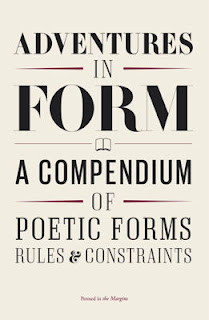
Adventures in Form out now!
Fighting the programming: self-confidence and equal achievement

“Anita Roddick,” sighed my friend. “Everyone seems to say her.”
So we come to another International Women’s Day, and the release of further depressing studies showing that women still make up only 13.7% of the boards of top European companies. According to the European Institute for Gender Equality, 59% of European university graduates are women, but 82% of the continent’s full university professors are men.
Of course, we’re way beyond the days women being written off as less intelligent. Perhaps the answer lies in studies such as Stereotype susceptibility in children: effects of identity activation on quantitative performance (Ambady, Shih, Kim, & Pittinsky, 2001), which showed that girls performed worse in traditionally male-dominated subjects, such as maths, when their gender had been highlighted beforehand.
If others give up hope on you and saddle you with lowered expectations, however baseless their reasons, it makes it doubly hard not to give up on yourself. If we really want to normalise the idea of women, or any under-represented group, in positions of power, authority and respect, we need to start by fostering the self-confidence that enables women to believe their gender isn’t the deciding factor.
Take the oft-lamented pay gap. It’s just sort of accepted, really. Women are paid less than men for the same work. A recent European Parliament feature explained that women have had to work until 2 March 2012 to catch up to the amount earned by their male counterparts as of 31 December 2011. Sucks, doesn’t it?
Since it’s illegal to overtly offer more money to a male candidate than a female one, what’s actually happening to maintain this disparity? I suspect, although some pay-bartering is perhaps done through old networks or rapport, a sizeable part of the problem is that women don’t feel as comfortable asking for the salary they believe they are worth as men do. Or perhaps they’re not confident enough that they are worth that salary; they just feel a vague dissatisfaction with the status quo, but don’t want to rock the boat, for fear of judgements based on their sex.
I’ve been wondering recently whether there is in fact a critical period for the development of self-confidence, the results of which travel with children into adulthood, greatly affecting their self-perception. As someone who experienced bullying in quite a few arenas in childhood, it’s only been very recently that professional and personal discussions have thrown up exactly how these early experiences have knocked my willingness to take risks, value my own work or try new things. The last time I was invited to put forward a statement as to why I should be given a pay rise at work, I didn’t even bother. I felt too exposed, as if I were setting myself up for failure.
The intense scrutiny I felt I was under may have been, in part, my imagination. But when girls grow up being told that doctors are men and nurses are women, or that fluffy, bland programmes like the 1980s version of My Little Pony (the new series is going some way to making things right), or Care Bears are their programmes, and the exciting, proactive shows about winning battles and inventing things are only for the boys (leaving aside the problematic Smurfette principle), I wonder if the message of acceptance, meekness and passivity gets welded to gender identity in the long-term. Let the boys do all the challenging, dangerous tasks – we’ve got hair to plait! Of course it’s not the fault of cartoons, but a general gassing with perfume that has the potential to negatively affect womens’ self-esteem.
On top of this, there are those areas of industry that thrive on relentlessly undermining women’s confidence. They have a knack for it. The beauty industry is the obvious one – a facehugger targeting younger and younger females with a slow-acting poison – but there are many other businesses heavily invested in sucking women’s money, time, energy and security dry, hence their social and economic power. Today I walked past a sign in a salon for Hair Botox. Hair Botox – where does it stop?
Say a woman does make it onto the board of a company. She will almost always be in the minority, and so will stand out. She unwittingly becomes a representative for ‘women’. Any criticisms of her way of working are all too easily attributed to her sex. Is it surprising that few women consider this career step? The gut reaction to outspoken women and girls by many male commentators is to resort to gender-based insults and threats. This is particularly noticeable in internet commentary. Are online forums really such a world away from the macho environment of big business?
When I was small, I didn’t shy away from the dream of becoming a pilot or a mathematics professor or a free-runner or an MD at any point because I consciously filed them under ‘for boys’. They were simply never suggested to me. It never occurred to me that women could be doctors. Growing up, I recognised that, logically, of course they could, but it still felt unusual and somewhat of a novelty to see a female in such a role. I’m concerned that, just as with age we lose the ability to naturally absorb new languages, so too do we lose a degree of openness, and the ability not just to consider new possibilities, but to believe in them. If we want to normalise women making global business and political decisions, women creating and curating, broadening views everywhere, women conducting ground-breaking research and saving lives, we need to start spreading the message to young children that they can achieve anything. And don’t just tell the girls: tell everyone.
Happy International Women’s Day everybody!
Guest Blogger: Sebastian Manley on ‘The Birds’

Like many people, I love The Birds (1963), Hitchcock’s tale of love troubled by dark forces in sunny California. And it’s a film I’ve been thinking about recently, partly in response to the various bird images and poems that have been circulating the Sidekick Books command centre ahead of the publication of Birdbook: Freshwater Habitats, volume two of Kirsty and Jon’s planned series celebrating the bird inhabitants of Great Britain. What I’ve been thinking about in particular is the relationship between the birds and the people that the film depicts and what we might make of it, particularly if we are interested in the relationship between animals and people in real life. Is it right to say, for example, as many critics have said, that the birds are there to express something significant and meaningful about the human characters or their relationships? Is there something else that they are there to do? Or is it possible to see the film as being in some way ‘about’ birds and our relationship with them?
The Birds is a frightening and shocking film in some respects – I can’t imagine many viewers forget the image of Dan Fawcett with his eyes pecked out – but it is also a self-consciously arty one, amply supplied with enigmatic compositions and Freudian banter and committed to a fairly radical form of narrative in which strange phenomena remain unexplained and the protagonists’ fate still hangs in the balance when the screen fades to black for the final time (Hitchcock had arranged to watch European art films by Antonioni, Bergman and others before making The Birds, and a number of his ideas for the film were a good deal stranger than his scriptwriter, Evan Hunter, was comfortable with). In its general ambiguity the film does seem to encourage some sort of metaphorical reading, in which the birds symbolise particular human emotions or desires. The critic Margaret Horowitz argues, for example, that the birds are an Oedipal symbol: a manifestation of Lydia’s wish to prevent her son becoming involved with another woman. Camille Paglia sees the film in similar terms, the horrific attacks in her reading representing ‘a release of primitive forces of sex and appetite’.
The philosopher Robert Yanal is not sure about all this psychoanalytical stuff, which in his view raises more questions than it answers (why would Lydia’s jealousy strike at her friend Dan Fawcett? why should the attacks get worse once Lydia and Melanie have started to bond?). Yanal’s alternative reading is that the birds express nothing specific about the emotional relationships between the main characters but are instead simply scary monsters made scarier by their ultimate inexplicability – an unsettling narrative truth that is, for Yanal, a far more plausible ‘subject’ of the film than the characters and their underdeveloped relationships. So maybe the film is in fact about the unknowable, and maybe – this is me speculating now – it plays on the slight apprehension with which we regard birds, perhaps the least easily anthropomorphised and most enigmatic of the vertebrate species with which we share our various habitats (I think it’s also possible that these are qualities that make birds appealing subjects for poets and other artists, but see the introduction to Birdbook: Towns, Parks, Gardens and Woodland for some other suggestions).
But the film also seems to suggest, to an extent, that the attacks are a kind of retribution, a vengeful strike by the bird species at its human exploiters or oppressors. Like another animal horror film, Jaws: The Revenge (1987), whose first post-credit shot is a close-up of the eye of a fish being cheerfully fried by the protagonist, The Birds includes an early scene that features animals being ‘used’ by humans. Long before we see birds attacking anyone, we see birds in cages, at the pet shop where Melanie and Mitch first meet. ‘Doesn’t this make you feel awful?’ asks Mitch, ‘Having all these innocent little creatures caged up like this?’ (he is pretending at this point to think that Melanie is a salesperson). In the later scene in the Tides restaurant, an amateur ornithologist, Mrs Bundy, offers a sceptical response to the reports of bird attacks, asserting that birds are not aggressive creatures. She then starts to make a point about the aggressiveness of humankind, but she is cut off by the waitress’s call for an order of fried chicken (that is, a bird killed by a human) – a kind of coincidental illustration of Bundy’s point that seems to be served up by the film itself and that leaves us with the feeling that, at the very least, the birds have got cause to feel aggrieved.

Avenging animals? The birds attack Melanie and the schoolchildren.
Dialogue drawing attention to humans’ mistreatment of birds is more common in the final-draft version of the script, which includes a bit where Melanie argues that the birds are attacking because they’re protecting the species (‘Maybe they’re tired of being shot at and roasted in ovens and …’) and an exchange between Mitch and Melanie in which they half-jokingly imagine the bird attacks to be part of a bird ‘uprising’ led by a kind of sparrow Marx fighting for an end to humans’ dominion over birdkind (see here). But there is a similar flavour to some of the materials that did get a public release, including a radio announcement that ran: ‘If you have ever eaten a turkey drumstick, caged a canary or gone duck hunting, The Birds will give you something to think about.’ Hitch himself, in a similar vein, described the film as a parable warning us not to take nature for granted (1).
This sort of analysis, I think, is likely to look a little out of place in the literature on Hitchcock’s work, which in keeping with cultural studies writing in general has tended to see fictional animals as metaphors rather than as things that might have some connection to real animals in the real world. Of course, one of the features of The Birds is that the birds don’t act like the birds we know – what kind of horror film would it be where they did? – and I wouldn’t want to suggest that films should always strive to capture the reality of animal behaviour or identity. But one important part of reality is the relationship we have with other animals, and that seems like a good thing for artists and critics to spend some time thinking about now and again.
1. See Paglia’s book The Birds for more on the radio announcement and on Hitchcock’s interpretation of the film.
Works referenced
Horowitz, Margaret, ‘The Birds: A Mother’s Love’, in Marshall Deutelbaum and Leland Poague (eds.), The Hitchcock Reader (Ames: Iowa State University Press, 1986).
Irving, Kirsten, and Jon Stone (eds.), Birdbook: Towns, Parks, Gardens and Woodland (London: Sidekick Books, 2011).
Irving, Kirsten, and Jon Stone (eds.), Birdbook: Freshwater Habitats (London: Sidekick Books, forthcoming).
Paglia, Camille, The Birds (London: BFI, 1998).
Yanal, Robert J., Hitchcock as Philosopher (Jefferson, North Carolina: McFarland and Company, 2005).
I maintain a blog on animals in film at http://cinematicanimal.wordpress.com/
~
I maintain a blog on animals in film at http://cinematicanimal.wordpress.com/
Submission Accomplished!

Check out Submission Accomplished, an article K’s written for the fantastic Young Poets Network on submitting to magazines. Comments appreciated!
Tickets please! Fuselit: Contraption is out at last!
After a long, long time under tarpaulin, attended by sinister figures in black, we unleash upon you, the public, not only a gorgeous new website, courtesy of Jon’s tireless graftery, but also Fuselit‘s 17th issue, Contraption!

Available to read online, or as a free (or pay-what-you-want-if-you-like) download for your Kindle or e-book reader, as well as in its traditional paper/card/ribbon/unicorn toenail hand-made format, it’s a modern marvel!
Head to www.fuselit.co.uk for a closer inspection.
Available to read online, or as a free (or pay-what-you-want-if-you-like) download for your Kindle or e-book reader, as well as in its traditional paper/card/ribbon/unicorn toenail hand-made format, it’s a modern marvel!
Head to www.fuselit.co.uk for a closer inspection.
The Boar reviews ‘Confronting the Danger of Art’
Award-winning university newspaper The Boar has reviewed Ian McLachlan and Phil Cooper’s ‘Confronting the Danger of Art’ thus:
“Imagine a world in which artistic expression is suppressed and condemned by the government. Not too difficult, is it, considering the cuts we have suffered in recent years. Both wonderfully relevant therefore and also intriguing in its portrayal of the thing is Ian McLachlan’s ‘Confronting The Danger Of Art’, a short poetry pamphlet that talks about how to survive an influx of creative types and their work in the style of a 70s nuclear safety information booklet. It is a marriage of ideas that does not sound quite as effective as it actually is; the poetry within providing a hilarious and searing look at the way people do sometimes treat the arts, and how it is a slippery slope potentially towards more totalitarian views … perfectly crafted and delightfully witty.”
Buy ‘Confronting the Danger of Art’ here, and make an old alchemist marginally wealthier.
“Imagine a world in which artistic expression is suppressed and condemned by the government. Not too difficult, is it, considering the cuts we have suffered in recent years. Both wonderfully relevant therefore and also intriguing in its portrayal of the thing is Ian McLachlan’s ‘Confronting The Danger Of Art’, a short poetry pamphlet that talks about how to survive an influx of creative types and their work in the style of a 70s nuclear safety information booklet. It is a marriage of ideas that does not sound quite as effective as it actually is; the poetry within providing a hilarious and searing look at the way people do sometimes treat the arts, and how it is a slippery slope potentially towards more totalitarian views … perfectly crafted and delightfully witty.”
Buy ‘Confronting the Danger of Art’ here, and make an old alchemist marginally wealthier.