Author: Kirsten Irving
Suzanne Collins’ “Catching Fire” and Linda La Plante’s “Wrongful Death”
 |
| Ain’t that scary |
Autrement, A Concise Reading Journal by the Judge
Airports terrify me. Not for the prospect of flying, rather because the only way to kill time in there is to go leafing in the bookshops, and these always seem to contain the most insulting samples of literature ever assembled in a single place. This is, I fear, an unfortunate necessity of our civilisation: whenever I have to go on a particularly long journey (eight plus hours, staying away two or three weeks), I have to take a book with me that a.) cannot possibly tire me, no matter how long I sit there reading it, and b.) that won’t be over and done with in just one hour. Airport novels are engineered for just that.
The thing is that there are almost no novels that can meet those criteria and still be good. I can think of George Martin’s Songs of Ice and Fire that do the job wondrously, and when I was a kid I could read Michael Crichton from dawn to past midnight. The problem with the former is the release date of his next book (see the self-fulfilling prophecy, when the sun rises in the west and sets in the east, when the seas go dry and mountains blow in the mind like leaves), and I’ve kind of grown out of the latter. So I go for whatever I can, crossing my fingers that it’ll keep my mind distracted while I sit inside that box ten-thousand feet above-ground.

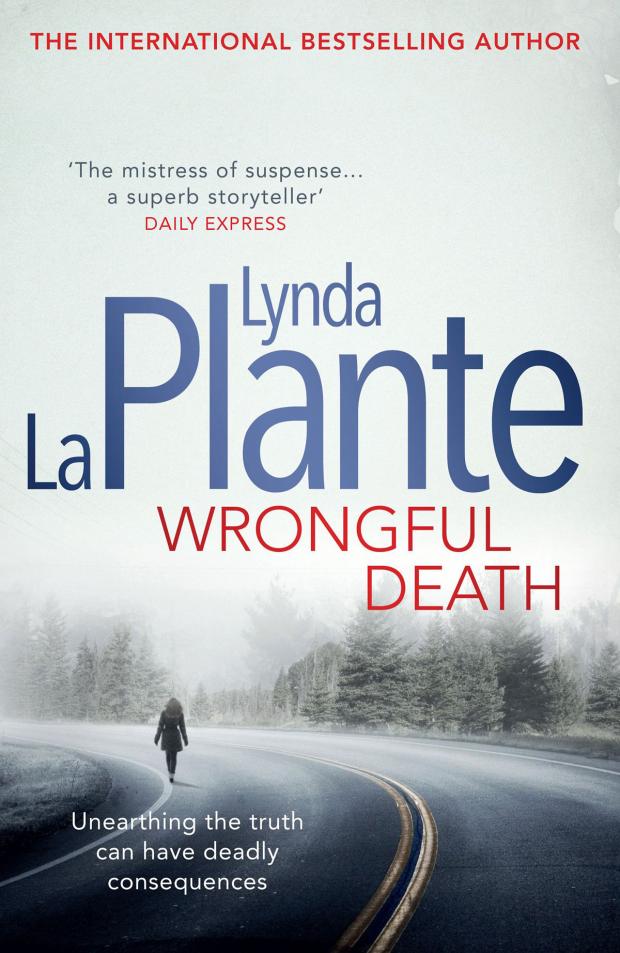
Most recent reads: Suzanne Collins’ Catching Fire and Lynda La Plante’s Wrongful Death.
Golly. Did I steer that car into the tree this time.
(For what it’s worth, the journey was to Brazil – I was there for three weeks over the World Cup – and these books certainly did not live up to the rest of the trip, which admittedly is not a fair comparison as it would take one hell of a novel to beat an evening spent snogging a Brazilian girl).
I suppose this isn’t a ‘review’ as much as an exorcism. These novels have made me so cynical and morose that I’d be recounting them to my therapist, if I had one. Yes, I could dress this up as an intelligent discussion about the ‘airport novel phenomenon’ and what it means to literature, but the idea seems to me like that of studying tarantulas – I’m sure there are plenty of fascinating things to be learnt, but Christ, who the heck wants to go near those things?
Let’s start with Catching Fire. I picked it up because its predecessor, The Hunger Games, actually did its job more than decently as an airport novel. It’s not exactly a difficult book to explain: the set-up is old enough that you can almost hear Suzanne Collins yelling ‘Yabba-Dabba-Doo’ as she is pitching the novel. It’s so old in fact that this is one of its strengths – the dystopian totalitarian future that she represents in such crude detail is positively comforting, being after all a trope that was tired in the early seventies, and the plot is just The Running Man except that Arnold Schwarzenegger gets replaced by an angsty teenage girl (just about the most anti-Schwarzenegger type of character they could find, showing if nothing else that this plot can run pretty smoothly without giving two figs about its central character). Then from halfway onwards it’s just Rambo with something like a love interest vaguely shoe-horned into it and some references to Imperial Rome that nobody in the USA will have picked up (oh, the capital is called ‘Panem’, like panem et circenses, that Roman thing they used to say, get it? Get it? Clever!).
The fun in it, from my personal point of view, lay purely in reading about these characters slugging it out in the woods. Everything else is just an excuse to set up the stage. (Does anyone actually give a fuck about Prim?)
(I just typed that question into Google and found out – SPOILER ALERT – that in the third book she dies).
 |
| Prim and proper |
And even when they FINALLY get into the arena, the Rambo narrative is totally thrown out of the window in favour of these ‘alliance strategies’ they decide to undergo, which have them walking around in a goofy party comprising the angsty teenage girl, the romantic baker who always loved her, Edward Cullen with a trident, a mumbling hag piggy-backed onto the aforementioned vampire, and two genius idiots (not making this up) who can’t speak English. They don’t even fight each other much – most of the time they seem too busy stabbing the monkeys on the island (???). The narrative in Catching Fire feels less like Rambothan it does an episode of It’s a Knock-Out.
I eventually lost the novel somewhere in eastern Brazil – Vitoria, or Itabuna – and I can’t say I’ve ever felt so indifferent about losing a book in my life. I was at around page 330 and I might have been more engaged if I’d been listening to a cricket match that was being narrated by a GPS reader.
But I still had to confront the flight home, so I picked up one of those items that have always been completely arcane to me – a crime novel.
But the fact is that crime fiction is DULL. Even in the theoretically more digestible medium of film, I can never bring myself to give a crap as to why Dick Jones was killed with a marble elephant tossed against his balls or how somebody ran over the granny to inherit the stuffed Komodo dragon that she beats herself on the face with whenever she has to read a crime novel. This, to me, is the greatest of mysteries and the only one I’d really like to see solved – why the hell do people read crime fiction? It’s not just dull, it’s almost unpleasant, this sense of reading without being told what you want to know. And why not tell you anyway? You don’t feel any more satisfied once you found out it was Bob Rogers than you did before. Why not skip to the last page and just find out? (Well, because then you’ve thrown £8.99 into the toilet – there’s your economics).
But I told myself. ‘I’ve read so little, surely I talk out of prejudice’. These novels must at least be entertaining. And there’s nothing else in this bookshop other than ‘How To Make More Money’ by Rich Bastard (whose idea seems to be that I should spend it on his book) or graphic novels about Captain America, which cost about $45 and would scarcely last me an hour. So I picked up the first thing I could find – Lynda La Plante’s Wrongful Death.
 |
| Anna Travis, detective. Not looking too bad here. |
Together with the main detective, Anna Travis, they set off to investigate a fishy suicide.
And this is where the novel goes not just downhill but off the cliff altogether. The more I went into it, the less could I bring myself to care whether this guy had actually killed himself or whether he’d been murdered and why. It looks like perhaps his wife, or the wife’s sister, plotted to kill him – because, hmm, probably not for money as they’re already rich, some family feud of some kind I suppose OH GOD WHO GIVES A F –
The novel started losing me around page 50, but I managed to bring myself past page 200 (out of almost 500) before I was back home – and then I put WD on the desk and haven’t touched it since. I doubt if I ever will. I doubt, too, if I’ll ever read another crime novel, but that’s going to depend on whether my next substantial holiday is going to take place before or after George RR Martins releases his next book. The fact that both these things are set in a future more distant than Star Warsis a somewhat depressing prospect.
Josh Ekroy’s “Ways to Build a Roadblock”
Ah heck. Just read the review: Ways to Build a Roadblock by Josh Ekroy.
Luke Kennard’s “A Lost Expression” (Video Review)
Stephen Nelson’s “Thorn Corners”

Why unusual? Well – read the full review to find out.
2666, aka “The First Great Novel of the 21st Century”

I no longer remember how I first heard about 2666. I have a faint recollection of reading somewhere about the Ulyssesof Latin America that came out only a few years ago. Since Latin American literature KICKS ASS, I was immediately interested. I wanted to read it in the original Spanish, but didn’t want to spend god knows how much to buy it on the internet. So I waited.
In early 2012 I found myself in Spain, in what I believe was the same contract that led me to purchasing another Great Classic. Going to a different country is always a great opportunity to pick up some books, especially poetry, but 2666 by Roberto Bolaño was one particular novel that I was on a mission to find. Once I did, it rested in my library at home for another two years until last Christmas I started leafing through the first few pages, more out of curiosity than out of a genuine decision to start reading it.
To my great surprise, I was hooked. When you start a book thinking that it’s going to be kind of like Ulysses, you expect difficulty and challenge. Instead, the beginning of 2666 is the reading equivalent of riding a bicycle down a gently sloping hill. The story is gripping and the writing is beautiful. I ended up taking the book with me back to England. A few days ago I finished it.
 |
| He does look a bit like Joyce I suppose |
I already knew I was going to write an article about this novel, though the original intention – that of spreading the word about a piece of literature that I thought to be relatively unknown – sounds a bit funny now. In only ten years since its release in Spanish (six since that in English), the book appears to have garnered a global reputation as the first Great Novel (R) of the 21st Century. I was feeling pretty swanky as I progressed through it, thinking I’d be able to show off about reading something so advanced and modern and difficult nobody even knew it, but everywhere I pulled it out of my rucksack people went ‘Oh, Bolaño’. Heck, if you Google ‘2666 reviews’ you’ll get a hundred pages of critical commentary – and it’s so ubiquitously positive that it boggles the mind.
In effect, one of the (many, many) springboards for discussion around this book is simply that of its critical reception – and if I had more time and were more qualified, I’d be tempted to question the seemingly homogeneous response that the book has generated.
But that challenge, not unlike the others posed by this book, is one I will defer to the better judgment of others, not because I don’t believe it may be rewarding, but because 2666– and in this, if in very little else, it truly resembles Joyce’s great work – is a hydra that will devour you no matter how many heads you chop off. I do not know if it is a Great Novel, but it’s certainly the kind of book that you can go on discussing FOREVAH, and that’s scary (and also, perhaps, the very definition of a Great Novel… see me being sucked into yet another of the questions raised by Bolaño even as I declare my resistance to it).
I write this article because I know my limits. A few scattered thoughts is all I can afford; any more than that would be dangerous; any less, an insult.
So – a few thoughts about 2666. If you’ve read this far I assume you must have a vague notion of what the novel is, or what it’s about. Me, I purposely eschewed all information about the book until I could read it, to get as fresh an experience as possible (come to think of it, perhaps that’s why I was unaware of its reputation…). 2666 is a novel divided into five independent parts – or, if you prefer, five separate novels collected together in an anthology. They are only loosely related to each other – they share a fictional city where all the novels are set (or where they end up), and a handful of reappearing characters.
 |
| Regrettably “The Neverending Story” was already taken, but it would have been a fitting title |
The story behind the writing of this book – how the author was dying, how he planned the books to be published posthumously to support his family – is as legendary as the book itself. It deserves its own article, but I’m going to assume here that you’re at least partly familiar with it.
What can I say about this book? I suppose I could do worse than sharing Alessandro Baricco’s impression: ‘Normally, if you write books, reading your contemporaries provides you with some self-esteem, it stimulates and challenges, sometimes it gives you a bitter perception of your limits: only very infrequently does it crush you.’ In an attempt to describe what the novel is about, he says: ‘I think it’s something like Evil. But I wouldn’t put my money on that. Maybe Evil and the delight of the living. Or Evil and the mystery of the living.’
This is no doubt one of the common threads that I’ve perceived in reviews / summaries of this book: it’s about the problem of evil, in and across the problem of history (or perhaps the two are one and the same). This is because the longest, most difficult and in my opinion the best of the five novels is just a long relation of serial murders in which women are raped and butchered in a town called Santa Teresa (inspired by the real events in Ciudad Juárez).
Though these are clearly important themes in the book, if I had to put my finger on what the book is essentially about, I’d go for something different. In fact, all the way until the end of the third book, I could have sworn that the topic of the whole work was that of dreams, or dreaming, and the significance thereof. It seemed to me that all of the novels were composed of characters experiencing events that take up an oneiric quality, moments in which the real and the surreal mingle at the edges. It’s impossible to tell when something really significant is taking place, and when, on the other hand, you’re faced with something that’s just random. Like the five novels themselves, the episodes within them stand alone as frescoes of sanity and madness, and simultaneously connect to all the others in ways that are subtle and suggestive but never quite definite: everything in this book is referential and intuitive, never quite important in and of itself but always somehow hinting at something that you should be aware of.

It helps my argument that there are several actual dreams being described. I usually dislike it when a writer interrupts the narrative to describe one of his characters falling asleep and having a dream, especially if the description is extensive. But Bolaño pulls it off with remarkable grace, perhaps precisely because all the other episodes are so dream-like anyway. This is but one of a number of small miracles that the author performed for me over the length of the book – another is the fact that the first three novels are about characters that I usually have no interest in reading about, such as critics, academics, philosophers, teachers, and scribblers of various nature (some journalists, though this category I don’t mind too much). And yet I was spell-bound, and very much intrigued by all of them.
If you were to follow the path that I took into the novel – that is to say, reading it as a novel fundamentally about dreams and dreaming – and it is but one of numerous paths that you can take, among other things because the five novels can be read in any order you like (and yes, this will change your experience of 2666dramatically!) – if you were to follow this path, I was saying, you will inevitably be faced with a challenge when you reach the fourth novel, the one about the crimes in Santa Teresa.
I suppose you’ll be challenged by that bit regardless, because it’s so different from all the others. But for the purposes of my reading, it’s relevant because in many ways it seems to represent the opposite of dreaming: the horrors of the serial killings are so down-to-earth, so grimy, so exhaustively and exhaustingly physical, that you could almost call it a representation of a world without a dreams. Not that it lacks some oneiric moments of its own, including a very esoteric clairvoyant and a whole subplot about ‘giants’ dreamt of by a German convict, but these are far more infrequent, and by comparison they almost seem crushed, powerless, insignificant when confronted to the horrors before them, or tainted in such a way that they partake in the evil.
 |
| Mexican noir. The fourth novel is kind of like this, but really long. |
It goes without saying that having a part of the book, perhaps the most important part, being about the opposite of dreams does nothing but reinforce the sense that the whole thing may be explicitly about dreams.
At least this was the impression that I walked away with. I can’t really guarantee I’ll be holding to it a year from now – which is really the other half of the reason I’m writing the article, not just to spread 2666 to others, but to record it for myself. There is so much content in this book that the process of forgetting has already begun: like a dream, its details and characters are already becoming fainter.
Is this really the first Great Novel of the 21stCentury? I find that question tiresome, but it’s certainly a novel that belongs to a special, personal category: the Novel That I Write an Article About (or, That I *Need* to Write etc.). Not even a semi-humorous article, but a proper article. Yes, that’s rare enough. And I hope someday you’ll join us, as I look forward to reading your own articles. Some novels cause ten thousand words to be written for every word of their own. And when that happens, I guess it doesn’t even matter if the book is good or bad.
Marion McCready’s ‘Tree Language’

Three London Arts Nights Every Poet Should Know About
Whilst you’ve probably heard of, or been to, regular nights like Jawdance, Poejazzi, Utter! and Bang Said The Gun, all of which have built up a dedicated audience and a name for themselves, there are a great many distinctive lesser-known events off the beaten track. Here are three of my favourite hybrids, what makes them different and who might enjoy them.
1. Bingo Master’s Breakout

What be this?
One of the most joyfully anarchic and welcoming poetry nights in the capital, this merry stew of poetry, karaoke and bingo (yes, you heard right) is run by Kevin Reinhardt of the Vintage Poison collective. This evening has been running for years, but its existence is still a surprise to many people.
What makes it special?
Sheer variety, for starters. A typical night consists mainly of floor spots in which each performer goes up to read a poem of their own or one from a pile brought by the organisers, followed by a karaoke song of their choice. In between these spots, BMB presents a featured poet doing a longer set, who then goes on to call the numbers for a cash prize bingo game which everyone is free to play, and a band performing a karaoke set of their own songs, complete with inflatable guitars. Plus, the one-poem-one-song cap means you’re never stuck listening to an interminable mic-limpet.
Who might enjoy this?
Anyone who likes their readings a little less formal, a little less on the slam side and a lot more participatory. And of course anyone who enjoys karaoke.
Cost?
Free.
Where can I find out more?
Follow BMB on Twitter or check out their Facebook page.
2. Open Arts Cafe

What be this?
Run by the charismatic singer-songwriter Maya Levy, Open Arts Cafe is a variety extravaganza, showcasing new work from upcoming artists. Each show is themed (past themes have included Smoke & Mirrors, Seafaring and I Gave My Love A Cherry) and submissions to perform take their cue from this.
What makes it special?
Well for starters, it’s in a synagogue. For my fellow gentiles, it’s not often the opportunity really arises to go explore a synagogue, and practically, it makes for outstanding acoustics. But aside from the brilliant venue, the quality of acts is always outstanding. I guarantee that even grizzled veterans of London entertainment will discover something new here. Past performances have included poetry, acrobatics, stand-up, film screenings, live theatre and an improvised jazz board game with full audience participation. There’s also an art exhibition to look round during the interval, as well as snacks and drinks.
Who might enjoy this?
Anyone who likes their poetry set like a gorgeous stone in a big old crown of other artforms; anyone who wants to discover new acts; anyone who wants to be thoroughly entertained.
Cost?
Pay what you can (£6 suggested donation, which goes to the artists). Snacks are free, wine’s £3.
Where can I find out more?
Open Arts Cafe website
Facebook page
3. Scaledown
What be this?
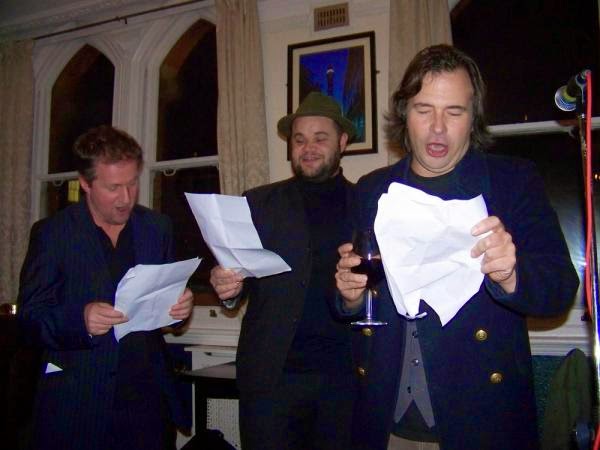
As the name suggests, Scaledown is a night of micro-sets, hosted by Mark Braby, Shaun Hendry and poet Jude Cowan Montague.
What makes it special?
A jamboree of poetry, monologue, music and performance art, the last Scaledown I played, I was performing alongside a sound artist collaging a soundscape from language learning tapes, an incredible experimental violinist, gorgeous folk music, a costumed band straight out of a Frank Zappa daydream and the hosts kicking off with an acapella song. Special enough?
Who might enjoy this?
Anyone who (not unreasonably) dreads a poetry set going over 15 minutes. With its quickfire lineup, Scaledown flat-out refuses to let you get bored.
Cost?
Free, but do, as they say, check out the Table of Wares and support the artists if the fancy takes you.
Where can I find out more?
Scaledown website
K reading with Brian Patten on Thursday 3rd June 2014!
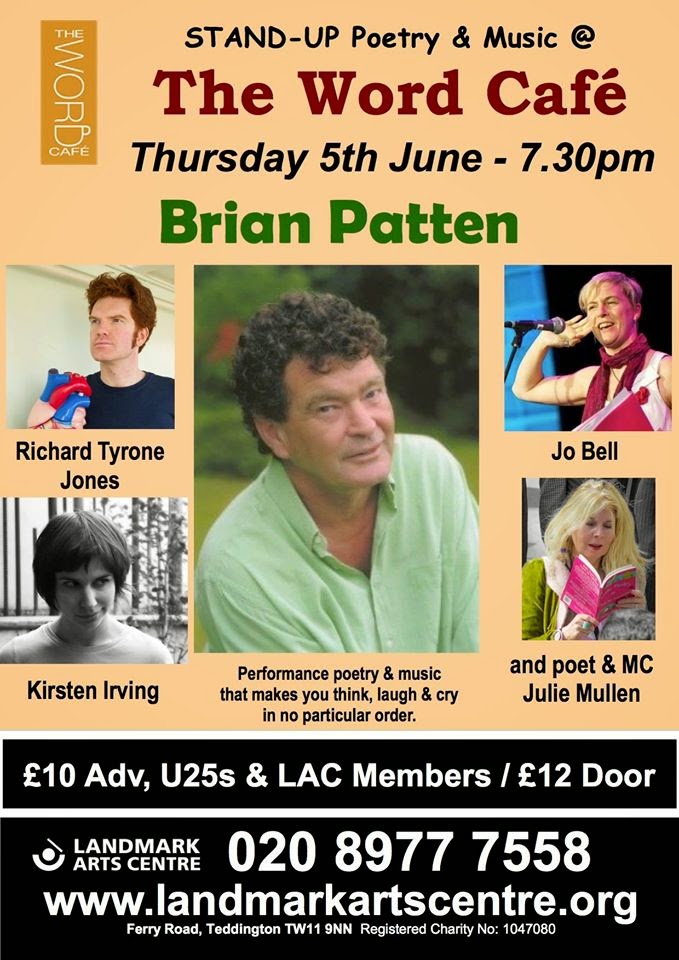
I’m extremely excited to be reading at the Landmark Arts Centre in Teddington on 3rd June (that’s this Thursday) with Utter! MC Richard Tyrone Jones, Charles Causley Poetry Competition winner, Jo Bell, the irrepressible Julie Mullins and Brian Patten!
Fun fact about Teddington: Its famous residents and former residents include Mo Farah, Noel Coward and Benny Hill (who mentions Two-Ton Ted from Teddington in the song ‘Ernie, the Fastest Milkman in the West’).
Further fun fact about Teddington: It is but a short, Oysterable train ride from Clapham Junction or Waterloo!
Saboteur Awards 2014 roundup (with bonus Sidekick triumph!)
Woooo! Sidekick Books won Best Collaboration for Riotous yesterday at the Sabotage Reviews annual Saboteur Awards! Thank you to everyone who voted for us!
For those who don’t know the Saboteur awards, they are run by the Sabotage staff Claire Trevien, Richard T Watson and James Webster, and are an incredible force for recognition in independent publishing, particularly poetry. As with the website themselves, the awards are run voluntarily, and are nominated and voted for by readers and fans. They are also the only awards we know of in the world to recognise collaboration and anthologies.
The ceremony was held at the Jericho Pub, Oxford, and had a brilliant turnout. The accompanying all-dayer included showcases from last year’s Best Magazine champions Rising, The Emma Press (surely one to watch for next year’s awards) readings from Lucy Ayrton, Paul Hawkins and Best Spoken Word Performer winner Steve Nash. I also discovered the brilliant work of short story writer May-Lan Tan (Best Short Story Collection nominee and unofficial winner of the Best Twitter Name award) for the first time. Check out the haul:

Huge, huge congratulations to all the winners, including the brilliant Poems in Which, run by Amy Key and Nia Davies and illustrated by Sophie Gainsley.
Particular kudos is due to Nine Arches Press, winner of Most Innovative Publisher. One of the hardest-working, friendliest and most dedicated small presses active today, with a seriously impressive oeuvre. Great also to see recognition for non-London presses (and we say that as a London press).
Huge thanks to the Sabotage crew for a fantastic event, a breath of fresh Oxford air and an opportunity for us independents to show the world what we do and why. Here’s to next year!
For the full results, visit Sabotage Reviews. And while you’re there, have a good look around. This is what it’s all about.
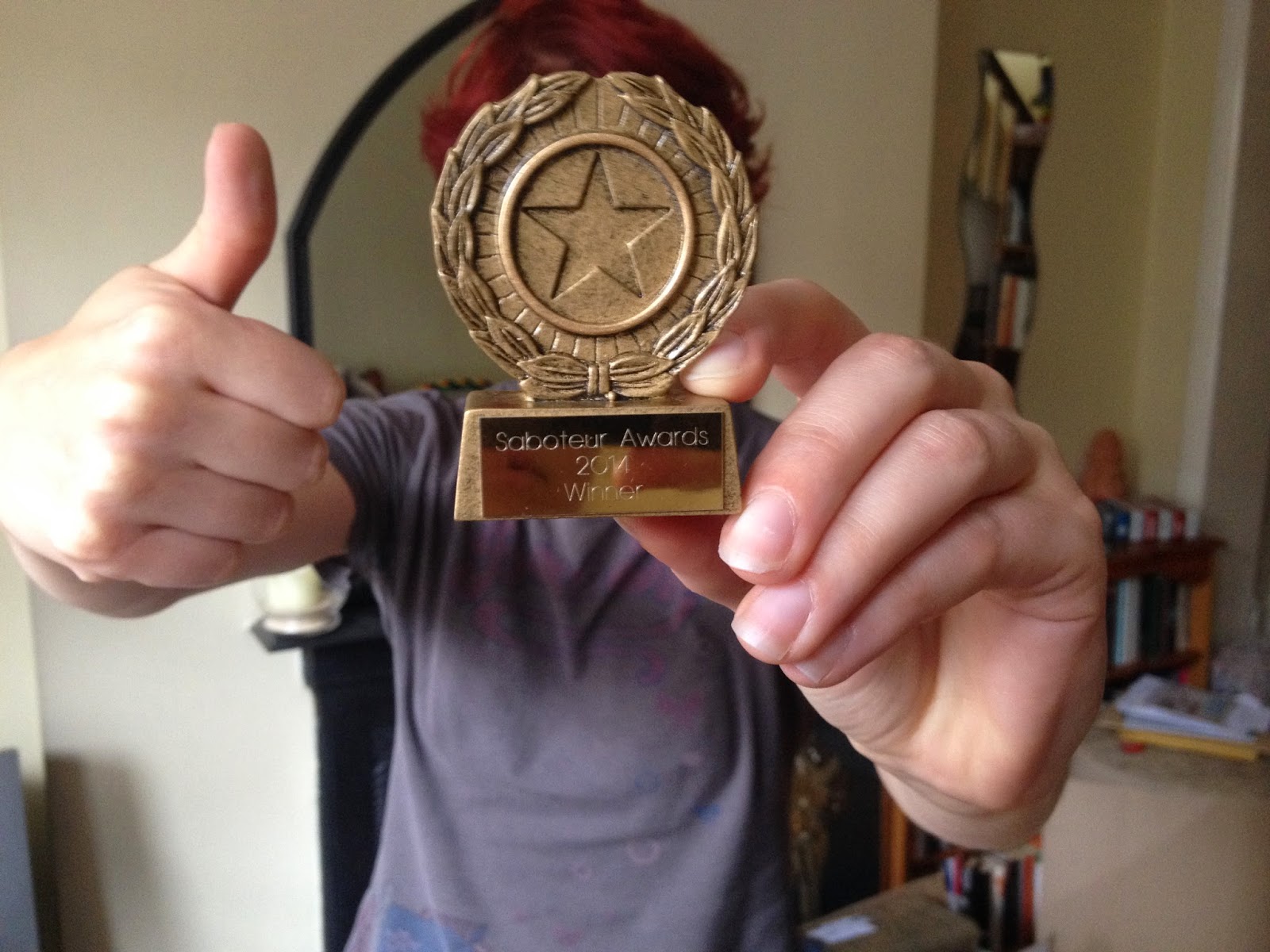 |
| K following surgery to graft the trophy onto her head. |
For those who don’t know the Saboteur awards, they are run by the Sabotage staff Claire Trevien, Richard T Watson and James Webster, and are an incredible force for recognition in independent publishing, particularly poetry. As with the website themselves, the awards are run voluntarily, and are nominated and voted for by readers and fans. They are also the only awards we know of in the world to recognise collaboration and anthologies.
The ceremony was held at the Jericho Pub, Oxford, and had a brilliant turnout. The accompanying all-dayer included showcases from last year’s Best Magazine champions Rising, The Emma Press (surely one to watch for next year’s awards) readings from Lucy Ayrton, Paul Hawkins and Best Spoken Word Performer winner Steve Nash. I also discovered the brilliant work of short story writer May-Lan Tan (Best Short Story Collection nominee and unofficial winner of the Best Twitter Name award) for the first time. Check out the haul:

Huge, huge congratulations to all the winners, including the brilliant Poems in Which, run by Amy Key and Nia Davies and illustrated by Sophie Gainsley.
Particular kudos is due to Nine Arches Press, winner of Most Innovative Publisher. One of the hardest-working, friendliest and most dedicated small presses active today, with a seriously impressive oeuvre. Great also to see recognition for non-London presses (and we say that as a London press).
Huge thanks to the Sabotage crew for a fantastic event, a breath of fresh Oxford air and an opportunity for us independents to show the world what we do and why. Here’s to next year!
For the full results, visit Sabotage Reviews. And while you’re there, have a good look around. This is what it’s all about.