News

Anatomy of Tragedy #3: Hero and Chorus


written by the Judge


X

The development of a tragedy often centres on a single act done by the hero. Sometimes the act was committed before the events in the tragedy even begin, as in the case of Oedipus Rex, in which the sin is represented by Oedipus’ murder of his father and his wedding to his mother: the play opens in the Theban city wracked by the plague, which was sent by the gods as a punishment for what Oedipus did several years before.

(I intend from this point onwards to refer to the hero by means of the masculine pronouns, ‘he / his’. This is not a reflection on the dramatic tradition at all, as there are very many tragic heroines, from Seneca’s Medea to Racine’s Athalie. It is simply an attempt to make this article easier to read, as there are many pronouns coming up, and it doesn’t help the flow of an already complicated essay when every sentence is punctuated by s/he, his/her and hero/ine).

As the first act opens and unfolds, we usually see the hero defending the legitimacy of his act, or simply his own honour (if he is unaware of what he did). The hero’s refusal to cave in to the pressures of the surrounding characters and / or the chorus is what identifies him as a representative of the I. The hero stands tall, refuses to bend: he will not compromise his first-person ‘I’ into the multiplicity of the chorus, he will be one (1) and whole with his ethical integrity.

But as the tragedy develops and the hero becomes aware of the consequences of his act, his speeches become increasingly dominated by O signifiers. A hero’s death speech is usually overwhelmingly lyrical precisely to the extent that it is powerfully dominated by the O. The Elizabethan stage makes this quite literal. Marlowe’s Dr Faustus says ‘O’ eight times in his famous last speech, and so does Romeo. Shakespeare’s other heroes die with speeches such as these:

HAMLET: O, I die, Horatio.
The potent poison quite o’ercrows my spirit.
I cannot live to hear the news from England.
But I do prophesy the election lights
On Fortinbras. He has my dying voice.
So tell him, with th’ occurrents, more and less,
Which have solicited. The rest is silence.
O, O, O, O.

LEAR: And my poor fool is hanged.—No, no, no life?
Why should a dog, a horse, a rat have life,
And thou no breath at all? Oh, thou’lt come no more,
Never, never, never, never, never.—
Pray you, undo this button. Thank you, sir.
Do you see this? Look on her. Look, her lips.
Look there, look there. O, O, O, O.

OTHELLO: Now, how dost thou look now? O ill-starred wench,
Pale as thy smock! When we shall meet at compt
This look of thine will hurl my soul from heaven
And fiends will snatch at it. Cold, cold, my girl,
Even like thy chastity. O cursed, cursed slave!
Whip me, ye devils,
From the possession of this heavenly sight!
Blow me about in winds, roast me in sulfur,
Wash me in steep-down gulfs of liquid fire!—
O Desdemon! Dead Desdemon! Dead! O! O!

A couple of notes. Firstly, Othello’s words are not technically his last, as he does exchange a few more lines with the other characters before dying; but it’s close enough to a final speech that I feel justified in quoting it along with the others.

Secondly, though I have chosen extracts in which the importance of the O as the ‘destination’ of the tragic hero is made explicit, it is important to understand that it is not the literal letter ‘O’ that matters, but its meaning, and the way this is implied. Several of the signifiers in the above speeches belong to the O: these include Hamlet’s ‘silence’ and Lear’s repetitious ‘No’ and ‘Never’. When Shakespeare’s Cleopatra dies, her final three lines open with ‘As sweet as balm, as soft as air, as gentle’, which is a barrage of O signifiers (just before she cries out ‘O Antony!’). These terms all mean the same thing as the final O, which on these grounds might even be termed redundant (some editions of the plays in fact omit them). But the choice of linguistic technique does not matter that much for the purposes of this study. The point is always that in tragedy, the hero who started out by declaiming his I, ends up crying out an O – whether literally or by means of other signifiers.

XI

The hero’s linguistic transition from I to O is a parable which most critics would recognise as the hero’s classic downfall. It is also the same process that takes place in lyric poetry. These things are acknowledged, in one form or another, in most of the critical tradition behind tragedy.

Now what is far less commonly recognised is the role that the chorus plays in all of this – and one of the reasons, by necessity, is the fact that the chorus appears to have vanished from tragedy since the twilight of the Classical ages. In reality, though, the chorus never died: it was simply reabsorbed. The Greeks used a collective ensemble of actors, speaking by turns, to represent social and established law. Later traditions simply delegated this role to a number of supporting characters, who had a slightly more dynamic role in the play, but who also fulfilled the same function. Like the chorus, they stood back after the hero committed his action or crime and declared “Alas, alas, how horrible!” When they did act, it was in compliance with or in defence of the same social law that is represented by the Hellenic chorus. Witness the difference between Hamlet (hero) and Laertes (chorus) when they duel. Hamlet is informed by an individual, internal agency that is impermeable to the concerns of the surrounding characters. Laertes is seeking revenge for his family: his motives are not only laced in the framework of a social construction (family), they are broadly acknowledged and understood by all of the surrounding characters (to the point that the king can use them to his advantage, by poisoning Laertes’ sword). Moreover, Laertes’ rancour, inasmuch as it is motivated by a legitimate desire to champion his family, represents a wider law that would be understandable in practically any human culture. Laertes may himself be a real character inasmuch as he is an orphaned son, but he is also forcing Hamlet to confront judgment by law. Hamlet has to pay for his murders through Laertes. What the Greeks would have dramatized by having the gods coming in and punishing the protagonist for his sin (by plagues, madness, or the furies), Shakespeare resolved by having a character who embodies the sentence of the law in his own personal drama. Laertes is a son, but on a parallel plane he is also tribunal, judge and (aspiring) executioner.

Of course, it is difficult to recognise such a thing as a ‘chorus’ when it is fragmented into many different characters as we see it in the Elizabethan stage. And yet the chorus, whether its form be organic or composite, deploys a linguistic trajectory that is just as definite as that of the hero. As much as the hero’s parable goes from the I to the O, performing the lyric, the chorus goes from the O of its initial passivity to the I on which it usually closes the play, effectively drawing an epic arch.

If the initial statements of the chorus refer us back to signifiers of the O, often even literally saying ‘O!’ (or its semi-alternatives, like ‘Alas!’), their closing statements point us to the I and to its values of individualism, energy, decision and affirmation of life. This can be performed in a number of ways, for instance by using imagery that suggests verticality and open Apollonian qualities…

Cut is the branch that might have grown full straight
And burned is Apollo’s laurel bough,
(Dr Faustus)

…or by closing speeches on a proper name, i.e. a mark of individualism and specification:

For never was a story of more woe
Than this of Juliet and her Romeo.

But in the more memorable cases we get more than just a great number of signifiers of the I. In the final speeches, as in the tragedy as a whole, the chorus specifically shows a transition from the O to the I – just like in epic poetry. Here are Antony’s closing words on Caesar in Julius Caesar, with the signifiers for the O in italics and those for the I in bold:

His life was gentle, and the elements
So mixed in him that Nature might stand up
And say to all the world, ‘This was a man!’

Notice the pattern; O-O-I-I-O-I. The last line executes synthetically what was done by the previous two, as much as the three lines together execute synthetically Antony’s whole trajectory over the course of the play. Compare the above active, affirmative statement with the passive, submissive (and only) lines he speaks over the course of his entire first scene, which he spends mostly standing in the background:

Caesar, my lord? […] I shall remember:
When Caesar says ‘do this,’ it is perform’d.

Antony has travelled on the exact opposite orbit as that of the tragic hero (a path which will later become his own in Antony and Cleopatra). A chorus, or a character standing in for it, will come to the end of the play in a condition that is active, one that demonstrates a will beyond mere social law. As Edgar says in the final lines of King Lear, his generation must ‘[s]peak what we feel, not what we ought to say.’ This is a statement that contradicts everything the chorus initially stands for, and that would sound more proper in the mouth of a hero. Linguistically speaking, they have taken up the mantle of the hero (just like the hero has joined the original circle of the chorus).

This, and not some philosophical or existential statement inherent in the genre, is what makes tragedies so ultimately uplifting even as they are so dark and terrible. The downfall of the tragic hero comes hand in hand with the rise of the chorus. Our ability to identify simultaneously with both the hero (who is a first-person ‘I’ just like the individual viewer) and the chorus (who are a multiplicity just like the entire audience) means that we experience the epic and the lyric simultaneously, and the unique effect in which they are synthesised – an effect which is simultaneously beautiful and fearsome, glorious and intimate, hopeful and pitiful, luminous and dark – is exactly what we call the tragic.

That sounded final, didn’t it? Not so! The series continues next Wednesday. See you for Part 4…

Sunday Review: Scattered Vertebrae by Jerrold Yam

posted by the Judge


Did you know that the average human body contains enough bones to make a complete skeleton? This and more fun facts in our Sunday review, in which Ian Chung looks attentively at Jerrold Yam‘s Scattered Vertebrae.

For this one we had a genius idea – it’ll be our New Year’s review. Yes, we’re doing the review early by nine months!!! (Fact is we’re late by three months on the last one – check that skeleton – and we’re pretending it’s the other way round. Ian’s idea). Naw seriously – this is a sneak peak fellas, cause the book is coming out at the end of this month.

Ain’t ya privileged? Yeah, yeah, we’re spoiling you.

Have a great Sunday!

Anatomy of Tragedy #2: Monologue and Dialogue


written by the Judge


V

The Poetics aside, the other two great works on tragic theory belong to Hegel and Nietzsche. Hegel’s writings on the subject are scattered across his lectures and essays, so we cannot talk of a single treatise. Nietzsche makes it easier for us: the first book he ever published was the short and radically innovative The Birth of Tragedy.

The Birth of Tragedyoccupies a bizarre spot in dramatic theory. It is so radically different from anything else written on the subject that most critics tend to treat it as a separate entity, one which could even be removed from the history of criticism with little change on the landscape that developed later. Indeed, the merit of the Birth of Tragedy is that it abandons the Aristotelian models and goes for something completely new. Today, it is mostly remembered for having introduced the antinomy of Apollonian and Dionysian values, with Apollo representing order, form, rigidity, reason and ideal, and Dionysus standing in for chaos, dissolution, anarchy, emotion and ecstasy.

But the pertinence of Nietzsche’s vision becomes clear when you consider that Apollo and Dionysus correspond perfectly to the tragic duality that Homer first projected in Achilles and the sea. Achilles is an Apollonian figure, an ideal of a man whose rage is the expression of his uncompromising moral integrity. The sea is a Dionysian object, a non-differentiated, formless, vaporous essence. When Achilles calls to his mother across the sea, she emerges from it ‘as it were a grey mist out of the waves’. Nietzsche was the first not only to identify the bipolar nature of tragedy, but also to provide us with an accurate representation of its symbolic values.

VI

Hegel’s work on tragedy is more widely quoted than Nietzsche’s, but less original. He claimed that tragedy is a moral conflict not between good and evil, but between good and good. Two equally legitimate and incompatible values clash against each other until one is annihilated. In Hegelian tragedy, love demands what honour forbids; ambition commands what family resists; duty requires what society outlaws.

What really made Hegel’s contribution so priceless, however, was the way that he framed tragedy as part of a much greater architecture of literary genres (something that Northrop Frye would also attempt a hundred years later in the Anatomy of Criticism). Hegel’s studies, like Aristotle’s, discuss not only tragedy but also lyric and epic poetry. The novelty is that he does not treat them as separate entities, but as logically, organically connected parts of the same tradition. In Hegel’s view, epic poetry is a representation of the past, with the narrative taking place in a golden age of heroes that is detached from the present age and inherently inaccessible. Lyric poetry is a representation of the present, with the voice of the speaker and the sentiment of the reader being simultaneous and synchronised with each other. The poem ‘happens’ as we read it, which is in a small measure where the cliché of certain poetry being ‘timeless’ derives from.

Now tragedy, according to Hegel, is a special composite that brings together the epic and lyric form. Like the epic, it is set in a past age of heroes (this is literally the case in Hellenic tragedy, which involves mythical characters like Odysseus, Prometheus, and Oedipus). But the various speakers declare their positions and ideologies by means of subjective, lyric monologues. The result according to Hegel is a separate time continuum occurring in front of us (which is why the stage, as a suspended, self-sufficient temporal zone, is required for tragedy). It is neither the present nor the past, but a separate time that goes on with its own internal congruity – a staging of the present in the past.

Oddly enough, and perhaps due to the over-emphasis on Aristotle, there is no critical tradition that attempts to bring together the theories of Hegel and Nietzsche, in spite of the fact that they are widely recognised as the two greatest non-Classical thinkers on the subject. Every book I’ve ever read on tragedy dedicates one or more chapters to each of them, but insists on treating their ideas separately, as though they were two possible hypotheses to account for the same phenomenon. In reality, they are better described as two dimensions of the same theory. My first attempt at bringing together Hegel and Nietzsche can be found in the trilogy of articles we published three years ago, which are an exegesis of lyric and epic poetry (as much as this series is an exegesis of tragedy – and partly of comedy, but more on this later). You can access part one, part two and part three in our 2010 archives.

In those essays, I started from Hegel’s idea that the lyric and the epic are dialectically related, each representing the opposite of the other, each necessitating its opposite. My thesis was that the nature of this dialectic was defined by an opposition of values which are best symbolised by the letters ‘I’ and ‘O’ – intended as letters, words, and even numbers (1 and 0). These are the elementary signs which synthetically represent Nietzsche’s Apollo and Dionysus, and also Achilles and the sea. To put it as succinctly as possible, I argued that the lyric is an effect produced by a transition from values of the I to values of the O, while the epic is produced by going from values of the O to values of the I. In the lyric, Achilles comes into the sea and surrenders to it. In the epic, Achilles emerges from the sea, triumphant.

All of this is crucial to an understanding of tragedy. One of Hegel’s great lessons is that due to the organic relation between the different literary genres, you cannot really understand tragedy if you have not grasped lyric and epic poetry first – for these two are the core constituents of dramatic poetry. This aspect of Hegel’s theory was so original and ahead of its time (and written in such a tremendously difficult, convoluted and impenetrable style) that it was mostly ignored by his successors. With the exception of Frye, the literary community kept seeing tragedy as its own thing, as a genre which could be taken in isolation. Definitions such as the one by Mandel, which does not involve poetry at all, have been rife. This, along with the usual over-reliance on Aristotle, is perhaps the greatest shortcoming of twentieth-century theory on tragedy. As we are about to see, tragedy cannot be understood if not as a successor (formal and conceptual, not just temporal) to the lyric and epic forms.


VII

A metrical connection can be established between poetry and tragedy. Most tragedies are written in verse, of a kind which obeys the same formal rules that we find in the lyric and epic forms. In the case of the English language, the most convenient example is iambic pentameter. It’s the standard metre for Elizabethan drama, but also preponderant in English poetry in general.

Now, we know that dramatic verse is fundamentally based on dialogue, while poetry is essentially a monologue – the exact lexicology states that the former is dialogical, while the latter is monological. This has been more or less agreed on by all theory on the subject, from Hegel to Bakhtin. Though it may seem intuitively true, the precise meaning of the concept is in fact quite difficult to grasp. Any literature student can point to numerous examples of poetry replicating or simulating dialogue between two or more speakers. TS Eliot’s Wastelandis notoriously composed of a pastiche of different voices, though they are not exactly arranged in a precise dialogue. And yet it is not enough to simply string together a sequence of different poems in pentameter, even connecting them in a narrative as has been done in many collections, to produce a full tragedy. What, then, truly distinguishes drama from poetry?

The answer is that the types of dialogue are qualitatively different. In lyric / epic poetry, symbols and metaphors for the I and O values are employed with great liberality, but these final values do not themselves change. It doesn’t matter how many images you use to represent the I, there is always only one I: you can write a poem in which three characters defend the respective merits of a sword, a sceptre and a wand, standing in for the philosophical merits of warriors, rulers and sages, and though they may appear to be on opposing sides, all of their objects will throw us back to the same I (the pun is not a coincidence – indeed the three voices are only three representations all coming from the same speaker, which would be the lyric poet). It may be argued that mine is an easy example, having chosen three objects which are clearly vertical signifiers. Yet the only possible symbol, other than the I, to which any fictional voice may ultimately refer, is the O. The three characters could hold a sword, a crown and an egg, for example – one I and two Os. Again, I use objects the shapes of which make it clear what they signify, but the shape does not matter – any non-literal, referential object or word in lyric or epic poetry, whatever its function, meaning, appearance or shape, will alwaysultimately refer to one of the two primal symbols which we have identified in the I and the O. This is the very definition of monological discourse, on which lyric and epic poetry are founded. A text whose signifiers cannot be referred to an I or an O (and this is much more difficult than it sounds) is straying outside the boundaries of the genre – regardless of what its form is. A sonnet that does not conform to these rules, for instance, may have less in common with an original Petrarchan lyric than a paragraph in prose that does – even if the sonnet respects every formal rule of metre, rhyme and structure. Compare the following passage of glittering prose from Cormac McCarthy’s Blood Meridian

Whoever would seek out his history through what unraveling of loins and ledgerbooks must stand at last darkened and dumb at the shore of a void without terminus or origin and whatever science he might bring to bear upon the dusty primal matter blowing down out of the millennia will discover no trace of ultimate atavistic egg by which to reckon his commencing.

…with the full poem Photographby contemporary French poet Emmanuel Hocquard…

When we say “a red cube”, do we
mean a cube of red colour
(painted or coloured in red) or a red
that is cubical (a red in the form of a cube)?

The same question is posed with “X naked”.
Does “X naked” mean X made naked
(with no clothes) or does it refer
to an X nakedness (this nakedness of X form)?

Nakedness and absence of clothes are two
things.

…and make up your own mind as to which one seems more immediately lyrical.

This is not something uncommon or unheard of, especially not in this postmodern age in which poetry deliberately questions and undermines established forms and genres. So-called ‘experimental’ verse is usually termed as such when we recognise (even if only subconsciously) that it is not being or attempting to be lyric or epic in any traditional way; other than that, there are almost no common traits by which to recognise this ‘genre’ at all.

Nietzsche’s categorical claim in the opening of the Birth of Tragedy that the ‘development of art is bound up with the duality of the Apollonian and the Dionysian’ holds true, and our studies in lyric and epic poetry only continue what he began with tragedy.

VIII

Now the question is, how is dialogical / dramatic discourse any different from that of poetry? If all objects and images refer us back to the same I or O, how is it possible to have anything other than monological discourse at all? What else can we do with the I and the O, other than simply going from one to the other and back?

In order to answer these questions, we must go back to the origins of tragedy. Let us return to the Greeks.

IX

The chorus is an aspect of Hellenic tragedy that struggled to make its way into the more modern traditions – understandably so. Since it usually represents a crowd of people, it does not leave much space for subtlety of characterisation, and it is difficult to integrate it into dramatic action. The chorus cannot wait behind a curtain like Polonius, it cannot fall in love, depart from or arrive at a city, be killed or commit suicide. Yes, in theory it could itself kill one of the characters, but in practice it never does.

The Elizabethan stage later showed instances of crowds taking part in the dramatic action. An excellent example is provided by the citizens of Rome in Shakespeare’s Julius Caesar, who enter in conflicts with the protagonists and even murder a side-character in Cinna the poet. But Shakespeare’s mobs are not a chorus. They are there to illustrate dramatically what happened at the historical moment of Rome’s civil upheavals, and also to clarify the political weight of the main characters, who sway the mob with their rhetoric. But they are never set in the type of diametric relation with the tragic hero(es) that typifies the Hellenic chorus. Shakespeare’s crowds are, if anything, an abnormality within the genre, a violation of the Aristotelian canon. Along with the unwillingness to sustain the unity of time and place, this is the type of genre contamination that incurred in the wrath of classicists like Voltaire (who famously referred to Shakespeare as a ‘barbarian’).

One of the qualities that define the original Hellenic chorus is its inherent passivity. The chorus stands there while the other characters pass by and enunciate their positions (usually via lyric monologues); it provides a response to them, but it never actually takes action, except sometimes by performing custom ceremonials such as funerary rites or coronations. The nature of their speech is usually something along the lines of “Oh dear! Our king intends to dig out the dead soldiers from their holy resting place! And who shall hold back the wrath of the sacred Erynies then? Alas, alas!” (This is not an actual quote, but it gives the idea).

That these speeches should resemble the classic matter of lyric poems is no coincidence – because when taken on their own, they are examples of lyric verse:

O for the wings, the wings of a dove
To be borne with the speed of the gale,
Up and still upwards to sail
And gaze on the fray from the clouds above.
(Oedipus Colonus)

Note how everything in these lines emphasizes passivity, from the desire to be ‘borne’ to the image of the harmless ‘dove’, while the signifiers – clouds, winds, air, sky – all belong to the O (also the letter that opens the enunciation). As Hegel already argued, lyric (and epic) verse is the compositional matter of tragedies; when broken down, tragedies turn into collections of lyrics.

Now, seen how poetry is lyric when it is dominated by signifiers of the O, and seen how we identified the O with the sea (as opposed to Achilles), it is possible for us to say that the Hellenic chorus represents the sea in the great duality that is at the heart of tragedy. The part of Achilles (ergo the I) can be taken up by any of the tragic heroes that are at the centre of the play and who stand in opposition to the chorus. They represent the same type of hyper-individualism dedicated to the defence of an unbending, uncompromising ethical position that clashes with the antagonist order represented by the non-differentiated, impersonal, undefined voice of the chorus / sea.

If this were all that there were to tragedy, it would never have posed such theoretical problems. What makes it complicated is that both the forces representing the I and the O (these forces being the hero and the chorus) are seen to shift between making lyric and epic speeches depending on the dramatic situation. If these shifts were arbitrary, we would be back to monological discourse as we find in the dialogue of lyric poems (e.g. The Wasteland). But they are not arbitrary: in fact, the way that the hero and the chorus employ lyric and epic speeches reveals a pattern that is consistent to all dramatic verse, and it is this pattern that produces what we know as dialogical verse – and, by extension, tragedy.

Sunday Review: The Escape Artists by Ben Parker

posted by the Judge


Is it a plane? Is it a bird? No – it’s the Sunday review!!!

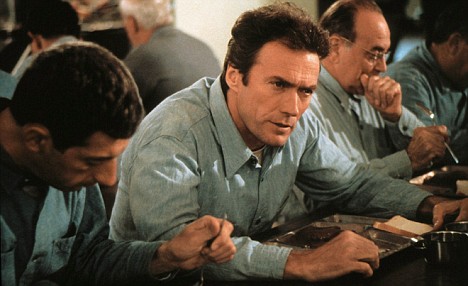
Today’s piece of work is The Escape Artists by Ben Parker. Parker, whom you can see in the photo above as he debates with some of his inmates on whether anapestic verse is obsolete, has only produced this one pamphlet in poetry. His career in the art was tragically interrupted when he was shot by a common thug in New York City. That same thug was later found by the police in an abandoned industrial complex, bound in a bizarre material which resembled a spider-web. Shortly after that, a mysterious figure called Spiderman started making his appearances… but we all know that bit.

Judi Sutherland took care of this review, and you can read her thoughts in full by clicking on this link.

Enjoy your Sunday!

An Anatomy of Tragedy #1: Achilles and the Sea

written by the Judge


I

Patroclus did as his dear comrade had bidden him. He brought Briseis from the tent and gave her over to the heralds, who took her with them to the ships of the Achaens – and the woman was loth to go. Then Achilles went all alone by the side of the hoar sea, weeping and looking out upon the boundless waste of waters. He raised his hands in prayer to his immortal mother, “Mother,” he cried, “you bore me doomed to live but for a little season”…

These lines, charged with dramatic intensity, are from the first book of the Iliad. Achilles’ bride Briseis has just been taken from him, and he goes to the sea, where he prays to his immortal mother Thetis. Samuel Butler’s translation seems to omit an important detail, which most other translators have retained – in the original Greek, it is specified that Achilles reaches the sea and sits down before praying. In terms of the dramatic image, it makes a big difference.

The elision notwithstanding, we can imagine Achilles in the timeless moment just before he sits down and starts praying – we can see him standing before the sea, cross-armed, his lips pursed and his brows creased in a bleak fury. Among Homer’s many gifts to us, there is this vignette, which encapsulates the central theme (‘μῆνις‘, wrath) and atmosphere of the whole Iliad. But there is also something else. In this primal fresco of a brilliant young man standing before the endless expanse of the sea, we find the symbolic essence of a genre that has fascinated and puzzled literati for millennia. It is a supreme encapsulation of tragedy.

II

The tragic nature of the Iliadis what gives it its enduring power. The Odysseyintrigues and captures the reader’s imagination with its tales of wonders and distant lands; it is a story filled with magic, monsters and guile. Ultimately, it is completely satisfying because it closes with the mother of all happy endings. The Odyssey is the perfect adventure story.

But the Iliad is the tragedy. Though it does not read as well or as easily as Homer’s other great epic, it rings with an existential power which the other book simply cannot match. It transcends its own genre in a way that very few epics have ever done. This is remarkable, because tragedy is a category that tends to abort itself when it is taken out of the dramatic infrastructure in which it so naturally unfolds. Numerous examples can be found of narratives in other mediums that attempt to replicate the tragic effect, from Thomas Hardy’s novel The Return of the Native to the Marcel Carné / Jacques Prévert effort in film, Le Jour se LèveAlmost all of them fail in one way or another. Tragedy simply does not yield. You cannot haul it and lump it from one genre to another without losing it somewhere in the process. You cannot bend it without breaking it. And you certainly cannot stray away from having Achilles in the front of the sea. Any story that takes a single step out of that diorama instantly ceases to be tragic.

III

What is tragedy? The question is old – old enough to be a little tiring. Theory on the subject goes as far back as Aristotle – it is well known that the world’s first book on literary theory, the Poetics, was essentially a book about tragedy (along with a cursory glance at epic and lyric poetry, of course, and the whole other book on comedy which went lost). Since then, so much has been written on the topic that it hurts to think about. A scholar called Oscar Mandel, back in 1961, wrote an entire book entitled A Definition of Tragedy. This was the fruit of his efforts:

A protagonist who commands our earnest good will is impelled in a given world by a purpose, or undertakes an action, of a certain seriousness and magnitude ; and by that very purpose or action, subject to that same given world, necessarily and inevitably meets with grave spiritual or physical suffering.

My personal reaction was to think that it reads less like a definition than a description, but Mandel can at least be credited with precision. For Herbert Joseph Muller, tragedy is ‘a fiction inspired by a serious concern with the problem of man’s fate, a spectacle of a relation between good and evil, a dramatic representation of a set of values’. (The Spirit of Tragedy, 1956). Not only is this inaccurate, as ‘good and evil’ are usually the subject of morality plays rather than tragedies, it is also tremendously vague. Even some comedies are ‘inspired by a serious concern with the problem of man’s fate’, and almost any self-respecting story will be ‘a dramatic representation of a set of values’.

There are some intriguing essays on tragedy that have been produced in the twentieth century – JP Vernant’s Marxist reading is definitely worth looking up – but on the whole, most of the original theory on the subject was written before the year 1900. I may be stretching it, but I can’t think of anything new that has been said on tragedy at all since Nietzsche.


IV

Almost all theory on tragedy is derived from, or has been directly influenced by, one of three main works, the most famous and widely quoted of which – and by a great distance – is Aristotle’s Poetics. It is also the least useful. The fact that it has been so enormously influential does not make its arguments more valid. In fact, one of the problems with literary theory surrounding tragedy is that so much of it is stuck on Aristotle, to the point that some critics appear to spend more time on his arguments than on the plays themselves. When Ashley Horace Thorndike, writing in 1908, argues that ‘[a] typical tragedy is concerned with a great personality engaged in a struggle that ends disastrously’, he is only paraphrasing Aristotle.

The Greek luminary, however, was interested in an exegesis of genre that is no longer very relevant to us. His claim that tragedy is ‘an imitation, not of men, but of action and life’ doesn’t really mean much anymore, as the argument applies to representation generally more than it does to tragedy specifically. Aristotle was writing at a time when poetry – either epic, lyric or dramatic – was the only narrative form there was other than history. This is why he was so careful about distinguishing them as their own separate genres.

The rise of the novel, and later that of film, are sufficiently important developments to outmode most of Aristotle’s arguments.  Tragedy used to be a genre that encapsulated a number of narrative functions – functions which have been retained, but split and delegated into different subgenres. For instance, Aristotle specifically says that tragedy should arouse ‘fear’. This goes hand in hand with the (somewhat less widely appreciated) fact that tragedies are a very bloody genre. Most of them involve people killing or mutilating each other, from Oedipus driving nails into his eyes to Agamemnon’s skull getting split with an axe. Several of them really bring gore to what seems like an unreasonable extreme, such as Marlowe’s Tamburlaine plays or Shakespeare’s Titus Andronicus (and that’s without beginning on John Webster).

This is neither an expression of sadistic voyeurism nor some sophisticated aspect of high culture. It is no more and no less than stories being used to exorcise our inner anxieties, primarily those related to the fragility of our own bodies. When seeing, as we do in King Lear, a man having his eyes ripped out on stage, it gives a form to that fear and lets our psyche represent and resolve it, putting it to rest. This is to a very great extent what Aristotle was talking about when he spoke of the ‘purgation of emotions’ (otherwise known as catharsis) that we undergo in tragedy.

I mention this specific role of the dramatic genre because contemporary culture evidently fulfils it otherwise. The component of physical anxiety and gore has been enucleated from tragedies and transferred fully onto what we know as the Horror genre (enveloping its many subgenres, from psychological thrillers to splatters). These films do exactly the same thing that tragedies did in another age: they stage our anxieties related to death, violation, or sex, and by giving them a form, they let us deal with them. Unsurprisingly, Aristotle’s statement that tragedy should inspire ‘fear’ now seems alien and distant from us – there can be tension and conflict, certainly, even some suspense, but do you really expect to be scared when going out to watch Othello?

There is much in the Poeticsthat is similarly outmoded – including the statement on tragedy’s other main emotion, ‘pity’ – and an unwillingness to dismiss the Aristotelian axioms has been the greatest millstone around the neck of tragic theory.

Obviously I am not suggesting that we should just ditch the Poetics as a whole. It is mandatory reading if only for how widely it informs our history of criticism, and there are plenty of arguments that are still of interest (such as Aristotle’s wonderful meditations on language and metaphor). It is just that an understanding of tragedy is best served by leaving Aristotle and his historical moment aside, and looking at what it is that makes tragedy unique not only in our own culture, but in all cultures in which it has appeared. Because there clearly is such a thing as a recognisable element that we call tragic – one that has not and cannot be transferred to other subgenres like that of Horror. The aborted imitations which attempted to render tragedy in other mediums are case in point. They were trying to bring the tragic outside of tragedy, but even as they carried over all of the Aristotelian jigsaw pieces, they could not reproduce the whole. They had lost Achilles and the sea.

Nominate Sidekick for the Saboteur Awards 2013!

Sabotage Reviews‘ annual Saboteur Awards, which normally recognise excellent work in poetry magazines, have this year been extended to include spoken word shows, anthologies, pamphlets, innovative publishers and literary one-offs! If you would like to nominate Sidekick Books for a Sabby, here’s a round-up of our eligible titles. Click to read samples:


Psycho Poetica

12 cabins, 12 vacancies.

A ‘faithful distortion’ of Hitchcock’s Psycho. Originally a live, multi-poet performance, Sidekick worked with editor/creator Simon Barraclough to create this blood-soaked collectible.


Birdbook: Freshwater Habitats

The second part of our four-part anthology series, created with the aim of gathering one poem and one illustration for every species of British bird. Part II features a foreword by Tim Birkhead, author of The Wisdom of Birds, and new work by W. N. Herbert, A. B. Jackson and a raft of newer voices.


The Debris Field

A multi-voiced tribute to those aboard RMS Titanic. Sidekick present the hard copy of the sell-out BFI live show. Simon Barraclough (a double whammy this year), Isobel Dixon and Chris McCabe weave the languages, memories and sensory experiences of the passengers into meditations on voice, death and, of course, “the white extent of the eternal sea”.


Nominations close on 31st March at midnight (UK time), so get in there!

The following day, Sabotage will post a shortlist on their site made up of the top 5 nominees and open up a round of voting. Voting will close on 1st May at midnight (UK time).

To read more about the Saboteur awards, head here.

Sunday Review: Andrew Frolish’s Retellings

posted by the Judge


Review o’clock, ladies and gents. Andrew Frolish gets the inky treatment for his debut collection, Retellings, and it’s Simon Turner getting down and dirty to do the review. You can read the whole thing here.

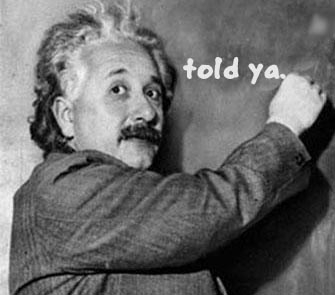
The image above is a famous individual whom you really should recognise without my help (but in case you can’t, that’s Will Shakespeare) writing the original draft of a poem called Told Ya. The first of Frolish’s poems is in fact called Retold Ya, which I think is a reference, albeit a subtle one.

Make up your own mind. That’s what poetry is for.

Have a great Sunday!

Anaxagorou’s ‘If I told you’ and False Anti-Racism

written by the Judge

I’ll bet I’m not the only person who, upon reading Jon’s open letter to Maurice Riordan, clicked on the link to the poem ‘If I told you’. I’ll link it now just in case you missed it. The author’s name is Anthony Anaxagorou:


It’s a moving performance and it’s worth listening to it before reading it on paper. I was initially very struck by it – I thought it was deliberately presenting me with a partial, selective, manipulative reading of history as a way of placing me in the position of someone whose history has been similarly misrepresented over the years (i.e., any minority). In other words, it provoked me in an attempt to make me feel what it’s like to be provoked. Subtle and Trojan.

I was so impressed with the poem, in fact, that I started researching the author, and I came upon this video. Here Anaxagorou elaborates on some of the statements he makes in the poem, and it was upon seeing it that I realised I was mistaken. ‘If I told you’ is not some satire or parody. It’s not a clever intellectual game or a winking of an eye. It is, with all due concessions for a poem’s rhetorical mode, what the author actually thinks. Talk about a disappointment.

I’m going to be arguing with this poem – and not very nicely – so before I do anything else, let me state that I didn’t dislike it entirely. Around halfway through the text shifts from the historical into the personal, building to a type of humanitarian crescendo which is at times touching and intense. I can agree with statements like ‘every bit of you is in every bit of me’. However, I think these very statements are undermined and contradicted by the poem’s first half – and that’s the bit I take issue with.

According to the author, in that part he ‘challenges many conventional beliefs about the origin of humanity, civilisation and philosophy’. To be clear, I don’t have a problem with the idea that European civilisations, both ancient and modern, have been largely influenced by Africa, even to the point that some of the great early Greek thinkers may have learnt their trade from African masters. I do have a problem, however, when said European civilisations are represented in a manner which is offensive and distorted.

Yes, I understand that the poem has certain layers of subtlety and should not be taken at face value. I know that it’s saying ‘what if I told you’, and not ‘I am telling you’. The first line – ‘What if I told you that all life is African?’ – already sets a hyperbolic (even epic) tone that suggests the poem is not to be taken literally. For this reason I can accept an approach to history that is at times convenient and selective (e.g. comparing the dark ages to the empires of Mali and Kush). I can also accept that some of the raw figures presented may be difficult to corroborate (Anaxagorou claims that Native Americans today have a life expectancy of forty-six, but Wikipedia gives it at seventy-one and most other searches give me similarly differing results – but then I haven’t read the author’s suggested ‘study-list’, so maybe that’s where the data comes from). I can even swallow – with some reluctance – intellectually lazy statements like ‘the abolition of slavery had nothing to do with philanthropy / but pure economics’.

Where I draw the line, however, is at his representation of the European civilisations, most notably the Greeks. It’s one thing to claim that Africa’s history has been understated. It’s wholly another to twist and vilify the history of other cultures. Anaxagorou writes, ‘What if I spoke about the library in Kemet and Alexander’s pillaging of knowledge, / the burning of books, of culture and philosophy?’ I’m assuming that what he means is the Library of Alexandria, a fulcrum of academic studies in the ancient world. If that’s the case, it’s hard to see how it could have been pillaged by Alexander since it was founded (and it flourished) under the Ptolemaic dynasty, thus after Alexander’s conquest and death. It was not burnt down until centuries later, after the advent of the Romans. Anaxagorou claims in the interview that Alexander and Aristotle both took books from the library of Kemet back into Greece, and that ‘a lot of the information in those books was used and plagiarised by the Greek philosophers’. The reality is that the Greeks founded, managed and developed that library, and that the majority of the texts it contained were written in Greek; regardless, most of the major Greek philosophers (including Socrates, Plato, Aristotle, Democritus, Empedocles, Leucippus, and of course all of the seven sages) could not have plagiarised anything from that library simply because they were all dead before it was built.

Anaxagorou portrays Alexander as some sort of cross between a book-burning Nazi and Attila the Hun. While the man was certainly no saint, to characterise his import and distribution of foreign books as a form of ‘pillaging’ is historically obtuse. A perfect example is provided by the Enuma Anu Enlil, a sequence of tablets detailing the enormous astrological and astronomical knowledge of the Babylonian civilisation. Had Alexander never sent it back from the stagnant Babylonian culture, which had neither updated nor developed that old text in more than two thousand years, it might simply have been lost. Instead, the introduction of the Enuma Anu Enlil prompted an explosion in Greek astronomical studies that laid the foundation, among other things, for the subsequent astronomy of the Moors (which Anaxagorou lionises). Without Alexander’s ‘pillaging’, our stars may not bear such beautiful Arabic names as Aldebaran and Betelgeuse at all, and the poet’s own point about the influence of the Moors would lose its most celestial point of reference.

Going back to the idea that ‘a lot of the information in [the library’s] books was used and plagiarised by the Greek philosophers’, I would also question the choice of words – the Greeks did not simply learn or draw inspiration from this foreign knowledge, they ‘plagiarised’ it (by this standard I might as well say that Virgil plagiarised Homer when he wrote the Aeneid). This is but one example of a string of expressions that Anaxagorou uses in that interview which are offensive and appropriative. Again, I have no problem with the idea that African cultures influenced the European ones. But to say that ‘this group of people was responsible for [Europe’s] ascent into history and civilisation’, and that they ‘put [Europeans] in the position they are in, scientifically, philosophically, academically, culturally and linguistically’ – I don’t know. I reckon I might tell a modern American that the origins of his nation lie in Europe and that Europe was a great influence to the Americans throughout, because it’s true; but I don’t think I’d tell him that Europeans are ‘responsible’ for their achievements, or that Europeans put the Americans in the position they are in. That would simply come across as an attempt to insult them, right? No-one put the Americans where they are: they put themselves there, with their own hands, their own heads, and their own hearts. And so did the European people.

In his claim that Europeans are denying African cultures their historical agency, Anaxagorou goes and does exactly the same thing with the nations of Europe. I won’t go so far as to call the poem itself racist, because I understand that the historic power relationships between different countries / continents mean that you cannot discuss them as though they were perfectly equivalent. Even so, I cannot help but sense a definite insensitive bias, even a certain contempt, in his refusal to differentiate between the most basic of European cultures and histories. Consider this line:

‘What if I told you all great European philosophers were trained by Black Africans in Ionia?’

All great European philosophers? European philosophers? Doesn’t he mean Greek? Am I really to believe that he doesn’t know there is an entire legacy of philosophers, working all over the continent, which came long after the Greek civilisation was extinguished, from Aquinas to Descartes, from Hume to Kant, from Nietzsche to Derrida? Is he really unable or unwilling to make such a basic distinction as one between the Classical and the Modern ages, or between Greeks and other Europeans? Doesn’t he understand its importance? Are all Europeans the same to him? Would I be justified in speaking about ‘all great Asian philosophers’ if I only ever referenced Chinese culture? (I must also – again – contend the choice of words, specifically in the selection of ‘training’ over ‘teaching’. You can train a soldier, a circus acrobat, a football player, or an ape. But you do not ‘train’ a philosopher, or an artist, or a mathematician).

This philippic culminates in the enigmatic line ‘What if I told you that racism was invented?’, which he explains in the video thus:

The idea of race and racism as an ideology is only two-hundred and fifty years old. It was only at the start of the seventeenth century that we started to see a change in the way that humans regarded each other. So it’s a very new idea.

I’m sorry, this is just plain wrong. Anti-Semitism, to make one easy example, is much older than two-hundred and fifty years – the term ‘ghetto’ actually originates from Italian, because it was the district in Venice where Jews  used to be relegated at the beginning of the 1500s (also, Anaxagorou seems to be confused about his numbers… the ‘beginning of the seventeenth century’ was four-hundred years ago). Of course, the Jews derive their own identity from one of the oldest and most racist texts in the world – the Old Testament of the Bible, the Histories of which are entirely about the elect people of God, the Jews, migrating and ‘legitimately’ slaughtering all of the populations they invade. Naturally the ancients wouldn’t draw on the language of genetics to legitimise discrimination, but this doesn’t mean that such a way of thinking was absent from their world. What is the parable of the good Samaritan in Luke’s Gospel if not an anti-racist tale, bearing in mind that Samaritans used to be one of the most generally despised and discriminated against of all ethnic / religious groups? I don’t know if it’s true that ‘the Greeks never had the concept of race’. I know that they had the concept of ‘barbarians’ to describe anyone who was not Greek, and while the word may not have had the special pejorative connotations we associate with it today, it was enough to discriminate people from certain aspects of society (taking part in the Olympic Games, for example). The concept was adopted by the Romans, who denied Roman citizenship to barbarians – even though they were themselves, technically, barbarians!

Anaxagorou is identifying a particular and contingent line of thought (mostly amenable to the history of eugenics, judging by his references) and identifying that with racism. That’s why he specifies that he is talking about ‘racism as an ideology’. Unfortunately, this specification is exactly the problem (and the reason, I guess, why his poem upset me so much). Not only is it highly controversial, suggesting as it does that only white people are responsible for and capable of racism, it’s extremely dangerous. Negating the terrible universality and a-historicity of racism – the fact that it is not some casual hole in the road we could just have driven around, but something the potential for which inheres in all of us, like evil itself – is to disrespect some of its faceless victims and to encourage it to happen again. Some months ago I was working as shop-floor assistant in a Poundland, and when it emerged that I was of Italian origin, some of the staff members stopped calling me by my name and simply referred to me as Mafia. Hello Mafia. How you doing Mafia. How many whores did you have beaten today Mafia. These quips are a form of racism: and the fact that they have nothing to do with either anthropology or the colour of my skin (for what it’s worth, I’m white and the two people calling me that were Middle-Eastern and black respectively) does not make them any less hurtful. ‘What if I told you that everyone that looked like you was a killer, a bomber, a terrorist?’ Well, it would be racist and unforgivable, of course, but it wouldn’t be qualitatively different from saying that every Italian is a member of the Mafia or a fascist or a wop, or – to make an example that is so rarely acknowledged, so rarely sympathised with – that every German man and woman is a Nazi.

As I said at the outset, I understand that the poem is not entirely literal. I also understand the value of a certain type of historical revisionism in terms of modern identity – if you’re black, it’s important to understand that your ethnic history does not begin the day that one of your ancestors was kidnapped and sold into slavery. At the same time, however, I think this type of revisionism should be equitable, not to mention ethical. I think there are lines that should not be crossed without being condemned, regardless of whether they are being said in a joke, or in a story, or in a poem. I found myself feeling hurt and neglected by Anaxagorou’s text. I found myself reading a poem in which all that there is of best in my cultural heritage as a European is either vilified or negated, and yes, I know that the notion of a ‘European identity’ based on our political union is something alien or distant to most people in this country, but it’s there, and it’s young, and it’s new, and it’s not about defending the horrors that we have perpetrated in the past, it’s about believing in our ability to transcend them. ‘What if I told you that the enemy is White supremacy?’ Then you’d be wrong, Anthony. The enemy doesn’t have a colour. It doesn’t need to be white to call me Mafia. It doesn’t need the language of Darwin to start enslaving others, as all ancient civilisations – regardless of colour – reveal to all but the most partial observer. It doesn’t need anything but a little bit of fear on which to feed and a person’s heart in which to sleep. What if I told you that was your heart.

Sunday Review: Kate Noakes’ Cape Town

posted by the Judge


We’ve already had the chance for a chat with Kate Noakes in the past. She was pretty chuffed about it, at least judging by the photo we took after the interview (see above).

Now we’re taking it to the next level (ok, the football references are already overbearing) by reviewing her poetry collection Cape Town. The review was tackled (uh) by Shane A., who had never written for us before and is therefore kicking off, er, opening his career with us. The goal is to – ok I give up. Is it derby day or something?

Happy Sunday everyone!!


The Debris Field + Special Offers


Sidekick Books’ latest publication, The Debris Field, is available now for £6 plus postage. It slots into our team-ups section, as it’s a collaboration between three poets: Simon Barraclough, Isobel Dixon and Chris McCabe, and a project which began (and continued) life as a multimedia performance with film-maker Jack Wake-Walker and Oli Barrett.

We’ve also got two special offers on the go. You can buy The Debris Field together with Simon Barraclough’s previous project (also featuring work by Dixon and McCabe), Psycho Poetica, for a combined price of £10 plus postage …

… or you can buy it together with our previous team-up pamphlet, Confronting the Dangers of Art, by poet Ian McLachlan and illustrator Phil Cooper for £8.50 plus postage.


Take advantage of either offer from the product page of any of the books.