Books | Poems | News | About

sidekickBOOKS

Poetry Parnassus and the Paradox of International Poetry


written by the Judge

It hasn’t been long since Poetry Parnassus. The event took place between the 26th of June and the 1st of July, as part of the Cultural Olympiads, and it brought together more than two-hundred poets from all over the world for readings and debates. The scale of the project, even in retrospect, is staggering.

The event having lasted a week, and myself being constrained by the nagging trifle of having a job, I was only able to attend the events on the weekend, which disqualifies me from writing a proper review. This is just as well, because what I am interested in discussing here is not Poetry Parnassus itself as much as some aspects (and problems) of international poetry as they emerged from the festival.

I should start by saying that I thought the field day was a resounding success. The organisers did a superb job in bringing together a group of diverse and fantastic poets, including some real stars (my jaw pretty much dropped when I saw Gioconda Belli on the roster). All of the readings I attended were very interesting, and those I didn’t sounded just as promising. As importantly, the event offered myriad opportunities to pick up books of international poetry and find out information about literature from abroad, often by speaking with the foreign artists and/or editors in person. Myself, I walked away with a collection of contemporary Polish poetry and a pamphlet by a Persian author, two books that I look forward to reading in the coming days. So even though my arguments later in this article may seem critical of the festival, my final position should be clear from the start: great job, and do it again as soon as possible.

With these indispensable disclaimers out of the way, I was a little puzzled by certain of the invitations, particularly in light of what they meant in an event that declared itself as primarily international. Being interested above all in the European poetry scene, I did not look into many of the poets from North America, South America, or Africa (I’m aware that these represented the majority of the festival’s readers and I must stress once more that this article does not intend to review the festival as a whole). What struck me about the selection of the European poets was the fact that so many of them were already international by default. The choices always seemed to fall on poets who were fluent in English, professional translators from or into English, and often having lived away from their home country.

The prime example of this was Ilya Kaminsky. When I entered the site of the event, I found a list of poets by nationality. I immediately scrolled down to the link for Russia, as I am head-over-heels in love with the contemporary poetry scene from this country, and I was linked to Kaminsky’s bio. I had never heard of him before and I am unfamiliar with his work. A little reading told me that he was born in Odessa (which is in Ukraine, not in Russia, and that country has not been Russian since the fall of the Soviet Union), that he moved to the United States when he was sixteen, and that he writes in English. Presently he is, I quote from the bio, “professor of Contemporary World Poetry in the Master of Fine Arts Program in Creative Writing at the University of San Diego”.

I mean no disrespect to the man, but he doesn’t strike me as the quintessentially Russian poet. When interviewed by SJ Fowler for the festival, he spoke of Horace, Borges, and Whitman, and he answered the question “What are your thoughts on contemporary Russian poetry?” by discussing the merits of people like Mandelstam, Mayakovsky and Kharms, all of whom died decades before today’s most interesting Russian poets were even born (for a comparison, imagine answering a similar question on contemporary English poetry by talking of Yeats and Eliot). He also said, when asked about the extent to which he represents his country and culture, that: “Poets are not born in a country. They are born in childhood.” This may be true, but it skirts the important question of how being born in a particular country enriches, limits, colours or otherwise affects a poet’s work. This is how contemporary St Petersburg poet Darja Suchovej writes of buying a present for a friend (the translation is my own, and so is the transcription of the name, which I’m sure I messed up):

Recently the Ozegov vocabulary was released,
the last edition, there’s a dream,
acquiring it in some alley,
among other things because you can’t find a word
in the old one with either 
гз or жз; in the four
volumes of the eighties’ edition, likewise:
and in the older pages yet of the Pushkin-Tongue
vocabulary (four volumes in turn)
there isn’t flatiron, computer, refrigera-
tor, and distributor, and dialer,
nor even leader. But it’s clear with the
xa, the нa, the e
End of the quotes. We had some canapé. We ate
them, without thinking, together with vodka.

This is the type of uniquely national flavour which makes it so rewarding to investigate poetic scenes outside of our own, and it is unquestionably related to the environments where the artist was raised.

The case of other attendants was similar, if not quite as extreme. Elisa Biagini, from Italy, is a translator from English and an expert in American poetry. She has lived and taught in the US (though now she resides in Florence), and she writes in English as well as in Italian. Evelyn Schlag, from Austria, studied German and English literature and writes novels set in places like Quebec, where characters meet American poets like Elizabeth Bishop. Valérie Rouzeau, from France, is a famous translator of Sylvia Plath and Ted Hughes. So is Eli Tolaretxipi, from Spain, except that her specialty is on Plath and Bishop rather than Plath and Hughes (in her interview she cites four writers/poets, two of whom wrote in English, one in Swedish and only one in Spanish, and answers a question about her national poetic identity by saying that “rather than a country a poet has a home which can be anywhere”, which, again, misses the opportunity). Ironically, the poet whom I most readily associated with a European culture was Ryoko Sekiguchi, who represented Japan, but who lives in Paris and is a major voice in French poetry (I assume she must have a certain status in Japan as well, but I only know her work in French).

This is not to slight any of the above poets, much less the event’s organisers. I am not suggesting that these artists are not representative of their countries or that they were poorly selected. Rather, the argument goes the other way round – firstly, and as Fowler’s interviews suggest, these are poets whom by virtue of their international background are more likely to reject or downplay the role of nationality in writing than to foreground it. There is nothing wrong with this in principle, but in context of this festival, it left me with a bit of an unsated hunger. How does the rise of Silvio Berlusconi’s televisual, hegemonic politics-of-communication affect the Italian language and what can poetry do about it? How did the Spanish language respond to and reflect the shift in the perception of homosexuality that took place in Spain over the last decade? What is the attitude of the Russian poetic scene towards all these new Romantic poets who are dying young, like Boris Rizhy, Igor Davletsin, or Dmitrij Bannikov? Could the increasingly academic nature of poetry in France somehow be reflective of the left-wing’s struggles to communicate with its base, thus favouring the rise of populist right-wing parties, and if so, what is to be done? These are all important questions which cannot simply be discarded by saying, as one poet did, that “a woman has no country” (this being a quote by Virginia Woolf, it was also rather wastefully made, which perhaps exemplifies my point – you don’t need to invite an international poet to London if you want to hear people quoting Woolf).

Secondly, to continue my argument, it may be objected that I am putting the cart before the horse. It is easier to communicate with poets from an international background, so naturally they would be the first to attend such events, right? This is true, but it only highlights the difficulty (and the real challenge) of dealing with international poetry – that it is interesting precisely to the extent that it is difficult to mediate with it. A festival such as Poetry Parnassus, despite some of its more grandiloquent terms (the “World Poetry Summit”? Seriously?) is, in this particular sense, hindered by its own size. While it is a great chance to meet individual foreign poets and be exposed to their work, it simultaneously risks projecting an anglocentric understanding of global poetry – which is the trap one must try to avoid. It is true that most poets today speak English anyway because, well, most people speak English. The question that is worth exploring, however, is what can be done with other languages that can’t be done with English. For all the commendable good will of the Parnassus, the great paradox of international poetry remains that the best people to ask are those who are most inapt to answer.
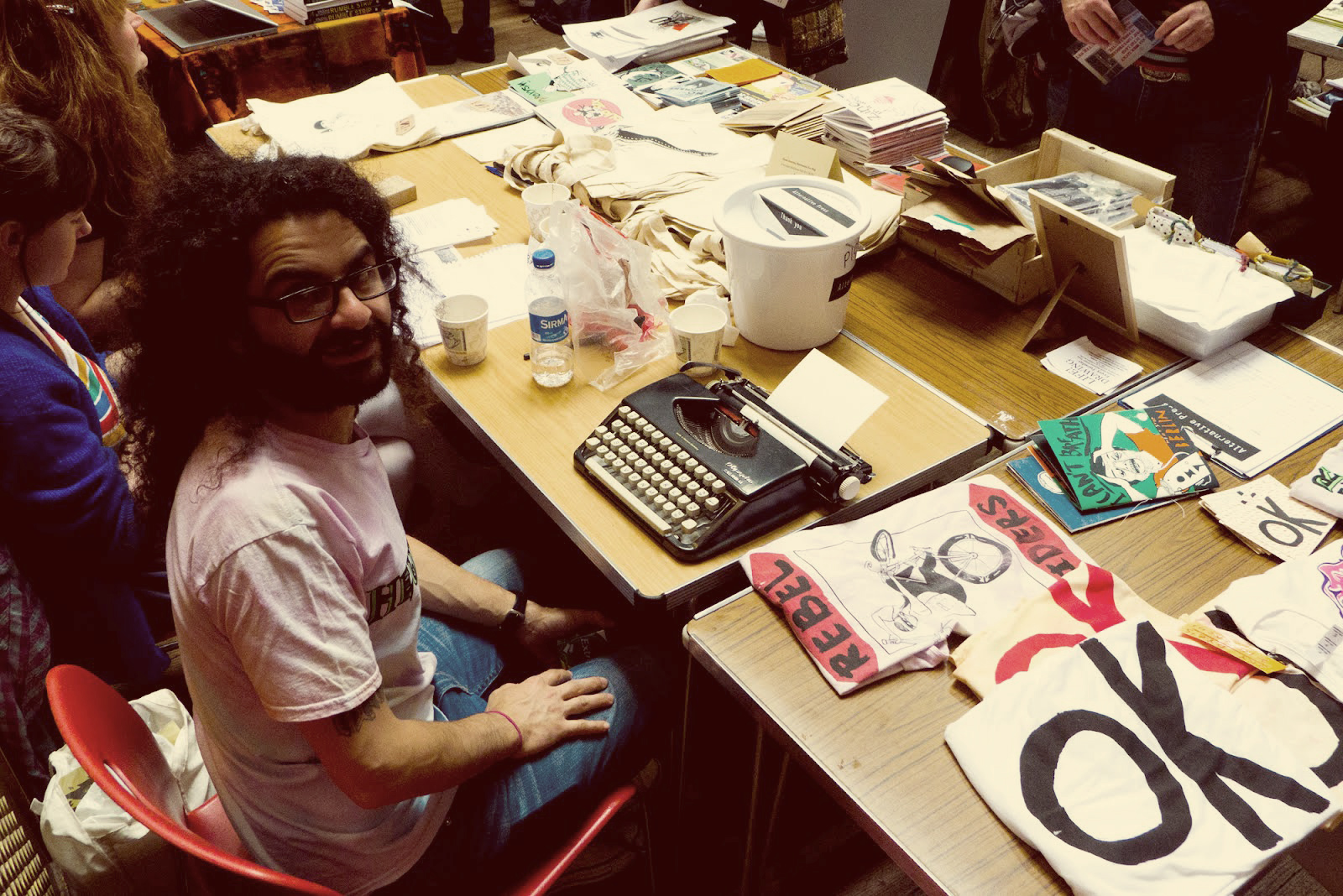
International Alternative Press Festival


This Saturday, The Camden School of Enlightenment is coming to the International Alternative Press Festival, at London’s Conway Hall. The show’s at 1:45 sharp and will include your dearly beloved editors, Jon and Kirsty, on the interface between poetry and computer games. It will also feature
Abi Palmer, with a new What’s New, Pussycat? update on her favourite compulsive amazon.com cat calendar critic. Tony Hickson, former paparazzo, knife-thrower and star of Byker Grove, will offer true stories and lifestyle tips. I shall be talking about Sir Henry Newbolt: Victorian balladeer, naval weaponry designer and menage-a-trois-er.

The festival is on Saturday and Sunday 4th-5th August, and other spoken word events include
  • live storysketching
  • Listen Softly, an afternoon of storytelling with words and handmade fabrics, presented by Ceri May
  • left-field poetry collective Vintage Poison, maybe in collaboration with Michael Horovitz
  • Structo magazine‘s So Bad it’s Good – Adventures in Terrible Writing
There will also be workshops on felt-making, set design, linoprinting and bookbinding. And then, of course, there are all the weird and wonderful comics and artworks that are the main point of the festival. Come and have fun!

August Writing Challenge on YPN


Back in April, I wrote a series of 15 simple formal ideas (some original, some derivative) with example pieces for National Poetry Writing Month. This month, the Young Poets Network is going to be publishing one every two days as a prompt for young writers, with an accompanying mini-anthology contest.

Day 1, together with a fuller explanation, is up here.

Poetry International Web Profile


This month, I’m featured on Poetry International Web alongside two other poets – Shazea Quraishi from Pakistan (now living in London), and the UK’s Helen Ivory.

Here is the feature profile, in which I am generously described thusly:

His accomplishments include not only the writing of formal, voraciously experimental, precociously accomplished poetry but (along with his partner, Kirsten Irving) a boundary-breaking small magazine and a standard-setting small press – and an array of websites built by him to support all this activity.

They’ve also put up three poems: The Procedure (from School of Forgery), Eisenstangen (a version of Rilke’s Der Panther)  and Meat.

Ethiopian Poetry Event!

This Sunday 15 July at 4pm, join us at the Ethiopian Community in Britain, 2A Lithos Road, London NW3 6EF for a celebration of Ethiopian poetry!


Hot on the heels of triumphant performances at Poetry Parnassus, a second chance to see the fantastic Lemn Sissay and Bewketu Seyum, as well as many other fantastic performers. Jon and me are joining in the fun too.

Hope to see you there!

Antler


Back in early June, I launched School of Forgery alongside John Clegg‘s Antler, also out from Salt. Owing to an unfortunate concatenation of events, John arrived at the launch with very few copies of his book, and I gallantly deferred the chance to take home my own so that he might sell as many as possible on the night.

Earlier this week my own copy finally turned up, and while I’d say I’m probably too close to John now for a full review to be carried out with the requisite lack of bias, I did want to take a moment to say how much I like Antler and how, even against the backdrop of a steady flow of distinctive and excellent poetry volumes onto my exhausted bookshelves, it stands out as a genuinely characterful debut.

As the blurb hints at, Clegg mixes “genuine and imaginary anthropology”, and the join between those aspects of his work that are essentially tall tales or fabulation and those that the results of diligent research is practically invisible. So too is the transition between tightly controlled traditional form and ranging free verse, the former being done so softly and unostentatiously. A quick march through some of the titles (Moss, Nightgrass, Wounded Musk Ox, Kayaks, Meteor, Dill, Mosquito) reads like a sort of ingredients list – words as ancient elements, boiled down tinctures, excavated knucklebones and panned nuggets, bottled and labelled for cautious use in the creation of spells and medicines. Plus there’s the over-arching sensation of the poet’s joyous obsessiveness, like a child collecting shells or insects, in everything he writes about.

So yeah, yeah, I recommend it.

Poetry Review 102:2


I have a new poem, Terrifying Angels, in the latest issue of Poetry Review. Following the departure of Fiona Sampson, who helmed the magazine for a number of years, the magazine is entering a phase of having guest editors at least until some time in 2013. I have to say, it already feels much fresher for it. This issue, edited by the estimable George Szirtes (he and I have briefly been on bad terms in the past but I’ve always admired both his poetry and his dedication to the cause), is themed around branching out to include poetries not comfortably included within the ‘mainstream’ bracket, hence the subtitle: ‘mapping the delta’. Szirtes’ introduction reflects my own feelings about where how I’d like to see future dialogues progress:

“But I know where the less explored areas are. They are less explored maybe because they seem more difficult, more the possession of one particular tribe … I admire much about these ‘tribes’ and wanted to invite writers to open them up through a sense of shareable enthusiasm, to tell us why they matter and to show us not so much the fascination of the difficult, but the fascination of poetry as a whole: the full delta.”

As well as some very good articles by Emily Critchley, Daljit Nagra and Adam Piette, there’s a rich crop of poetry presented, incorporating a wider-than-usual variety of styles. It’s always great to see poets we’ve published in (and first discovered through) Fuselit hitting the big time, so I’m particularly pleased that poems by Christian Ward and Joe Dresner have been included.

With the next two issues being edited by Charles Boyle of CB Editions, and Bernadine Evaristo respectively, I’m feeling very optimistic about the future of Britain’s flagship poetry journal.

The Story of $

Mark my words, pseudo-erotica will be the new children’s/YA fiction for celebrities. Eager to cash in, they will, in exactly the same way, assume that erotica is an easy genre to cash in on, and if they use 50 Shades of Grey as their benchmark, who can blame them for this assumption? If, however, they pick up any inexpensive omnibus of erotic short fiction, they will surely find the quality within undoubtedly better than that of what has become the best selling book of all time.

As Laurie Penny points out, 50 Shades is not really erotica at all. It’s porn. It’s being marketed as erotica for a variety of reasons, some spurious, some sensibly mercenary.

1. There’s still a huge stigma to women enjoying porn and masturbating. The term ‘erotic fiction’ suggests high art. Something you can discuss with your seminar group. Nin. Sacher-Masoch. Desclos. But then, The Story of O is genuinely a well-written novel with complex characterisation and masterful tension, development and build-up, as opposed to a series of passively quadorgasmic shag scenes separated by showers. And anyway, the embarrassment of reading porn, as has been endlessly pointed out, is void since the introduction of the clean, anonymous e-reader device. If women who wish to discuss it afterwards are then embarrassed to do so, perhaps they should just get an online pseudonym under which to talk filth like everybody else.

2. Erotica is for women, porn is for men. While most mucky fanfiction stories and erotica compilations are indeed written by, and aimed at, women, laying down an assumption like this, dressed up as fact, yet again segregates the sexes and attempts to file and categorise sexuality based on gender. Aside from the other problems this causes and reinforces, including the exclusion of those individuals caught inbetween, such a situation makes our cultural stash of smut dull, binary and generic. No fun at all.

3. Porn is purely audiovisual, while naughty stories all fall under the erotica banner. Bollocks. A story with the primary aim of titillation can totally be classed as porn, and the more diverse the media types associated with both porn and erotica, surely the more interesting, intertextual and ambitious both genres can become.

The sheep-like response to the success of 50 Shades, while typical for a bestseller of any genre, is pretty depressing. It’s like millions of women were meekly waiting for the corporate thumbs-up before rushing out and expressing their sexuality by buying an approved, tastefully packaged set text on (a completely clueless, and at times offensive, take on) BDSM. I don’t think we should whale on E.L. James, though. How about we hate on the greedy editors who marketed it as higher up the literary food chain than it is? The same publishing types who shied away from editing the shit out of this messy novel, for fear that the cash cow would walk away into the sunset.

Random House used to publish truly daring and well-crafted erotic work by authors such as Angela Carter, whose work bold and honestly investigated and magicked up real and fantastical sexuality in its many guises (golden showers, genderbending, objectophilia, centaur rape). Now they seem content to peddle tame BDSM tourism like 50 Shades, and only then after it’s already gained a hardcore following through its initial run with a small overseas publisher. It’s all a bit sanitised, and I think a small part of the backlash towards the book stems from frustration at a lack of courage on the part of the publisher and readers.

So to return to my opening prediction, this kind of lucrative, safe-yet-tamely-edgy market is exactly what celebrities with an idle interest in writing, and an active interest in increasing their brand awareness and income streams, will gravitate towards. Consider Madonna’s godawful efforts at children’s fiction, then imagine her lighting on James’s efforts, a dollar sign in each eye, and shiver. You have been warned.

Poetry Parnassus: Aftermath

Last week, for those who didn’t know, saw the unfolding of Poetry Parnassus, a festival in which a poet from every Olympic country visited London’s South Bank. Well, nearly. Unfortunately some poets were unable to secure visas, but most made it.

Parnassus took place as part of the Southbank Centre’s Festival of the World. Between 26 June and 1 July, London was treated to bilingual readings, discussions, signings, bombastic events (see below), translation labs, parties, workshops and lots more.

Many of us were asked to act as Buddies for visiting poets. This meant that someone was there to welcome those who didn’t already know/live in London, but it also forced us Brits to actually shuck off our shyness and interact with people we otherwise wouldn’t have met. I was teamed up with the awesome Jenny Wong, representing Hong Kong, though currently based in London (we were able to meet for a nice pint before the festival week started), Mr Arjen Duinker from the Netherlands and Oman’s Zahir Al-Ghafri, who I sadly didn’t get to meet, but who I hope had a grand week.

Shout-outs are due to many people. At the risk of missing out those who put in crazy hours to make it all happen, those that spring to mind are Bea Colley, Live Literature Producer at the Southbank Centre, Anna Selby, Literature and Spoken Word Coordinator at the Southbank Centre, Swithun Cooper, Chrissy Williams and Chris McCabe from the Poetry Library and all of the many, many volunteers I saw helping lost and bewildered poetry fans.

The Jamie Madrox Award for Inhuman Multitasking goes to Maintenant’s S.J. Fowler, who didn’t seem to sleep, choosing instead to divide his time between throwing packed events, reading his own poetry, running workshops, filming, uploading said films, buddying international poets and generally hurling his entire bodymass into experimental poetry.

I’ll leave you with the highlight of the weekend, the Rain of Poems. Organised by Chilean art collective Casagrande. While their metamorphic self-titled magazine puts Fuselit to shame (past issues have included pages filling underground walkways and letters from Chilean schoolchildren being transported to the stars), this was still more impressive. How often do you get to see a helicopter bombing London with thousands of poems in English and Spanish? Speaking to Julio Carrasco from the collective, I learned that just 20 people, or thereabouts, worked on translating approximately 300 poems from various languages into Spanish.

When the poems were dropped, they suddenly became valuable. Everyone really wanted them (myself included – there’s photographic evidence of me getting told off by security for flinging my bag at a tree to dislodge a poem) and it was a pretty impressive (at times violent) scramble, in which the moral maze of decking a child for a bilingual verse was frequently meandered around. Poetry could do with a few more spectacles like this. Without the violence, of course. Poets aren’t violent. We wear frilly shirts and write about spring flowers.

Anyhow, back to reality. The festival is over, and I don’t know when, or if, we’ll see its like again, but I hope it happens in the near future. It did my heart good to see polite houseguest of the arts Poetry getting such a damned good hoedown.

What’s that? You want to see the Rain of Poems? Filmed by Cambodian poet Kosal Khiev? Very well!

CONTACT:

contact [a] sidekickbooks.com

Sidekick Books Site assembled by Jon.
Wordpress TwentySixteen theme used to power the news and books sections.