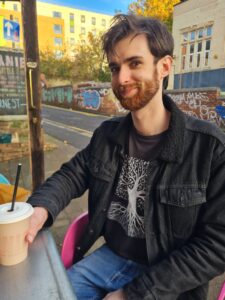
Carnyx Press is a brand-new micropublisher, based in Tyne & Wear in the North-East, founded by writer, designer and publishing all-rounder, Nathaniel Spain.
Carnyx publish speculative fiction in the form of anthologies, short fiction collections and novellas. We first got to know Nathaniel through his work with Inpress. More recently, we’ve been able to work with him as a Sidekick author in Ten Poets Get to the Bottom of Some Grisly Crimes. We caught up with him to ask a few questions about Carnyx’s mission.
First things first: Can you tell us how you chose the name Carnyx?
Nathaniel: The carnyx was an instrument found across Celtic Europe: a horn shaped like a boar’s head. I enjoy those links to paganism, to animal symbolism. These instruments were beautifully crafted and the replicas produce a lovely sound. But there’s also something kind of goofy and alien about them. I like the weirdness of ancient art, and I love the idea of artpieces surviving for centuries, the way that past cultures linger in the imagination in surprising ways.
What made you focus on publishing speculative fiction, and what does this kind of storytelling do uniquely well?
N: Because I read a lot of speculative fiction, and write in and around speculative genres, it felt like something I could approach with expertise. There’s also a real boom in the popularity of fantasy, sci-fi, and horror at the moment, so it made sense to try and tap into that. People enjoy the escapism and the imagination of these sorts of stories, but I think a good work of speculative fiction is well-placed to talk back to our world and what it’s like to live in it; to create fantastical worlds that are actually extended metaphors. Not having to meticulously represent our world in a factual way also means you’re free to explore the world of ideas more.“A good work of speculative fiction is well-placed to talk back to our world and what it’s like to live in it; to create fantastical worlds that are actually extended metaphors.”
You’ve worked to support plenty of other indie presses, most notably with Inpress, so it’s really exciting to see you launching your own. What’s been the most interesting part of setting up the press so far, and what do you wish more writers knew about indie publishing?
N: Creating an identity – through the visual branding, the way the press presents itself, the publications you want to release – has been really interesting. Positioning yourself in a busy ecosystem is difficult, it’s a work in progress, but it’s rewarding to start building a little community around your vibes and values. I think it’s always important for writers to understand the business of publishing, so they can be informed about the deal they want and the editorial support they’ll get. An indie might not be able to shift thousands of copies of your book, but because they’re publishing fewer titles per year you’re likely to have a more focused and personal relationship. I think indies are natural friends to writers who put the art first, or who want to get weird. But no two indies are the same, so it’s important to do your research, to be informed about who they are and what they can offer you.“[Indie publishers] are natural friends to writers who put the art first, or who want to get weird.”